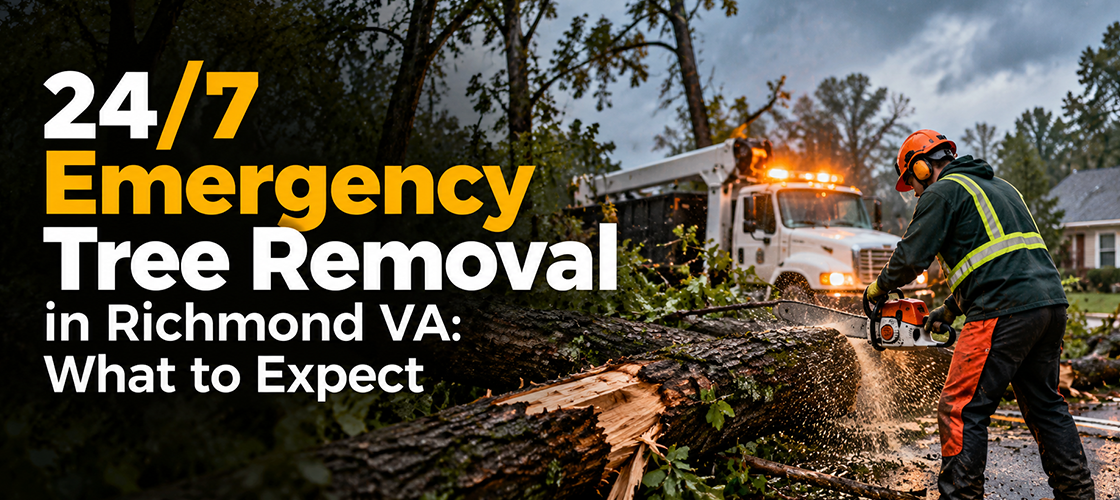
Tree problems do not always happen during convenient business hours. A tree may fall during a storm, a large limb may become dangerously unstable, or a partially uprooted tree may suddenly threaten your home or property.
In situations like these, you need emergency tree removal Richmond VA services rather than waiting several days for a routine appointment. Understanding what happens when you call an emergency tree service can help you respond safely and know what to expect from the crew.
Not every fallen branch requires emergency tree removal. However, some situations create an immediate safety or property risk and should be addressed as quickly as possible.
Common tree emergencies include:
If you are dealing with one of these situations, look for a company that provides genuine 24-hour tree service in Richmond rather than simply extending its normal business hours.
For non-emergency situations, homeowners can also explore professional tree removal services when scheduling can be planned.
When a tree becomes dangerous, your priority should be keeping people and property away from the hazard.
Do not approach a fallen, leaning, or partially uprooted tree unnecessarily. Damaged trees can shift unexpectedly, particularly when branches or trunks are under tension.
Keep children and pets away from the affected area until professionals have assessed the situation.
Emergency tree removal is not the time for chainsaw work or improvised cutting. A fallen or leaning tree can contain significant tension, and removing the wrong branch or section can cause the tree to shift suddenly.
Professional crews use appropriate equipment and removal techniques to manage these hazards.
If a tree has fallen onto power lines, stay away from the area and contact the appropriate utility company.
Tree removal crews do not work on live electrical lines. The utility company may need to de-energise the lines before tree work can safely begin.
If you can do so without approaching the hazard, take photographs of the damaged tree and affected property. These photos can be useful for insurance documentation and can also help the tree service understand the situation before arriving.
Once the crew reaches your property, the work generally begins with an assessment rather than immediate cutting.
The first step is determining what has happened and identifying the remaining hazards.
The crew may assess:
This assessment helps determine how the tree can be handled without creating additional risks.
In some cases, the tree cannot be removed immediately without first securing or stabilizing part of it.
For example, a partially fallen tree may require careful rigging or stabilization before sections can be removed. Loose or hanging branches may also need to be secured before the main removal begins.
The removal method depends on the tree’s size, position, condition, and surrounding environment.
Depending on the situation, the crew may use:
If power lines are involved, the utility company may need to address the electrical hazard before the tree crew can complete the removal.
Once the immediate tree hazard has been addressed, the crew can clear branches, logs, and other debris from the affected area.
The amount of cleanup required depends on how the tree fell and the extent of the damage.
For properties requiring more extensive debris removal after a storm or tree failure, professional property lot cleanup services may also be useful.
Urgent tree removal Richmond VA services may cost more than routine, scheduled tree work.
Several factors can affect the final price, including:
Storm-related emergencies can also involve more complicated working conditions than normal tree removal.
A reputable tree service should explain the expected scope of work and pricing before beginning whenever the circumstances allow. An emergency situation does not mean homeowners should be left without a clear understanding of the work being performed.
Even during an urgent situation, there are limits to what a tree service can safely handle.
Tree crews cannot safely remove trees from live electrical lines. The utility company must handle the electrical hazard first.
During widespread storms, many properties may require emergency assistance at the same time. Response times can therefore vary depending on the severity of the situation, accessibility, and the number of active emergencies.
Emergency work still requires proper planning. Skipping an assessment can increase the risk of injury, property damage, or an uncontrolled tree movement.
The goal of emergency service is to address the hazard quickly without creating another one.
Removing the immediate hazard may only be the first step.
Depending on the situation, you may also need:
If the tree came down at its base, the remaining stump may need to be removed or ground below the surrounding surface.
You can learn more about professional stump grinding services and how stump removal can help restore usable space.
Storms can leave behind branches, logs, leaves, and other debris. A larger cleanup may be necessary if the tree caused damage across your yard or property.
A severe storm or strong wind event can damage other trees even when they have not fallen. Cracked branches, exposed roots, leaning trunks, and damaged crowns may indicate additional hazards.
Professional tree cutting and trimming services can help address damaged or overgrown branches once the immediate emergency has been handled.
You cannot always prevent a tree emergency, but you can make the response easier by knowing what to do beforehand.
Keep the contact information for a reliable local tree service available, especially if your property contains large or mature trees.
It is also useful to:
Planning can make it easier to respond calmly if a tree becomes hazardous.
A tree emergency requires quick action, but it also requires careful decision-making. Whether a tree has fallen onto a structure, is blocking access, or has become unstable after a storm, the safest approach is to keep people away from the hazard and call qualified professionals.
Knowing what to expect can make the process easier, from the initial safety assessment and stabilization to controlled removal, debris cleanup, and follow-up tree care.
DCS Tree Services provides responsive emergency tree removal throughout Richmond, VA 23226 and the Greater Richmond area. For urgent tree situations, call 804-334-8948 to discuss the situation and available emergency assistance.
Response times depend on the severity of the situation, accessibility, current demand, and weather conditions. During widespread storms, multiple properties may require emergency assistance at the same time.
Emergency tree removal can cost more than routine scheduled work because of after-hours response, priority scheduling, equipment requirements, and the complexity of hazardous situations. The scope and expected cost should be explained before work begins whenever possible.
Stay away from the tree, wires, and surrounding area. Contact the utility company and do not attempt to move the tree yourself. Tree crews must wait until electrical hazards have been properly addressed.
Insurance procedures vary by policy and situation. If it is safe, take photographs of the damage and contact your insurer as soon as possible. If the tree presents an immediate safety hazard, discuss the necessary emergency work with the appropriate professionals rather than putting people at risk.
After the immediate hazard is cleared, you may need additional services such as stump grinding, debris cleanup, or an inspection of other trees that may have been damaged by the same storm or event.