Why You Need to Trim Trees Near Your Roof: 5 Hidden Property Risks
Living under a lush canopy of oak, maple, or pine trees gives a home instant curb appeal. However, when those branches spread over your roofline, they quietly transition from a landscape asset into a structural liability.
During heavy weather in Virginia, weak limbs scrape against shingles, drop heavy debris, or snap entirely. Trimming trees near your roof is one of the single most cost-effective preventive maintenance steps a homeowner can take to protect their property.
Here are five critical risks of neglecting overhanging branches and what you can do to keep your roof safe.
5 Major Hazards of Overhanging Tree Limbs
1. Shingle Wear and Structural Roof Damage
When wind blows, heavy branches sway back and forth across your roof. This repeated motion acts like coarse sandpaper, grinding away the protective granules on asphalt shingles. Once those granules disappear, water penetrates the underlying felt, causing roof damage from tree branches.
Worst of all, dead or diseased limbs hanging directly overhead can break under their own weight during summer thunderstorms or ice events, puncturing decking and causing sudden structural leaks.
2. Accelerated Gutter Clogs and Water Leaks
Trees hovering above your roofline drop a non-stop stream of leaves, twigs, pollen pods, and pine needles straight into your gutter troughs. Over time, this debris packs tightly into downspouts, causing water to pool along the eaves.
When gutters overflow, water backs up under the fascia boards and roof deck. This rot slips behind siding and eventually floods your home’s foundation. Roof clearance tree trimming prevents excessive organic buildup, letting your drainage system do its job.
3. Pests and Wildlife Access to Your Attic
Overhanging limbs serve as a natural highway straight to your attic. Squirrels, raccoons, mice, and roof rats routinely use these wooden bridges to leap onto home structures.
Once on the roof, animals chew through soft fascia wood, soffit vents, or loose shingles to build warm nests inside your home. Maintaining proper clearance cuts off roof animal access from tree limbs, keeping destructive pests outdoors where they belong.
4. Sun Deprivation, Moss, and Algae Growth
A dense tree canopy creates constant shade over your roof, blocking sunlight from drying out morning dew and rain. Moisture gets trapped against the shingles, creating the ideal environment for moss, mildew, and blue-green algae. Moss acts like a sponge, holding water against the roof surface, lifting shingle edges, and rotting the wooden decking underneath.
5. Heavy Storm and Ice Weight Hazards
Rain-soaked foliage and heavy ice add hundreds of pounds of load to tree branches. Limbs that look safely elevated on a calm, sunny day sag significantly under severe weather conditions. Pruning weak branches before seasonal storm cycles hit prevents heavy limbs from crashing down on your home unexpectedly.
How Far Should Tree Branches Be From Your Roof?
As a general rule, maintain 8 to 10 feet of clear space between tree branches and your roofline.
This clearance buffer accounts for natural branch sway during high winds and gives fast-growing species room to expand without encroaching on your shingles. Softwood trees like pines or silver maples may require even larger safety margins due to their rapid growth and brittle wood. Scheduling professional tree trimming in Richmond, VA with DCS Tree Services ensures these high clearance zones are pruned safely without risking damage to your roof structure.
DIY vs. Professional Tree Maintenance
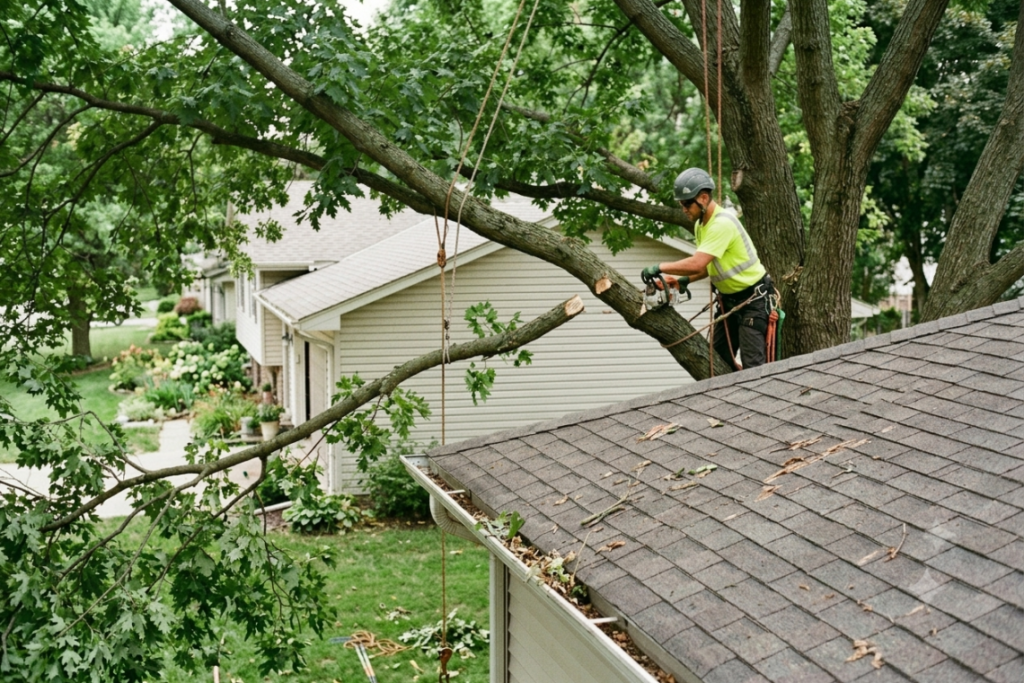
Attempting to prune large branches suspended over a roof is one of the most hazardous tasks a homeowner can undertake. Working from tall ladders with chainsaws while managing falling timber requires specialised rigging equipment, safety lines, and technical experience.
Professional arborists use controlled sectional lowering methods to tie off heavy sections, ensuring limbs are removed safely without dropping onto your home, fence, or power lines.
Protect Your Investment Today
Protect Your Investment Today
Ignoring branches over your home puts your roof, gutters, and family at unnecessary risk. Taking a proactive approach to tree trimming in Richmond, VA, with DCS Tree Services saves you thousands of dollars in unexpected roof repairs down the road.
If overhanging limbs are threatening your home, contact the licensed experts at DCS Tree Services today for a free, no-obligation roof clearance evaluation.
FAQs
1. Can tree branches damage a roof without actually breaking?
Yes. Even minor contact causes damage. Wind causes branches to constantly scrape across shingles, wearing off protective asphalt granules and exposing the underlying layers to moisture leaks.
2. How often should I schedule roof line tree clearance?
Inspect tree clearance once a year, preferably in late fall or early spring. Most fast-growing trees benefit from professional pruning every 2 to 3 years to maintain a safe distance from your home.
3. Will my homeowner’s insurance cover damage from overhanging tree branches?
Insurance generally covers sudden, accidental tree damage (like a limb snapping in a storm and hitting your roof). However, insurance policies usually deny claims resulting from long-term neglect, such as un-trimmed branches wearing down shingles over years.
4. How do I know if a limb over my roof is hazardous?
Look for warning signs like dead bark, fungal growth near branch joints, lack of leaves on a specific limb, or deep vertical cracks. If you notice any of these signs, have the tree evaluated by a professional immediately.
5. What is the best time of year to trim trees back from my home?
Dormant pruning in late winter is ideal because trees suffer less stress, and the leaf-free canopy makes structural branches easier to assess. However, removing hazardous limbs hovering over a roof should be done immediately, regardless of the season.