A leaning tree can be a normal part of a tree’s growth, but a sudden or worsening lean may signal a serious problem. Strong winds, heavy rain, root damage, soil movement, and decay can all affect a tree’s stability. The challenge for homeowners is knowing when a tree is simply growing at an angle and when it has become a safety concern.
Understanding the warning signs can help you decide when professional leaning tree removal services in Richmond, VA may be necessary and when a tree may simply need monitoring.
Trees can lean for several reasons, and not every cause means the tree is about to fall. Some trees gradually develop an angle as they grow toward sunlight or respond to their surroundings. Others may begin to lean due to environmental or structural problems.
Common causes include:
A tree leaning after a storm deserves particular attention, especially if the angle has changed noticeably.
No. A long-established, gradual lean may not necessarily indicate an immediate hazard. The more important question is whether the lean is new, increasing, or accompanied by other signs of instability.
For example, a tree that has stood at the same angle for many years may be structurally stable. On the other hand, a tree that suddenly begins leaning after strong winds or heavy rain could have damaged roots or a compromised trunk.
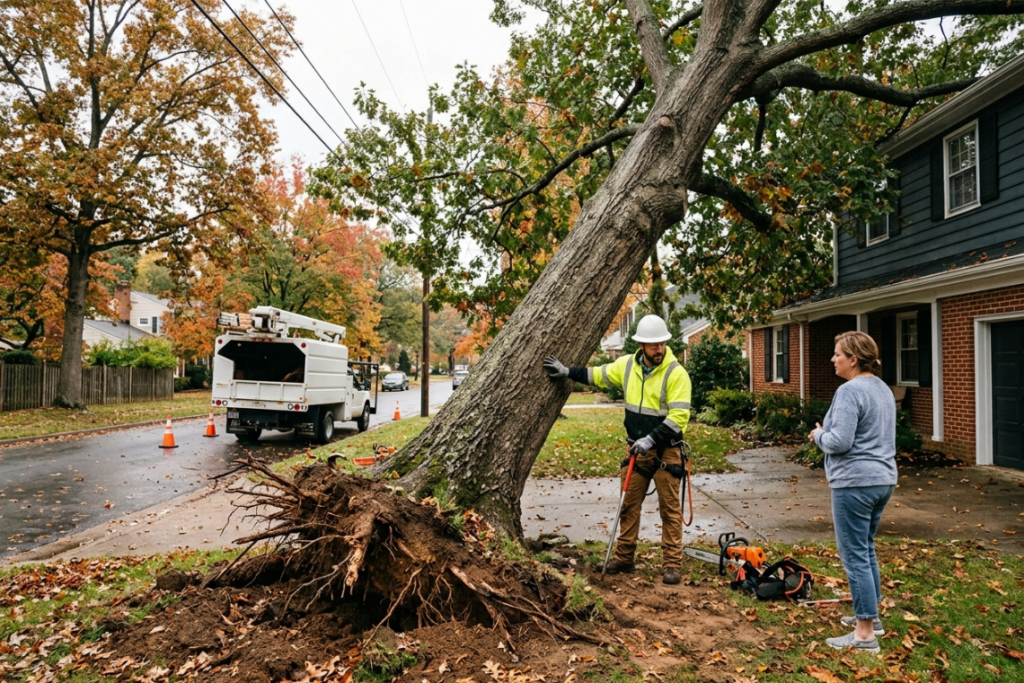
Homeowners should pay close attention to changes around the base of the tree. Soil movement, raised roots, or a visible gap between the roots and ground can indicate that the tree has shifted.
Recognising the signs of a dangerous leaning tree can help prevent injuries and property damage.
Roots that are lifted from the soil or newly exposed may indicate root movement. Since roots provide much of a tree’s stability, significant disturbance around the base can increase the risk of failure.
Large cracks, deep splits, or areas where the trunk appears separated should not be ignored. These defects can weaken the tree’s structure, particularly when combined with a noticeable lean.
A sudden tree lean is more concerning than a gradual, long-standing angle. If the tree continues moving in one direction, it may indicate that the root system or trunk is no longer providing adequate support.
Large dead limbs, hanging branches, or broken sections can add weight to an already unstable tree. They may also fall independently, creating additional hazards around your property.
Visible cavities, soft wood, fungal growth, or extensive decay can indicate structural deterioration. Internal damage is not always obvious from the outside, which is why professional assessment can be valuable.
Location plays a major role in determining the potential risk. A leaning tree near a home, garage, driveway, fence, walkway, or utility line can cause significant damage if it falls.
Even a moderately sized tree may become a serious concern when it is positioned directly over an area used by people or vehicles. This is why homeowners should consider both the tree’s condition and the potential consequences of failure.
If you notice a potentially unstable tree, keep children, pets, and vehicles away from the area. Avoid climbing the tree, cutting large branches, or attempting DIY removal. A damaged tree can behave unpredictably, especially during windy conditions.
For homeowners dealing with a potentially unstable tree, professional Tree removal Richmond, VA services can provide a safer way to evaluate the situation and determine the appropriate next step.
Removal may be considered when a tree has severe root damage, extensive decay, major trunk cracks, significant storm damage, or a rapidly worsening lean. The risk is also higher when the tree threatens buildings, power lines, vehicles, or areas where people regularly gather.
In these situations, Hazardous tree removal Richmond VA services from DCS Tree Services can help address potential dangers using appropriate equipment and controlled removal techniques.
However, removal is not automatically required simply because a tree leans. A professional assessment can help determine whether the tree can be retained, monitored, trimmed, or needs to be removed.
In some cases, yes. The possibility depends on the tree species, age, health, root condition, degree of lean, and surrounding environment.
A professional can evaluate whether the tree has stable roots and sufficient structural strength. Depending on the circumstances, options may include monitoring, selective pruning, or other tree-care measures. If the tree presents an unacceptable risk, removal may be the safest solution.
Richmond-area trees can experience changing conditions throughout the year, including strong winds, heavy rainfall, and storms that can affect soil stability and tree structure. A tree that appears healthy from the ground may still have hidden root or trunk problems.
Professional evaluation is especially important when homeowners notice signs a leaning tree may fall, such as exposed roots, fresh cracks, soil movement, or a rapidly changing angle.
Not every leaning tree is dangerous, but a sudden or worsening lean should never be dismissed. Cracked trunks, damaged roots, decay, broken branches, and storm-related movement can all increase the likelihood of tree failure.
If you’re unsure about the condition of a leaning tree, getting professional advice is safer than attempting to handle the problem yourself. For local tree care and removal services, homeowners can learn more about DCS Tree Services.
A leaning tree may be dangerous when the lean is sudden or worsening, particularly when accompanied by exposed roots, cracks, decay, soil movement, or broken branches.
Yes. Trees with severe root or structural damage can fail unexpectedly, especially during high winds or heavy rainfall.
Not necessarily. Some naturally leaning trees can remain stable for years. A professional assessment can help determine the actual level of risk.
Keep people and vehicles away from the area and avoid attempting DIY cutting or removal. Contact a qualified tree professional to assess the tree.
Yes. Storms can break branches, damage roots, split trunks, and loosen surrounding soil, potentially making an already leaning tree less stable.