Why Is Hazardous Tree Removal in Richmond, VA Important?
Trees can add beauty, shade, and value to a property, but they can also become a serious safety concern when they are damaged, weakened, or unstable. A tree with a major crack, severe decay, root damage, or an increasing lean may pose a risk to people and nearby structures.
Knowing when a tree has become hazardous can help homeowners take action before the situation becomes an emergency. This is where hazardous tree removal Richmond VA services from DCS Tree Services can play an important role in protecting homes, vehicles, yards, and surrounding properties.
What Makes a Tree Hazardous?
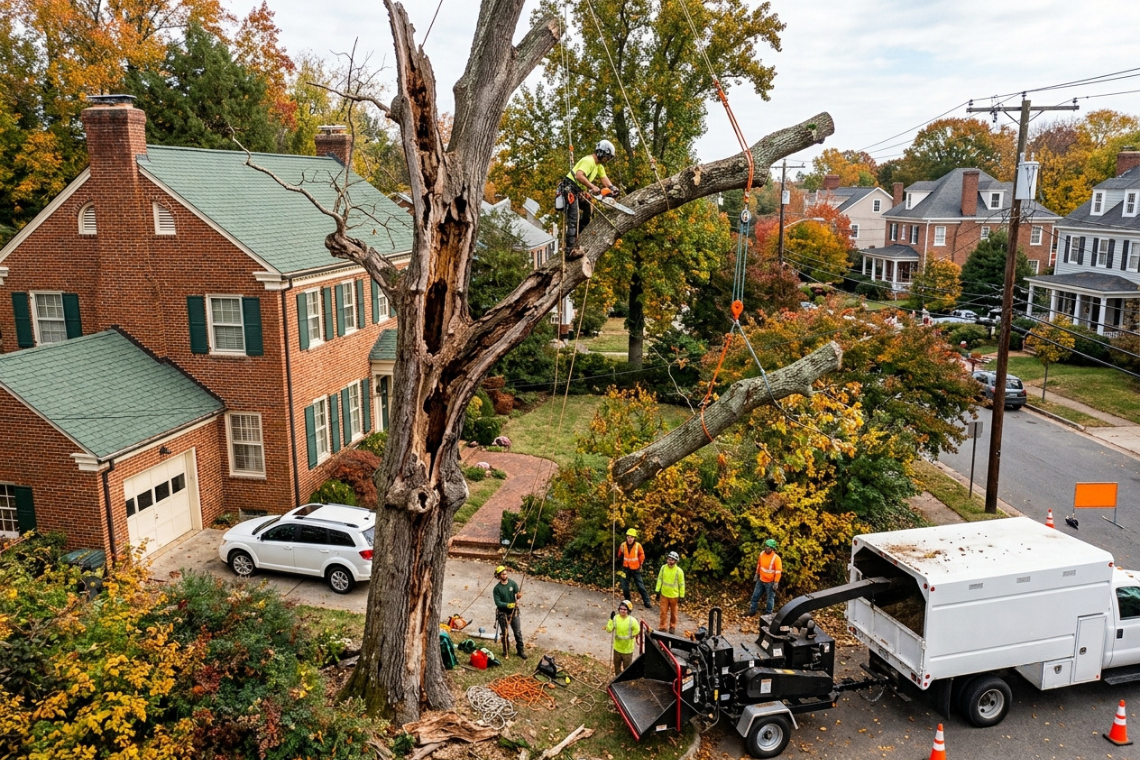
A hazardous tree is generally one that has a structural problem and could cause damage or injury if it fails. However, the condition of the tree is only part of the picture. What surrounds the tree also matters.
For example, a damaged tree standing in an open field may present less immediate risk than the same tree located beside a home or driveway.
Some common warning signs include:
- A significant or worsening lean
- Large cracks in the trunk or major branches
- Hollow areas or visible cavities
- Dead or hanging branches
- Root damage or exposed roots
- Extensive decay
- Large fungal growths or conks
- Significant canopy dieback
- Damage caused by storms or construction
A professional assessment considers these conditions along with the potential targets within the tree’s falling range.
Why Is Hazardous Tree Removal Important?
A hazardous tree can create risks that go beyond the appearance of your landscape. If the tree or one of its major limbs fails, the results can be costly and potentially dangerous.
Protecting Your Property
Large branches and trees can fall onto roofs, garages, vehicles, fences, sheds, and other structures. Even a single heavy limb can cause significant damage when it falls from a height.
Removing a hazardous tree before failure can help reduce the possibility of unexpected property damage.
Reducing Safety Risks
People walking through a yard, children playing outside, and anyone working near the tree could be exposed to falling branches.
When a tree has obvious structural problems, leaving it unchecked can create an avoidable safety concern.
Protecting Power Lines and Utilities
Trees growing near utility lines require particular caution. A falling tree or branch can damage power infrastructure and create dangerous conditions around downed lines.
Homeowners should never attempt to remove branches that are tangled with or close to energized power lines themselves. These situations require appropriate professional or utility assistance.
Avoiding Problems for Nearby Properties
A tree does not necessarily have to fall directly onto your home to cause a problem. If it is close to a neighbouring property, driveway, sidewalk, or shared boundary, a failure could affect other people and their property as well.
This is another reason why identifying hazardous trees early is important.
Common Hazardous Tree Situations in Richmond
Richmond properties can have a wide range of mature trees, and several conditions may increase the risk of tree failure.
Storm-Damaged Trees
Strong winds and severe weather can split trunks, break large limbs, or weaken branches. A tree may look stable after a storm while still having hidden structural damage.
Storm-damaged trees should be inspected carefully, particularly when large branches have been lost or the trunk has developed cracks.
Dead Trees Near Structures
A dead tree standing near a house, garage, driveway, or fence can become increasingly concerning as its wood deteriorates.
Dead branches may fall without much warning, while a weakened trunk can eventually fail under wind or other environmental stress.
Trees With Root Damage
Roots provide essential support for a tree. Construction, soil disturbance, erosion, drainage changes, or other site conditions can damage the root system.
When root stability is compromised, the entire tree may become more vulnerable to falling.
Trees With Internal Decay
Decay is not always visible from the outside. Large cavities, fungal growth, soft wood, or other signs may indicate that a tree has internal problems.
A professional assessment can help determine whether the tree can be managed safely or whether removal should be considered.
Increasingly Leaning Trees
Not every leaning tree is automatically hazardous. Some trees naturally grow at an angle and remain stable for years.
However, a lean that has recently developed or is becoming more noticeable can indicate a structural or root-related problem that deserves attention.
How Are Hazardous Trees Assessed?
Professional tree assessments generally look at several factors rather than relying on one visible warning sign.
An inspection may consider:
- The condition of the trunk and major branches
- Visible cracks, cavities, and decay
- Root flare and surrounding soil conditions
- The tree’s overall lean and stability
- Deadwood and canopy condition
- Recent storm or construction damage
- Nearby buildings, vehicles, roads, and walkways
- The potential direction and consequences of failure
After evaluating these factors, a tree professional may recommend removal, selective pruning, additional monitoring, or another appropriate course of action.
Why Waiting Can Increase the Risk
A hazardous tree does not necessarily become safer by being left alone.
Decay can continue to progress, damaged branches can weaken further, and root problems may become more serious over time. Additional storms or strong winds can also turn an existing concern into an emergency.
This is why homeowners should avoid waiting for a hazardous tree to actually fall before taking action.
Routine tree removal may sometimes be planned around landscaping or property improvements. Hazardous tree removal is different because the condition of the tree may create a more immediate safety concern.
What Should You Do If You Suspect a Hazardous Tree?
If you notice signs that a tree may be unsafe, take a cautious approach.
First, keep children, pets, and vehicles away from the area where the tree or branches could potentially fall. Avoid climbing the tree, cutting large branches, or attempting removal yourself.
Next, arrange for a professional tree assessment. This can help determine whether the tree presents a significant risk and whether pruning, monitoring, or removal is the appropriate solution.
It is also better to address a known concern before the next major storm rather than waiting until branches have already fallen or the tree has become an emergency.
Conclusion
Hazardous trees should not be treated as a simple landscaping issue. Cracks, decay, root damage, dead branches, storm damage, and changing lean can all indicate potential problems that deserve attention.
If you are unsure about a tree on your property, getting it professionally assessed can help you understand the level of risk and the appropriate next step. For homeowners looking for professional tree care in Richmond, DCS Tree Services provides hazardous tree assessment and removal services throughout Richmond, VA and the surrounding areas.
Taking action before a hazardous tree fails can help protect your property and the people around it.
FAQs
What makes a tree hazardous?
A tree may be considered hazardous when structural problems such as decay, cracks, root damage, or severe leaning create a risk of failure. Nearby homes, vehicles, power lines, and walkways can increase the potential consequences.
When should I consider hazardous tree removal Richmond, VA?
If a tree has major cracks, extensive decay, serious root damage, significant deadwood, or a worsening lean, a professional assessment should be considered. Prompt evaluation can help determine whether removal is necessary.
Can a hazardous tree be saved with pruning?
Sometimes, yes. If the risk is limited to certain branches, professional pruning may reduce the hazard, but trees with serious trunk or root problems may require removal.
Is a dead tree always considered hazardous?
Not necessarily. Its location, condition, size, and potential targets all matter. However, a dead tree near a home, driveway, walkway, or other occupied area deserves professional attention.
Why is professional tree removal safer?
Large or damaged trees can behave unpredictably during removal. Professional tree crews have the equipment and experience needed to assess hazards and plan removal while reducing risks to people and nearby property.