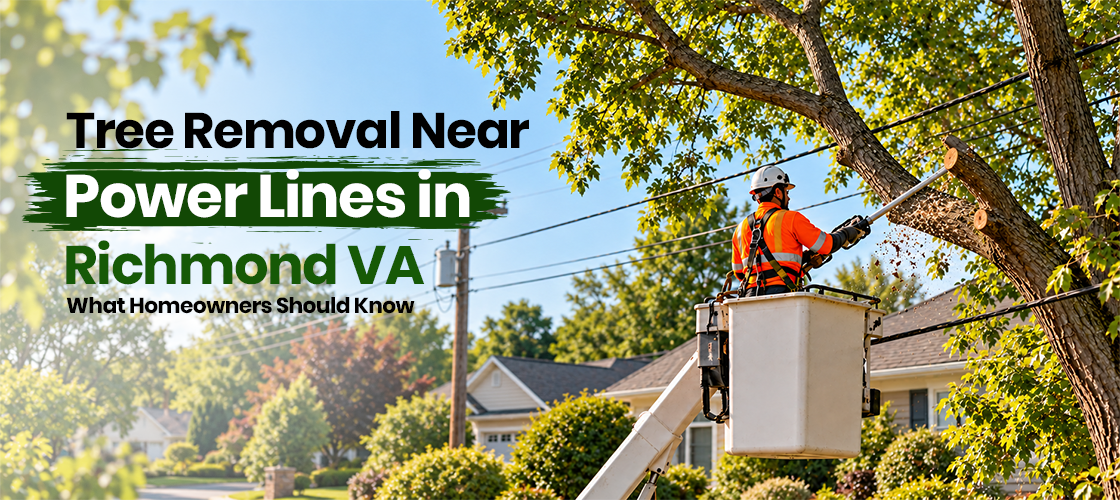
A tree growing close to overhead power lines can create a serious safety concern, especially when branches are touching the lines or the tree is damaged and leaning toward them. What may look like a simple trimming or removal job can become much more complicated when electrical lines are involved.
For Richmond, VA homeowners, understanding who is responsible for the tree, when to contact the utility company, and why professional removal matters can help prevent dangerous situations.
Removing a tree in an open yard is very different from working around overhead electrical lines. A falling branch, ladder, chainsaw, or piece of equipment can come into contact with a line and create a serious electrical hazard.
Several factors make these projects more complicated:
This is why tree removal near power lines Richmond homeowners need should be assessed before any cutting begins.
One of the first questions homeowners often have is whether they should contact a tree service or their electric utility.
The answer depends on where the tree is located and whether it is interfering with utility equipment.
If branches or a tree are directly touching power lines, homeowners should contact the utility provider before attempting any work. Utility companies have vegetation-management procedures for trees that interfere with their electrical infrastructure.
This is especially important when a tree has fallen onto a line, branches are actively contacting wires, or there are visible signs of electrical activity.
A private tree service may be appropriate when a tree is located on your property and needs trimming or removal but is not being handled directly by the utility company.
For example, a homeowner may need professional assistance when:
When you’re uncertain about who should handle the situation, contact the utility company first if the line itself is involved, and then arrange a professional tree assessment when appropriate.
Some situations should not wait for routine tree maintenance.
Contact the appropriate utility provider and keep people away from the area if you notice:
Do not approach, touch, or attempt to move a tree or branch that may be in contact with an energized line.
If a storm has damaged a tree but the electrical lines are not involved, professional storm damage tree removal Richmond, VA may still be necessary to safely assess and remove the damaged tree.
Professional tree removal near electrical lines requires planning before the first cut is made. The exact process depends on the tree, its location, the surrounding property, and the utility infrastructure.
The first step is assessing the tree’s size, condition, lean, branch structure, and proximity to power lines.
The crew also considers nearby roofs, fences, vehicles, landscaping, and other structures that could be affected during removal.
If the tree is directly interfering with electrical infrastructure, the utility company may need to be involved before work can safely proceed.
Homeowners should never assume that a line is safe simply because it appears inactive.
Trees near power lines often cannot be safely felled in one piece. Instead, branches and trunk sections may need to be removed gradually and lowered under controlled conditions.
This approach helps reduce the risk of uncontrolled branches or sections of trunk coming into contact with electrical lines or nearby property.
After the tree has been safely removed, the remaining branches and trunk sections can be processed and cleared from the property.
Depending on the project, homeowners may also need stump grinding after removal. DCS Tree Service provides stump grinding in Richmond VA for homeowners who want the remaining stump removed after a tree has been taken down.
Not every tree growing near an overhead line needs to be removed. In some situations, appropriate maintenance may help manage branches and maintain clearance.
Regular utility line tree trimming Richmond VA homeowners arrange can help address problematic growth before branches become a larger concern.
Ongoing maintenance may include:
However, homeowners should not attempt to create clearance around electrical lines themselves. Any work involving power lines should be handled by the appropriate utility professionals or qualified tree-care professionals.
Working around power lines is not a suitable DIY project.
Do not use a ladder, pole saw, chainsaw, or other equipment to cut branches that are touching or close to electrical lines. A line does not necessarily need to be visibly touched for an electrical hazard to occur.
You should also avoid attempting to pull down a fallen branch that may be connected to or resting against a power line.
Instead, keep children, pets, and other people away from the area and contact the appropriate utility provider or qualified professional.
Once a hazardous or unwanted tree has been removed, the stump may still remain in the yard.
A leftover stump can interfere with landscaping, mowing, construction, or future planting. It can also become more difficult to deal with as surrounding vegetation grows.
If stump removal is part of your project, stump grinding services can help clear the remaining portion below the surface and make the area easier to use.
For larger properties where several trees, stumps, brush, or other vegetation need to be cleared, property lot cleanups may also be relevant.
Planning ahead can reduce the likelihood of future conflicts between trees and overhead utilities.
Homeowners can:
The best solution depends on the tree’s location, species, condition, and proximity to the lines.
Trees growing near electrical lines require a different approach from standard tree removal. The combination of electrical hazards, limited working space, utility coordination, and controlled cutting makes professional assessment especially important.
If a tree is touching a power line or has fallen onto one, stay away from the area and contact the appropriate utility provider. For trees on your property that require professional assessment, trimming, or removal, a qualified tree service can help determine the safest approach.
DCS Tree Service provides professional tree care throughout Richmond, VA and the Greater Richmond area, including tree removal, trimming, storm-damaged tree services, stump grinding, and property cleanup.
For tree removal or an assessment of a tree near your property, call 804-334-8948.
If a tree or branch is touching an electrical line, contact your utility provider first and keep everyone away from the area. The utility company can determine what action is required before other tree work takes place.
No. Homeowners should not attempt to trim branches that are touching or close to electrical lines. The work can create serious electrical and fall hazards and should be handled by the appropriate utility or qualified tree-care professionals.
Not necessarily. Some trees may only require appropriate trimming or ongoing monitoring. The right approach depends on the tree’s condition, growth pattern, location, and relationship to the utility infrastructure.
There is no single schedule that applies to every tree. Fast-growing trees and trees located close to utility lines may require more frequent monitoring. Inspecting trees after storms is also important.
After safe removal, the remaining debris can be cleared from the property. If a stump remains, homeowners can consider professional stump grinding to remove the visible stump and prepare the area for future landscaping.