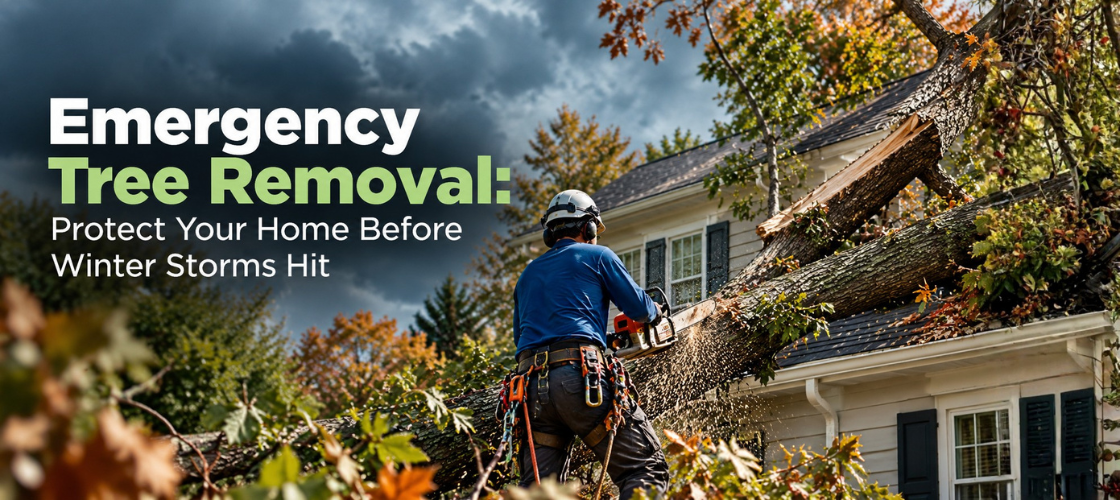
Winter storms can create serious risks for homeowners, especially when large trees or overhanging branches are close to the roof. Strong winds, heavy rain, ice, and snow can weaken tree limbs, damage branches, and cause unstable trees to fall unexpectedly. What may look like a harmless tree during mild weather can become a potential hazard when severe winter conditions arrive.
Emergency tree removal is an important service for homeowners dealing with dangerous, damaged, or unstable trees that threaten their property. Taking action before winter storms hit can help reduce the risk of roof damage, protect outdoor spaces, and address potential concerns before homeowners insurance policies come up for renewal.
Understanding when a tree needs immediate attention can help you make safer decisions and prepare your property for the colder months.
Winter weather can put additional stress on trees, particularly those with weak branches, damaged trunks, or compromised root systems. Strong winds can cause large limbs to break, while ice accumulation can add extra weight to branches and increase the chance of failure.
Trees growing close to homes, garages, driveways, and other structures may pose a greater risk when their branches extend over roofs or hang above frequently used areas.
Emergency tree removal may be necessary when a tree is leaning dangerously, has suffered significant storm damage, or shows signs that it could fall. In other situations, professional tree trimming or the removal of specific hazardous branches may be enough to reduce the risk.
Addressing these issues before severe weather arrives can help homeowners avoid unexpected damage and costly emergency repairs.
Overhanging branches are a common concern for homeowners preparing for winter. Even when branches appear healthy, their proximity to the roof can create problems during strong winds or heavy storms.
Here are some potential risks to consider:
If a large tree hangs directly over your roof, consider having it inspected by a qualified tree care professional before winter weather becomes severe. Depending on the tree’s condition and location, strategic pruning or complete removal may be recommended.
Homeowners insurance renewal is another important consideration during the winter preparation season. Some insurance companies may identify overhanging branches, damaged trees, or large trees close to a house as potential property risks during an inspection.
If an insurer identifies a concern, it may request that the homeowner address the issue before renewing or continuing coverage. Depending on the insurer, policy terms, and circumstances, this could involve trimming branches, removing a hazardous tree, or providing evidence that recommended work has been completed.
However, having a large tree near your house does not automatically mean your homeowners insurance will be denied or not renewed. Insurance requirements vary by provider, location, and individual policy.
To avoid surprises, homeowners should review any inspection notices or renewal requirements carefully. If the insurer raises concerns about trees near the roof, contact the company to understand exactly what work is required and the deadline for completing it.
Professional tree removal or trimming may help address identified hazards and demonstrate that appropriate steps have been taken to maintain the property.
Not every tree near a home needs to be removed. However, certain warning signs indicate that professional assessment may be necessary, particularly before winter storms.
A tree that has recently developed a noticeable lean may have root damage or unstable soil around its base. If the ground is lifting or cracking near the roots, the tree could be at risk of falling.
Broken limbs that remain attached to a tree can fall unexpectedly. Branches suspended over a roof, walkway, driveway, or entrance should be assessed promptly.
Large cracks, deep cavities, significant decay, or splitting in the trunk may indicate structural weakness. A qualified arborist can determine whether the tree can be managed safely or needs removal.
High winds and heavy precipitation can leave trees partially uprooted, split, or dangerously unstable. Storm-damaged trees near homes may require urgent professional attention.
Branches resting on or repeatedly rubbing against the roof should be evaluated. Pruning may resolve the issue, but damaged or unstable trees could require more extensive work.
If a tree is actively falling, has contacted a power line, or appears likely to collapse, keep people away from the area and contact the appropriate emergency or utility service. Never attempt to cut or move a dangerously unstable tree yourself.
Understanding the difference between emergency tree removal and preventive tree trimming can help you choose the right service.
Emergency tree removal is generally required when a tree has fallen, suffered major structural damage, or presents an immediate danger to people or property.
Preventive tree trimming focuses on removing selected branches, reducing interference with structures, and addressing potential hazards before they become emergencies.
For example, if a healthy tree has a few branches extending over the roof, selective trimming may be sufficient. If the tree has severe trunk damage or is leaning dangerously toward the house, removal may be the safer option.
A professional assessment helps determine the appropriate solution based on the tree’s health, stability, location, and surrounding conditions.
Preparing your property before winter weather arrives can help reduce tree-related risks. A few practical steps can make a difference.
Avoid climbing trees or using a chainsaw to remove large branches yourself. Tree work near roofs and electrical lines can be especially dangerous and should be handled by trained professionals.
Removing a large tree is not a simple task, particularly when it is close to a house or has been weakened by a storm. Incorrect cutting techniques can cause branches or sections of the trunk to fall unpredictably, increasing the risk of injury and property damage.
Professional tree removal services have the training, equipment, and experience needed to assess hazardous trees and determine the safest approach.
Depending on the situation, a professional team may provide emergency tree removal, hazardous limb removal, storm-damaged tree removal, or tree trimming near roofs and other structures.
Hiring an experienced service can also help homeowners understand whether a tree needs complete removal or whether targeted pruning will address the concern. If insurance-related work is required, ask for a written estimate and documentation of the completed service when appropriate.
For urgent situations, contact a qualified tree removal company as soon as it is safe to do so. If a storm is approaching, avoid waiting until high winds begin to address an already identified hazard.
Winter storms can turn damaged trees and overhanging branches into serious property hazards. Taking time to inspect the trees around your home can help you identify problems before they lead to roof damage, blocked access, or emergency repairs.
Emergency tree removal is essential when a tree presents an immediate danger, while preventive trimming may be sufficient for branches that simply need to be cleared away from the roof. Homeowners should also pay attention to insurance renewal notices and address any specific tree-related requirements communicated by their provider.
Do not wait for a winter storm to reveal a problem that could have been identified earlier. If you notice damaged limbs, unstable trees, or branches threatening your roof, contact a professional tree care service for an assessment. Taking action at the right time can help you prepare your property for winter and reduce avoidable risks to your home.
Call for emergency tree removal when a tree has fallen, is severely damaged, or presents an immediate risk to your home, people, or surrounding property.
Have overhanging branches inspected before winter storms. A professional can determine whether trimming or tree removal is necessary to reduce potential damage.
Some insurers may require hazardous trees or overhanging branches to be addressed before renewal. Requirements vary, so check directly with your insurance provider.
No. The need depends on the extent of the damage and whether a tree poses a safety risk. A professional assessment can help determine the appropriate action.
Trimming may be sufficient when only certain branches pose a concern. Complete removal may be recommended when a tree is severely damaged, unstable, or cannot be managed safely.