Fallen Tree Removal Richmond, VA: First Steps for Homeowners
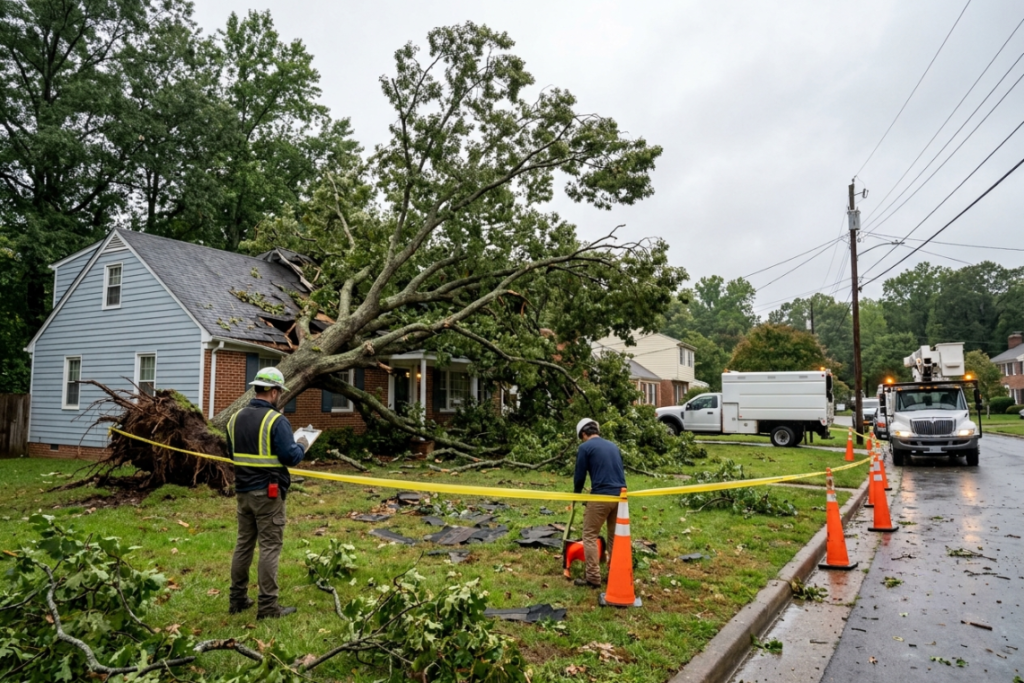
A fallen tree can turn into a serious property problem within minutes, especially when it lands on a roof, driveway, vehicle, fence, or near power lines. After a storm or strong winds, homeowners may be unsure whether they should start cutting branches, move debris, or call for professional help.
The safest approach is to stay clear of unstable trees, assess the situation from a safe distance, and determine whether professional assistance is needed. Understanding the right first steps can help prevent injuries and additional property damage.
What Should You Do First After a Tree Falls?
1. Keep People and Pets Away
Do not allow children or pets near the fallen tree. Large trunks, hanging branches, and uprooted trees can shift unexpectedly. A tree that appears stable may still have tension in its branches or roots.
Keep a safe distance until the area has been properly assessed.
2. Check for Immediate Hazards
From a safe location, look for obvious dangers such as:
- Damaged roofs or walls
- Blocked driveways
- Broken utility lines
- Hanging or partially detached branches
- Uprooted trees leaning against structures
- Damaged vehicles or fences
If the tree is touching a power line, do not approach it or attempt to move it.
3. Contact the Appropriate Utility Provider if Needed
Downed electrical lines create a serious electrocution risk. If you see a damaged or fallen power line, keep everyone away from the area and contact the utility provider or emergency services as appropriate.
Never assume a power line is safe simply because it appears inactive.
How to Assess Fallen Tree Damage Safely
Homeowners can document visible damage from a safe location using photographs or videos. Check whether the tree has affected your home, garage, vehicle, fence, landscaping, or other structures.
Avoid climbing onto the tree or cutting large limbs yourself. Fallen tree cleanup can become dangerous when branches are under pressure or the trunk is supporting part of a structure.
If the damage is extensive, a professional assessment can help determine the safest removal method.
When Do You Need Emergency Tree Removal?
Some situations require faster professional attention. Emergency tree removal Richmond VA may be appropriate when a fallen or severely damaged tree:
- Is resting on a house or other structure
- Blocks an important access route
- Has large unstable branches
- Is creating an immediate safety concern
- Is positioned near electrical infrastructure
- Could shift and cause further property damage
Professional crews have specialised equipment and experience for handling unstable trees and difficult removal conditions.
What to Know About Storm-Damaged Trees
Severe weather can break limbs, split trunks, and weaken root systems. Even when a tree remains standing, internal damage may make it unstable.
This is why storm damage tree removal Richmond VA services can be important after severe weather. A tree that looks manageable from the ground may contain hidden cracks or damaged roots.
Homeowners should avoid assuming that a partially fallen tree is safe to cut. A professional can evaluate the structure and determine how the tree should be safely dismantled.
What to Know About Storm-Damaged Trees
Severe weather can break large limbs, split trunks, uproot trees, and weaken their root systems. Even when a tree remains standing, storm-related damage may leave it unstable and more likely to fall later. This can be especially concerning when the tree is close to a home, driveway, fence, or other structure.
If a tree has suffered significant damage, homeowners should avoid handling it themselves. DCS Tree Service can help assess situations where professional attention is needed. For trees affected by severe weather, homeowners can also learn more about storm-damaged tree removal and the potential hazards involved.
A tree that looks manageable from the ground may have hidden cracks, split limbs, or damaged roots. These problems can make cutting unpredictable and increase the risk of injury or additional property damage. When the damage is extensive, or the tree has become unstable, professional storm damage tree removal Richmond, VA services can provide a safer way to address the situation.
Homeowners should never assume that a partially fallen or damaged tree is safe simply because it is no longer moving. A qualified tree professional can evaluate its condition, identify potential hazards, and determine the safest way to dismantle and remove it.
Should You Remove a Fallen Tree Yourself?
Small branches and lightweight yard debris may be manageable with appropriate precautions. However, large trunks and structurally damaged trees are a different matter.
DIY removal becomes particularly risky when:
- The tree is large or uprooted
- Branches are suspended above the ground
- The trunk is under tension
- The tree has fallen onto a structure
- Power lines are nearby
- Specialized cutting equipment is required
In these circumstances, professional tree removal Richmond VA services are generally the safer choice.
What Happens During Professional Tree Removal?
A professional removal typically begins with a site assessment. The crew identifies hazards, evaluates the tree’s position, and develops a removal plan.
Depending on the situation, the tree may be carefully sectioned into smaller pieces before the branches and trunk are removed. Once the main tree is cleared, the remaining tree debris can be collected and the affected area cleaned.
If a stump remains, homeowners may also consider stump grinding to make the space easier to maintain or prepare for future landscaping.
What About Insurance After a Tree Falls?
Before major cleanup, homeowners should photograph visible damage when it is safe to do so. Keep records of damage to structures, vehicles, fences, and other property.
Insurance policies differ, so contact your insurance provider to understand whether the incident and resulting damage are covered. Avoid putting yourself at risk simply to collect photographs.
How Can Homeowners Prevent Future Tree Problems?
Regular tree care can help identify potential hazards before they become emergencies. Watch for dead branches, visible decay, cracks, leaning trees, and exposed or damaged roots.
Professional inspections and appropriate pruning can also help maintain trees around homes and reduce the likelihood of serious problems during severe weather.
When Should You Call a Professional?
If a tree is large, unstable, damaged by a storm, blocking access, or affecting a structure, professional assistance is the safer option. The same applies when removal involves difficult access or hazardous surroundings.
For homeowners who need professional help assessing and clearing a fallen tree, DCS Tree Services can provide local tree care assistance through fallen tree removal in Richmond, VA.
Conclusion
A fallen tree should be treated as a potential safety hazard, not simply as yard debris. Start by keeping people away, checking for dangerous conditions from a safe distance, documenting visible damage, and contacting professionals when the situation is beyond basic cleanup.
Taking the right steps first can reduce unnecessary risks and help protect your property while the tree is safely removed.
FAQs
1. What should I do immediately after a tree falls?
Keep people and pets away, check for power lines and structural damage from a safe distance, and contact the appropriate professionals if the tree presents a hazard.
2. Can I remove a large fallen tree myself?
Large, uprooted, or structurally damaged trees can be unpredictable. Professional equipment and experience are recommended, particularly when the tree is near buildings or utility lines.
3. What should I do if a fallen tree is touching a power line?
Stay away from the tree and any nearby wires. Contact the utility provider or emergency services as appropriate. Never attempt to move the tree yourself.
4. Does storm damage always mean a tree needs to be removed?
Not necessarily. Some damaged trees may be safely managed, while others may have structural or root damage that makes removal necessary. A professional assessment can help determine the appropriate option.
5. Should the stump be removed after a fallen tree?
Stump removal or stump grinding may be useful if the remaining stump interferes with landscaping, lawn maintenance, construction, or future planting.