How to Handle Trees Damaged by Severe Storms in Richmond, VA
Severe storms can leave behind more than fallen branches and scattered debris. High winds, heavy rain, ice, and tropical weather can weaken trees, damage their roots, and create hazards that may not be obvious at first glance. For Richmond, VA property owners, knowing what to look for after a storm can help prevent further damage and protect people, homes, and surrounding property.
Not every damaged tree needs removal. Some trees can recover with proper pruning and care, while others may have serious structural problems that make removal the safest option. The first step is understanding how to assess the damage without putting yourself at risk.
Start by Assessing the Tree From a Safe Distance
After a severe storm, avoid immediately walking underneath or around a damaged tree. Take a few moments to look at the area from a safe location and identify obvious hazards.
Pay particular attention to:
- Downed power lines: Never approach a tree or branch that is touching a power line. Treat the area as dangerous until the utility company confirms it is safe.
- Hanging branches: Large broken limbs can remain suspended in the canopy and fall without warning.
- Leaning trees: A tree that has suddenly started leaning toward a house, vehicle, road, or other structure may be under significant stress.
- Lifted roots: A raised or cracked root plate can indicate that the tree has become unstable.
- Broken trunks: Large cracks, splits, or snapped sections can compromise the tree’s structural strength.
If you notice any of these conditions, keep people and pets away from the area. Storm-damaged trees are often unpredictable, and attempting to cut large limbs yourself can increase the risk of injury or property damage.
Understand the Different Types of Storm Damage
Storm damage can range from a few broken branches to complete tree failure. Understanding the level of damage can help determine whether pruning, monitoring, or removal may be appropriate.
1. Minor Limb Damage
Small branches may snap during high winds without causing significant damage to the trunk or larger limbs. If the tree remains structurally sound, professional pruning and cleanup may be enough.
Removing broken branches can also help prevent additional damage and allow the tree to redirect energy toward healthy growth.
2. Major Limb Loss
Large limbs can break away from the trunk during strong winds or when heavy ice accumulates on branches. This can leave large wounds and make the tree’s canopy uneven.
Professional pruning may help restore the tree’s structure, but extensive damage should be assessed carefully before deciding that the tree can remain.
3. Trunk Cracks and Splits
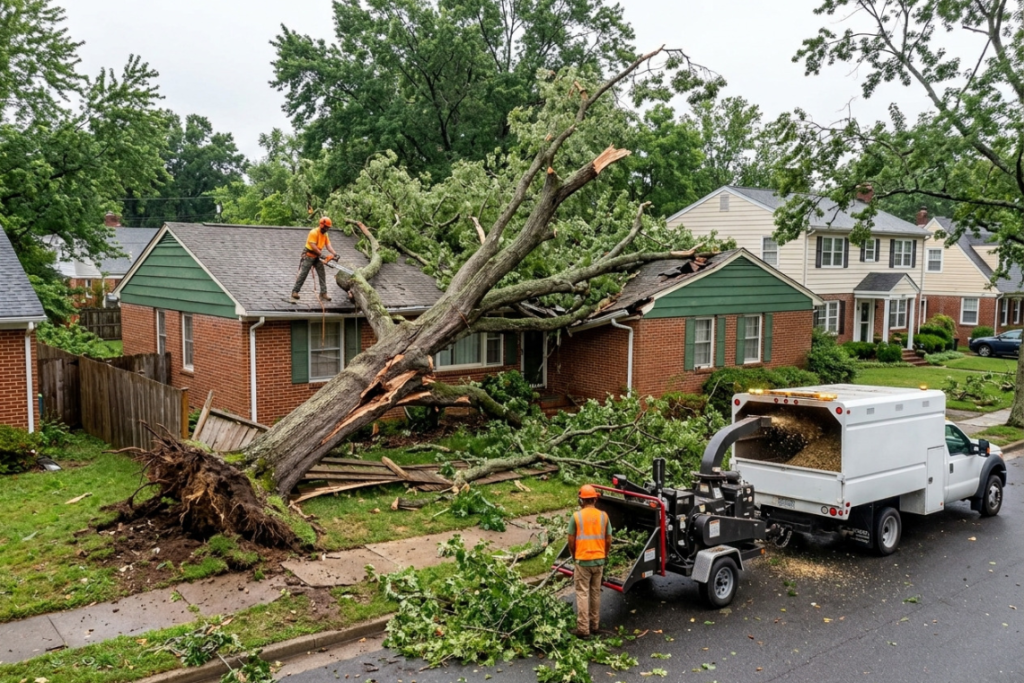
Damage to the main trunk is more serious than isolated branch breakage. Deep cracks, splits, or a partially broken trunk can significantly affect the tree’s stability.
When structural damage is severe, storm damage tree removal Richmond VA services may be necessary to reduce the risk of the tree falling onto people, buildings, vehicles, or other property.
4. Uprooted or Partially Uprooted Trees
An uprooted tree can be extremely unstable, even if some of its roots remain in the soil. Wind can continue to shift the tree or cause it to fall after the initial storm.
A lifted root plate, exposed roots, or significant soil movement around the base should be treated as a serious warning sign. Stay clear and have the tree professionally evaluated.
Watch for Storm Damage That Is Not Immediately Visible
Not all storm damage can be seen right after the weather clears. A tree may appear stable while internal cracks, root damage, or weakened branches remain.
Over the following days or weeks, watch for signs such as:
- Sudden or unusual leaf loss
- New leaning
- Cracks developing around the trunk
- Soil heaving near the tree base
- New gaps between roots and soil
- Cracking or unusual movement during windy conditions
- Dead or declining branches appearing in the canopy
A tree that looks fine immediately after a storm may still have underlying structural problems. Monitoring the tree after severe weather can help identify issues before they become more dangerous. If damaged branches or fallen trees require professional attention, storm damage tree cleanup Richmond services can help address potential hazards safely. DCS Tree Services can assess storm-damaged trees and determine whether cleanup, pruning, or removal is the appropriate next step.
Should You Save, Monitor, or Remove the Tree?
The decision to remove a storm-damaged tree should depend on its overall condition, the type of damage, its location, and the potential risk it presents.
Save or Prune
A healthy tree with limited branch damage may often be preserved through professional pruning. Younger and structurally sound trees can sometimes recover well when damaged limbs are properly removed.
Monitor
Some trees may not require immediate removal but should be monitored over time. A professional assessment can help determine whether the tree is likely to recover or whether additional problems could develop.
Remove
Removal may be appropriate when a tree has severe trunk damage, major root failure, extensive structural damage, or poses an immediate threat to people or property.
There is no single percentage or rule that determines whether every damaged tree should be removed. The decision should be based on the tree’s structural condition and the risks associated with leaving it in place.
Check Your Property for Other Storm Damage
Trees are often only one part of the problem after a severe storm. Broken branches and falling trees can affect several areas of a property.
After the immediate tree hazards have been identified, check for:
- Roof and gutter damage
- Broken fences
- Damaged sheds
- Deck or outdoor structure damage
- Blocked drainage areas
- Soil movement around trees
- Damaged landscaping and turf
Looking at the property as a whole can help you identify secondary problems that may otherwise be overlooked.
What to Do With Fallen Trees and Broken Branches
Once dangerous conditions have been addressed, the remaining cleanup can begin. Large fallen trees may need to be cut into manageable sections and removed from the property.
Broken branches should also be cleared from walkways, driveways, lawns, and other frequently used areas. If the tree has been removed completely, the remaining stump may also need to be addressed.
Stump grinding can help clear the remaining base and make the area easier to maintain or replant.
Prepare Remaining Trees for Future Storms
Storm recovery should not only focus on the damage that has already occurred. It is also an opportunity to identify weaknesses that could create problems during the next severe weather event.
Regular tree inspections and appropriate pruning can help identify dead branches, weak attachments, excessive growth, and other potential hazards.
Keeping trees properly maintained may reduce the likelihood of preventable branch failures and help maintain a healthier landscape over time.
Storm Response You Can Count On
Severe storms can leave Richmond properties with damaged branches, unstable trees, and unexpected cleanup challenges. Taking the time to assess the situation safely and understand the extent of the damage can help you make a more informed decision about pruning, monitoring, or removal.
For professional help with storm-damaged trees, DCS Tree Services provides storm damage assessment and tree removal services throughout Richmond, VA and the surrounding Greater Richmond area. Learn more through the DCS Tree Services website and get the support you need to address storm-related tree hazards safely.
Call 804-334-8948 for storm damage tree service.
FAQs
1. When should I consider storm damage tree removal Richmond VA services?
If a tree has major trunk cracks, severe root damage, significant structural failure, or is threatening a home or other property, professional removal may be necessary. An assessment can help determine the safest option.
2. Can a storm-damaged tree be saved instead of removed?
Yes, some trees can recover after storms, particularly when the damage is limited to smaller branches. Professional pruning and ongoing monitoring may be enough when the trunk and root system remain stable.
3. Is it safe to remove broken branches after a storm?
Small branches may be manageable in some situations, but large or suspended limbs can be extremely dangerous. Avoid working near power lines or unstable trees and leave hazardous cutting to trained professionals.
4. What are the signs of hidden storm damage in trees?
New leaning, soil movement, unusual leaf loss, trunk cracks, and movement during wind can indicate damage that was not immediately visible. These warning signs should be professionally evaluated.
5. How quickly should a storm-damaged tree be inspected?
Trees creating an immediate hazard should be addressed as soon as possible. If there is no immediate danger, a professional inspection can still help identify structural problems before they become more serious.