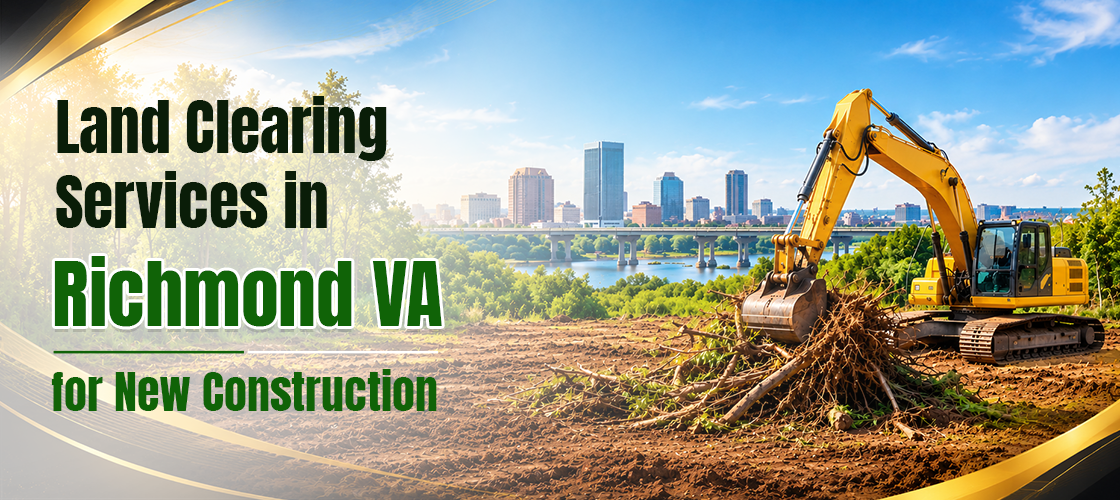
Land Clearing Services in Richmond VA for New Construction
Before a foundation is poured or grading equipment arrives, a construction site needs to be properly prepared. Trees, stumps, brush, overgrown vegetation, and debris can interfere with excavation, grading, access, and other stages of construction.
Professional land clearing Richmond VA services help prepare a property by removing unwanted vegetation and obstacles from the planned construction area. Depending on the site, this may include tree removal, stump grinding, brush clearing, debris removal, and preparation for the next phase of the project.
For property owners and builders, completing land clearing properly can make the construction process more organized and help reduce avoidable delays.
What Does Land Clearing Involve?
Land clearing is more than simply cutting down trees. The work required depends on the size of the property, vegetation density, construction plans, and condition of the site.
Typical land clearing services Richmond property owners may need include:
Tree Removal
Trees located within the building footprint, driveway, utility routes, or planned grading areas may need to be removed before construction begins.
A site assessment can also help identify trees outside the main construction area that could interfere with equipment access or other work. Trees that do not need to be removed should be identified early so they can be protected during construction.
For trees that require removal, proper planning is important, particularly when structures, utility lines, roads, or other obstacles are nearby.
Stump Grinding or Removal
Removing a tree does not necessarily mean the site is ready for construction. Remaining stumps and large roots can interfere with excavation and grading.
Depending on the construction plan, stumps may be ground below the surface or completely removed. Areas intended for foundations or other structural work may require more extensive removal than areas that will simply become landscaped space.
If you also need individual stumps addressed after tree removal, see our stump grinding service for more information.
Brush and Undergrowth Clearing
Overgrown brush, vines, saplings, and dense vegetation can make a property difficult to access and prevent crews from accurately assessing the ground.
Clearing this vegetation exposes the site and gives grading and excavation crews a cleaner working area.
Debris Removal and Cleanup
After trees and vegetation are cleared, the remaining wood, branches, brush, and other debris need to be handled appropriately.
Depending on the project, debris may be:
- Chipped on-site
- Hauled away
- Cut into usable firewood
- Managed according to the construction site’s requirements
Discussing debris handling before work begins helps avoid confusion once clearing is complete.
Why Land Clearing Should Happen Before Grading
Grading requires a workable site where equipment can move and operators can accurately shape the ground according to the construction plan.
Incomplete clearing can create problems for the grading crew, including:
- Equipment delays caused by remaining stumps or large roots
- Difficult access through dense vegetation
- Uneven areas caused by improperly removed stumps
- Additional work when trees or debris are discovered after grading begins
- Delays caused by having to bring another crew onto the site
Completing the construction site clearing Richmond phase before grading allows the next crew to begin with a more prepared work area.
Good coordination between the property owner, builder, land-clearing contractor, and grading crew can also help keep the project moving in the correct sequence.
Not Every Tree Has to Be Removed
Clearing a construction site does not necessarily mean removing every tree on the property.
Healthy, mature trees outside the construction footprint may provide shade, privacy, visual appeal, and other benefits. If you want to keep specific trees, identify them before clearing begins.
A preservation plan may include:
- Marking trees that should remain
- Keeping heavy equipment away from their root zones
- Establishing protective barriers
- Planning access routes around preserved trees
- Avoiding unnecessary excavation near their roots
Protecting trees during construction requires planning. Damage to roots, bark, or surrounding soil can affect a tree even when the trunk itself is left standing.
How Lot Clearing Can Prepare a Property for Construction
Every property is different, but lot clearing Richmond VA projects commonly involve several stages.
1. Site Assessment
The property is reviewed to understand the vegetation, trees, stumps, access points, and areas that need to be cleared.
2. Clearing Plan
The areas to be removed and any trees or features that should remain are identified.
3. Tree and Vegetation Removal
Trees, brush, vines, and other unwanted vegetation are removed from the designated work areas.
4. Stump and Root Removal
Remaining stumps are ground or removed based on the requirements of the construction plan.
5. Debris Cleanup
Wood, brush, and other cleared material are processed, chipped, hauled away, or otherwise handled according to the agreed scope of work.
6. Site Handover
Once clearing is complete, the property can be prepared for the next stage, such as grading, excavation, or other construction work.
Permits and Local Requirements
Land clearing requirements can vary depending on the property, project scope, location, environmental conditions, and local regulations.
Some construction sites may have additional considerations involving trees, drainage, wetlands, erosion control, utilities, or other site-specific requirements.
Before work begins, property owners and builders should confirm whether any permits, approvals, inspections, or site protections are required for their particular project.
If you are unsure about the requirements for your property, discuss them with the appropriate local authority and your construction or land-clearing contractor before scheduling the work.
How Long Does Land Clearing Take?
There is no single timeline for every property. A small residential lot with limited vegetation may be cleared relatively quickly, while a heavily wooded property can require considerably more time.
Factors that can affect the schedule include:
- Size of the property
- Number and size of trees
- Density of vegetation
- Number of stumps
- Terrain and ground conditions
- Equipment access
- Proximity to buildings or utility lines
- Amount of debris that needs to be removed
- Additional site preparation requirements
A site assessment is the best way to establish a realistic timeline for a specific property.
What Should You Tell Your Land Clearing Contractor?
Providing accurate information before work starts can help the contractor plan the project more effectively.
Consider providing:
- Property boundaries or site plans
- Construction plans, if available
- Areas that need to be cleared
- Trees you want to preserve
- Known utility locations
- Access points for equipment
- Your preferred debris removal method
- Any specific requirements from your builder or grading contractor
If your project also involves clearing an entire property or removing unwanted vegetation beyond the building footprint, professional property lot cleanups may be part of the overall preparation process.
Why Professional Land Clearing Matters for New Construction
Construction sites often involve multiple crews working in a specific sequence. When the initial clearing work is incomplete, it can create complications for the teams that follow.
Professional land clearing helps establish a defined work area and can make it easier for grading, excavation, and construction crews to access the property.
It is also important to approach tree removal carefully. Trees near structures, utility lines, roads, or other obstacles may require additional planning and controlled removal techniques.
For larger or more complicated projects, coordinating the clearing work with the builder and other contractors can help ensure that the site is prepared according to the construction schedule.
Land Clearing and Tree Removal in Richmond, VA
For new construction, land clearing often involves more than simply removing vegetation. Trees, stumps, brush, debris, access, and preservation requirements all need to be considered before the next phase of work begins.
DCS Tree Service provides land clearing services in Richmond, VA and the Greater Richmond area for property owners and construction projects. From removing unwanted trees and vegetation to clearing stumps and managing debris, proper site preparation can help create a cleaner starting point for grading and construction.
For additional information about removing trees from a construction property, explore our tree removal services.
If your project also requires selective trimming around structures or access areas, you can learn more about our tree cutting and trimming services.
Conclusion
Proper land preparation is an important early step in any new construction project. Clearing trees, stumps, brush, and debris before grading begins can give construction crews a more accessible and workable site.
A successful land clearing Richmond, VA project starts with understanding the construction plans, identifying what needs to be removed, protecting trees that should remain, and planning debris removal.
Whether you are preparing a residential lot or a larger property for construction, having the clearing work completed according to the project’s requirements can help the next stages move forward more efficiently.
DCS Tree Services provides land clearing and tree services throughout Richmond, VA 23226 and the Greater Richmond area. Contact the team to discuss your property and site-clearing requirements.
FAQs
1. How much does land clearing cost for a new construction site?
The cost depends on factors such as property size, vegetation density, number and size of trees, stumps, site accessibility, terrain, and debris removal requirements. A site assessment is generally needed to provide an accurate estimate.
2. Can I keep some trees during land clearing?
Yes. Trees that are outside the required construction area may be preserved if they can remain safely during the project. Identify trees you want to keep before clearing begins so equipment routes and work areas can be planned around them.
3. Do I need a permit for land clearing in Richmond, VA?
Requirements depend on the property, project scope, location, and applicable local regulations. Before starting work, confirm any required permits or approvals with the appropriate local authority or your construction professional.
4. What happens to trees and debris after land clearing?
Cleared material can be handled in several ways depending on the project. Wood and brush may be chipped, hauled away, or managed for other approved uses. Debris handling should be discussed with the contractor before work begins.
5. How long does it take to clear a construction lot?
The timeline varies according to lot size, vegetation, number of trees and stumps, terrain, equipment access, and the amount of cleanup required. A site assessment can provide a more realistic estimate for your property.