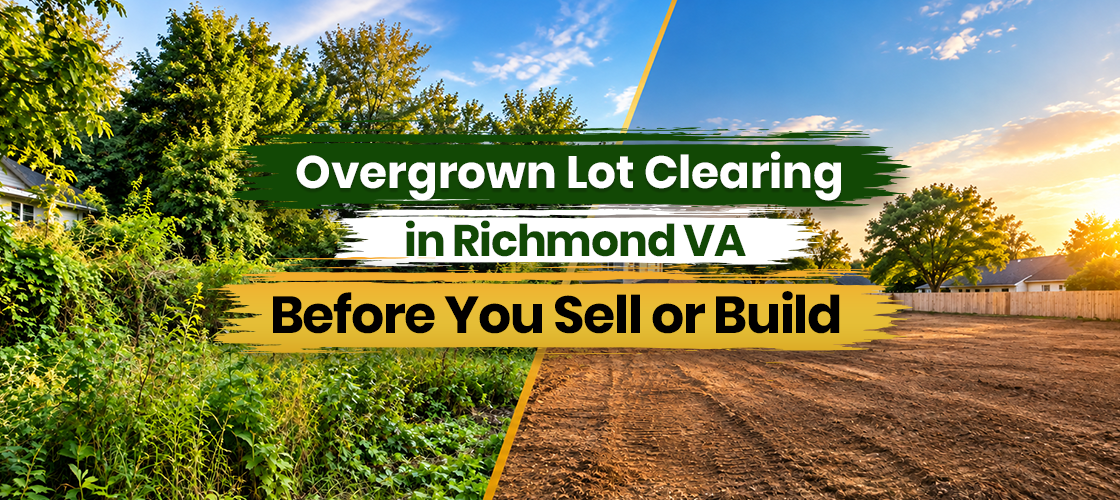
An unused or neglected property can become overgrown surprisingly quickly. Brush, vines, weeds, saplings, and volunteer trees can take over a lot after just a few seasons without regular maintenance. What may have started as a manageable property can eventually become difficult to access, inspect, sell, or prepare for construction.
If you are planning to sell a vacant property, build a new home, or simply reclaim an overgrown parcel, professional overgrown lot clearing Richmond services can make the land easier to assess and prepare for its next use.
Vacant properties naturally accumulate vegetation when they are not regularly maintained. Grass and weeds grow unchecked, vines spread into surrounding vegetation, and young trees can quickly establish themselves.
Over time, this growth can create several practical problems.
A heavily overgrown lot can make it difficult for potential buyers to see the property’s actual layout, access points, and usable space. Thick vegetation may also make the property appear harder to maintain than it actually is.
Clearing excessive growth can give buyers a clearer view of the land and help them understand what the property offers.
Dense vegetation can conceal issues that need attention before a sale or construction project. These may include:
A clearer property makes it easier to identify these conditions before they become larger problems.
Thick brush and unmanaged vegetation can provide shelter for rodents, insects, and other pests. During dry periods, accumulated vegetation and dead plant material can also increase the amount of combustible material on a property.
Regular maintenance and appropriate clearing can help keep an unused lot more manageable.
The exact scope of property clearing in Richmond, VA depends on the property’s size, vegetation, terrain, and intended use. A typical clearing project may involve several stages.
The first step is usually removing dense brush, vines, briars, weeds, and smaller unwanted growth. Clearing this vegetation improves visibility and provides better access to the property.
For properties with extensive undergrowth, professional brush clearing in Richmond, VA can make it easier to determine what needs to remain and what should be removed.
Once the heavy vegetation has been cleared, existing trees can be evaluated more effectively.
Healthy, desirable trees may be retained when they fit the property’s plans. Dead, damaged, hazardous, or unwanted trees may require removal.
For properties where individual trees need to be removed, DCS Tree Services also provides tree removal services.
Tree removal can leave stumps that interfere with future landscaping, grading, access, or construction. Depending on the property’s intended use, stump removal or grinding may therefore be part of the overall clearing plan.
If the lot contains multiple unwanted stumps, stump grinding Richmond VA can help prepare the area for its next stage.
Clearing can produce branches, logs, brush, leaves, and other vegetation debris. Depending on the project, materials may be chipped, removed from the property, or handled as part of the final cleanup.
A thorough cleanup leaves the property easier to inspect and ready for the next phase.
Clearing an overgrown property before putting it on the market can make the land easier for prospective buyers to evaluate.
Instead of looking through dense vegetation, buyers can get a better understanding of the property’s:
It can also make property photographs more useful because the land is easier to see.
However, not every property needs complete clearing before a sale. If the buyer is specifically purchasing the property for its wooded character, removing healthy mature trees may not be appropriate. The right level of clearing depends on the property’s condition and the seller’s goals.
Construction preparation generally requires more than simply cutting back visible brush.
Before construction begins, the property may need to be cleared to accommodate surveying, grading, equipment access, the building footprint, and other site requirements.
Depending on the project, this can involve:
If hazardous or storm-damaged trees are present, they should be addressed as part of the site preparation process. DCS Tree Services provides hazardous tree removal Richmond VA for trees that present safety or access concerns.
The clearing plan should ultimately match the construction plans rather than simply removing everything from the property.
There is no single clearing method that works for every property. The appropriate scope depends largely on what you intend to do with the land.
A more open property can make it easier for buyers to understand the land’s condition and potential. Clearing the areas that are heavily overgrown may be sufficient, while some wooded sections can remain.
Construction projects usually require a more defined clearing area. The building footprint, driveway, equipment access, grading requirements, and other site considerations should guide the clearing work.
A full clearing may not be necessary if you are not planning to sell or build immediately. Selective brush removal, vegetation maintenance, and removal of hazardous trees may be enough to keep the property manageable.
The process varies depending on the property’s size and condition, but a typical project begins with an assessment of the site.
The clearing team identifies the vegetation, trees, stumps, debris, and areas that need attention. Equipment and removal methods are then selected based on the site’s conditions.
During the work, brush and unwanted vegetation are removed first where necessary. Trees and stumps are addressed according to the project scope, followed by debris processing or removal.
The final stage focuses on cleanup so the property is left more accessible and easier to inspect.
For larger or particularly dense properties, the project may require heavier clearing equipment and additional time.
Timing depends on what you plan to do with the property.
If you are selling, clearing before photography, showings, and property inspections can give prospective buyers a clearer view of the land.
If you are building, clearing should be coordinated with the overall construction and site-preparation schedule.
For an unused property, addressing excessive vegetation before it becomes significantly denser can make future maintenance easier.
If your property also requires broader cleanup after vegetation removal, property and lot clean-up services can be part of the overall project.
Overgrown properties can contain more than just weeds and brush. Hidden stumps, unstable trees, buried debris, uneven ground, and dense vegetation can make clearing more complicated than it first appears.
Professional clearing allows the project to be approached according to the property’s condition and intended use. It also helps separate vegetation that should be removed from trees or other features that may be worth preserving.
For Richmond-area property owners, the goal is not necessarily to remove everything. It is to create a property that is cleaner, more accessible, and better suited to whatever comes next.
An overgrown lot can make a property difficult to access, inspect, maintain, sell, or prepare for construction. Removing dense brush, unwanted trees, stumps, and accumulated debris can reveal the property’s actual condition and create a more usable site.
Whether you need overgrown lot clearing Richmond for a property sale, construction project, or general land maintenance, the clearing plan should be based on the property’s condition and your long-term goals.
DCS Tree Services provides lot and property clearing throughout Richmond, VA and the surrounding Greater Richmond area. For an assessment of your property clearing needs, call 804-334-8948.
The timeframe depends on the size of the property, vegetation density, number of trees and stumps, terrain, and amount of debris. A small residential lot may take considerably less time than a large, heavily overgrown parcel.
Clearing can make a property easier for buyers to access and evaluate. Whether it increases the property’s market value depends on factors such as location, condition, zoning, development potential, and the extent of the clearing.
Not necessarily. The appropriate level of clearing depends on the property’s condition and your selling strategy. Some properties may benefit from selective clearing, while heavily overgrown lots may require more extensive work to make the land visible and accessible.
Removed trees and branches can generally be chipped, processed, or hauled away depending on the project requirements and site conditions. The preferred debris-handling method can be discussed as part of the clearing plan.
Yes. Stump grinding can be included when existing stumps interfere with access, landscaping, grading, or future construction. The need for stump work depends on the property’s intended use and the condition of the site.