Stump Grinding Richmond, VA: Costs & Yard Recovery
Removing a tree can really change how your property looks and feels. The job doesn’t end when the tree is gone. Often, what’s left behind, like a tree stump, can still cause problems. A stump takes up space in your yard; it can be a trip hazard it gets in the way when you mow the grass. It makes any future landscaping plans more complicated.
For homeowners in Richmond, VA who are thinking about using stump grinding services, knowing how the process works, what affects the cost and what happens to the yard after the work is done can help make everything much easier to plan. Here’s what you should keep in mind before booking the service.
Why Should You Remove a Tree Stump?
Leaving a stump in your yard may seem harmless, especially if it is tucked away in a less-used area. Over time, however, an old stump can become more than an eyesore.
Stumps Can Attract Pests
As wood begins to decay, it can attract insects such as termites, carpenter ants, and other wood-destroying pests. While a stump does not automatically mean an infestation will occur, removing decaying wood can help reduce potential pest concerns around your property.
Stumps Can Become Safety Hazards
A stump that is hidden by grass or vegetation can be easy to overlook. Children, pets, guests, or homeowners mowing the lawn can trip over it, particularly when the stump is close to a walkway or frequently used area.
They Make Lawn Maintenance More Difficult
Mowing around a stump takes extra time and care. Accidentally hitting exposed wood with lawn equipment can also damage mower blades or other equipment.
They Take Away Usable Yard Space
If you’re planning to reseed your lawn, install landscaping, create a garden bed, or improve the appearance of your outdoor space, an old stump can get in the way.
For these reasons, many homeowners choose to address the stump after completing tree removal.
Stump Grinding vs. Stump Removal: What’s the Difference?
Although the terms are sometimes used interchangeably, stump grinding and stump removal are different services.
Stump grinding uses specialized equipment to grind the visible portion of the stump below ground level. The remaining roots stay underground and gradually decompose naturally.
Stump removal involves physically extracting the stump and, depending on the situation, a substantial portion of the root system. This generally requires more digging and creates a larger area that needs to be filled and restored.
For many residential properties, grinding is a practical option because it is less disruptive to the surrounding landscape and usually requires less excavation.
The right choice depends on what you plan to do with the area afterward. If you’re simply looking to eliminate the visible stump and reclaim the surface space, grinding may be sufficient. If you’re planning construction or planting in the exact location, complete removal may sometimes be more appropriate.
What Affects Stump Grinding Cost in Richmond VA?
There isn’t one standard price for every stump. The final cost depends on the specific conditions at the property.
Stump Size
Larger stumps generally require more grinding time and equipment work than smaller ones. Diameter is one of the first factors a professional will consider when estimating the job.
Type of Wood
Hardwoods can take longer to grind than softer wood species. The condition of the stump also matters because an old, partially decayed stump may behave differently from a solid, healthy hardwood stump.
Root System
Some stumps have large surface roots extending into the surrounding lawn. If those roots also need attention, additional grinding work may be required.
Number of Stumps
If several stumps need to be handled at the same property, completing them during one visit may be more efficient than scheduling separate jobs.
Accessibility
Location matters, too. A stump in an open backyard may be straightforward to access, while one located behind a narrow gate, close to a structure, or in a confined side yard may require additional planning and specialized equipment.
Because these factors can vary significantly from one property to another, an on-site assessment is the best way to determine an accurate estimate.
What Happens During Stump Grinding?
The process is generally straightforward, but professional equipment is essential.
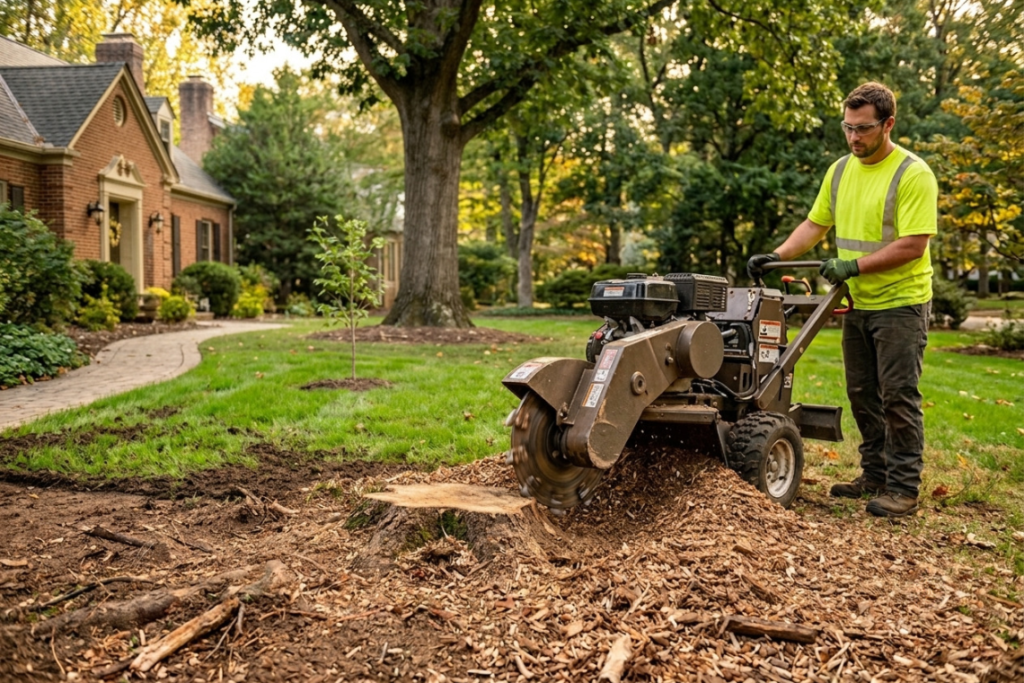
First, the work area is assessed for potential obstacles and access requirements. The stump grinder is then positioned over the stump, and the cutting wheel gradually grinds the wood into small chips.
The visible stump is reduced below the surrounding soil level. Depending on the property and the requested service, the resulting wood chips may be left for use as mulch or removed from the site.
Once grinding is complete, the area can be prepared for whatever comes next.
What Does Yard Recovery Look Like After Stump Grinding?
Stump grinding removes the visible obstruction, but your yard may need a little additional work before it looks completely finished.
1. Deal With the Wood Chips
Grinding produces a considerable amount of wood-chip material. You can sometimes use these chips as mulch, or they can be removed depending on the service arrangement.
2. Fill and Level the Area
Once the stump has been ground below grade, the depression can be filled with suitable soil. The area should be leveled so it blends with the surrounding landscape.
3. Restore the Lawn
If the stump was located in a grassy area, you can reseed or install sod after the area has been properly prepared. Good soil preparation is important for helping new grass establish successfully.
4. Consider Future Landscaping
If you plan to plant another tree or install a structure in the same location, remember that underground roots can remain after grinding. Your landscaping plans may determine whether additional root removal or preparation is necessary.
Should You Combine Stump Grinding With Tree Removal?
If you are already scheduling tree removal Richmond VA services, it may make sense to discuss stump grinding during the same project.
Handling both services together can reduce the need for a separate return visit and help you restore the property sooner. It also gives you an opportunity to plan the entire project—from removing the tree to cleaning up the remaining stump and preparing the yard.
If the tree was removed because of storm damage, disease, or a hazardous condition, dealing with the remaining stump can be an important final step in getting the area back into usable condition.
How Long Does Stump Grinding Take?
The time required depends primarily on stump size, wood type, accessibility, and the number of stumps being handled.
A small, easily accessible residential stump may be completed relatively quickly, while larger stumps or multiple stumps can require considerably more time. Your tree service professional can provide a more accurate estimate after evaluating the property.
When Is the Best Time to Grind a Stump?
Stump grinding can generally be planned whenever site conditions allow the equipment to safely access the area. However, homeowners may want to consider what they plan to do with the space afterward.
If you’re preparing the yard for new grass, landscaping, or another outdoor project, scheduling stump grinding before that work can make the overall process more efficient.
The most important consideration is not simply the season but the condition of the property, accessibility, and your landscaping plans.
Complete Your Yard Cleanup With Professional Stump Grinding
A leftover stump can keep your yard from feeling truly finished after tree removal. Grinding can help eliminate the visible obstruction, improve the usability of your outdoor space, and prepare the area for future lawn or landscaping work.
If you need professional stump grinding Richmond VA homeowners can rely on, working with an experienced local tree service can make the process easier from assessment through cleanup.
For tree removal, stump grinding, and other tree care needs in Richmond and the surrounding area, contact DCS Tree Services to discuss your property and get an estimate for the work.
FAQs
1. How much does stump grinding cost in Richmond VA?
The cost depends on stump size, wood type, root spread, accessibility, and the number of stumps. An on-site assessment is the best way to receive an accurate estimate for your property.
2. Does stump grinding remove the tree roots?
No. Stump grinding Richmond VA services typically remove the visible stump below ground level while leaving most of the root system underground to decompose naturally over time.
3. Can I grow grass after stump grinding?
Yes. Once the remaining chips and debris are addressed and the area is filled and leveled with suitable soil, the lawn can be reseeded or restored with sod.
4. Is stump grinding better than complete stump removal?
For many residential situations, grinding is less disruptive because it does not require removing the entire root ball. However, complete removal may be more suitable when future construction or planting requires the roots to be cleared.
5. Should I grind a stump after tree removal?
In many cases, yes. Removing the remaining stump can improve yard safety, simplify lawn maintenance, and make the space easier to use for future landscaping projects.