Stump Grinding in Richmond, VA: What Happens After a Tree Is Removed?
Completing a tree removal in Richmond, VA brings an immediate sense of relief. The dangerous branches hanging over your roof are gone, the canopy shadow has cleared, and your outdoor living space is safe once again. However, once the primary work is done, homeowners are often left looking down at an unsightly wooden eyesore.
What happens to the leftover stump, and why isn’t it automatically gone?
Understanding how professional stump grinding in Richmond, VA works, why it matters, and how to properly restore your yard will help you turn that leftover ground crater into a smooth, healthy lawn.
When you partner with a trusted local crew like DCS Tree Services, you ensure the entire job- from top canopy clearing down to below-grade grinding- is handled safely, cleanly, and efficiently.
Is Stump Grinding Included in Standard Tree Removal?
A common point of confusion for property owners is expecting a stump to disappear as soon as the trunk comes down. In the tree care industry, taking down timber and processing sub-surface wood are two completely different operations requiring different equipment.
Standard tree cutting takes the trunk down flush or slightly above the soil grade. Unless explicitly bundled into your initial scope of work, specialised grinding is billed as an add-on service.
Why Leaving a Tree Stump Behind Is a Risk
Leaving an old stump to rot naturally might seem like a budget-friendly move, but it introduces several serious problems over time:
- Pest Infestations: Decaying hardwood stumps are prime real estate for Virginia pests, including termites, carpenter ants, and wood-boring beetles. Once established in your yard, these colony pests can easily migrate toward your home’s foundation.
- Lawn Care Hazards & Liability: Hidden stumps damage expensive mower blades and pose trip hazards for children, pets, and visitors.
- Unwanted “Zombie” Regrowth: Certain local tree species (like Crape Myrtles and Maples) will continue sending up unsightly sapling shoots or sucker growth that siphon nutrients away from nearby healthy landscape plants.
- Fungal Spores: Decaying wood often sparks fungal growth like honey fungus, which can spread underground to infect surrounding tree root systems.
Step-by-Step: What Happens During the Stump Grinding Process?
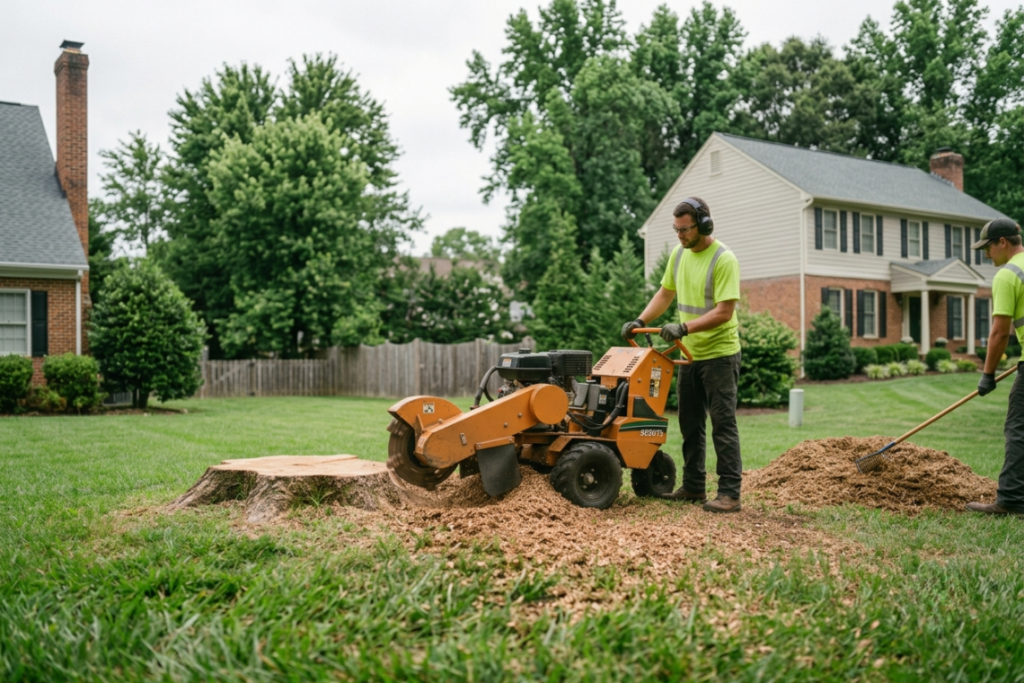
When you hire a licensed tree service in Richmond, VA, trained arborists use specialised, heavy-duty machinery equipped with high-speed, carbide-tipped teeth to systematically reduce the remaining wood fibre to organic mulch.
Here is what you can expect during the professional grinding process:
- Utility Line Clearance & Site Assessment
Before starting any machinery, technicians inspect the area and ensure all underground utility lines, such as gas, water, electric, and telecommunications, are properly located and marked. This critical safety step prevents costly property damage and guarantees a safe work area.
- Mechanical Sub-Grade Grinding
The operator positions the stump grinder over the trunk base. The machine’s high-speed cutter wheel sweeps back and forth, shaving the stump down 4 to 12 inches below ground level. Technicians also grind down any major exposed surface roots spreading across the lawn to prevent future trip hazards and protect your lawnmower blades.
- On-Site Mulch Production & Surface Levelling
As the carbide teeth slice through dense wood, the machine naturally transforms the solid stump into a blend of organic wood shavings and soil. This mixture fills the sub-surface hole, leaving a manageable mound of fresh, nutrient-rich mulch ready for backfilling or garden bed landscaping.
3 Ways to Handle Leftover Wood Chips and Soil Depressions
Once the grinding wheel stops, you are left with a mixture of soil, organic debris, and wood shavings expanding beyond the initial hole. You have three primary choices for managing the site:
- Backfill & Re-Seed Grass: Scoop out excess coarse wood chips, backfill the depression with nutrient-rich topsoil, pack it tightly to prevent future settling, and broadcast fresh grass seed.
- Repurpose as Landscape Mulch: Use the fresh wood mulch in surrounding garden beds or around remaining trees to lock in ground moisture and suppress seasonal weeds.
- Full Debris Removal: Request that your crew haul all leftover wood debris off-site so you are left with a clean slate ready for immediate landscaping.
Emergency Tree Removal vs. Planned Stump Grinding
Severe Central Virginia weather often brings down large oaks and pines without warning. When unexpected severe storms strike, emergency tree removal in Richmond, VA focuses first on structural safety, clearing fallen timber off roofs, power lines, and driveways.
During an emergency response, torn-up root balls and jagged stumps are stabilised to eliminate immediate hazards. Homeowners can then schedule follow-up stump grinding in Richmond, VA once urgent property risks are fully mitigated.
Conclusion
Leaving a tree stump in your lawn opens the door to unwanted pests, tripping hazards, and damaged lawnmowers. Investing in professional grinding finishes the job right, allowing you to reclaim your outdoor space, protect your property value, and keep your landscape looking pristine.
Whether you need routine maintenance, storm cleanup, or stump removal, trust the local experts at DCS Tree Services for safe, reliable execution. Contact our team today to request a free estimate and get your yard looking its best!
FAQs
1. Can I plant a new tree directly in the spot where the old stump was ground down?
No, it is best to plant a new tree at least 3 to 5 feet away. The soil beneath a ground stump is depleted of key nutrients and packed with acidic leftover sawdust that slows down new root development.
2. How deep does professional stump grinding go?
Professional stump grinders typically operate between 4 and 12 inches below ground level. This depth completely severs the root collar, prevents regrowth, and allows enough soil clearance to establish healthy turf grass.
3. Will the remaining underground roots rot on their own?
Yes. Once the stump collar is ground away below the surface, the remaining underground root system dies off and naturally decomposes over a few years without causing sinkholes.
4. How long does the grinding process take?
Most residential stumps take between 30 to 90 minutes to grind down, depending on the wood density, diameter, and site accessibility.
5. Is stump grinding better than full stump excavation?
Yes, for almost all residential properties. Full stump extraction requires massive excavators that tear up lawns and leave massive craters, whereas grinding is faster, cost-effective, and minimally invasive.