What to Do After Storm Damage Tree Removal in Richmond, VA
When a severe storm hits Richmond, fallen trees and broken branches can leave homeowners with more than just a messy yard. Trees may damage roofs, fences, driveways, landscaping, and nearby structures, while standing trees can also develop hidden weaknesses.
After storm damage tree removal Richmond VA services have cleared a fallen tree, your property may look better, but the recovery process is not necessarily finished. Taking a few additional steps can help you identify hidden damage, deal with the remaining stump, protect other trees, and prepare your property for future storms.
1. Document the Property Damage
Before cleanup begins, take clear photographs and videos of the affected areas. Capture the fallen tree, broken branches, damaged structures, landscaping, and any visible property damage.
If possible, keep photographs taken immediately after the storm. These can help provide a record of the property’s condition if you need to file an insurance claim.
Once the tree has been removed, take additional photographs of the cleared area and any damage discovered during cleanup.
2. Inspect the Area After Tree Removal
Removing a fallen tree can reveal damage that was difficult to see when the tree was still on the ground. Walk around the affected area and check for:
- Damaged fences, sheds, decks, or other structures
- Broken irrigation systems
- Damaged underground utility areas
- Torn or compressed sections of lawn
- Exposed soil or roots
- Damage to nearby trees
Heavy equipment used during cleanup can also affect lawns and garden beds. Identifying these issues early makes it easier to plan the next stage of restoration.
3. Check Your Roof, Gutters, and Exterior
A tree does not have to fall directly onto your home to cause damage. Large branches and wind-blown debris can affect shingles, gutters, siding, windows, and downspouts.
Look for missing or damaged shingles, clogged gutters, cracked siding, and other visible problems. If you suspect structural damage, contact an appropriate professional for an inspection rather than attempting repairs yourself.
4. Decide What to Do With the Stump
After a tree is removed, the remaining stump can become an obstacle for landscaping and future yard use. It may also take up valuable space and make mowing more difficult.
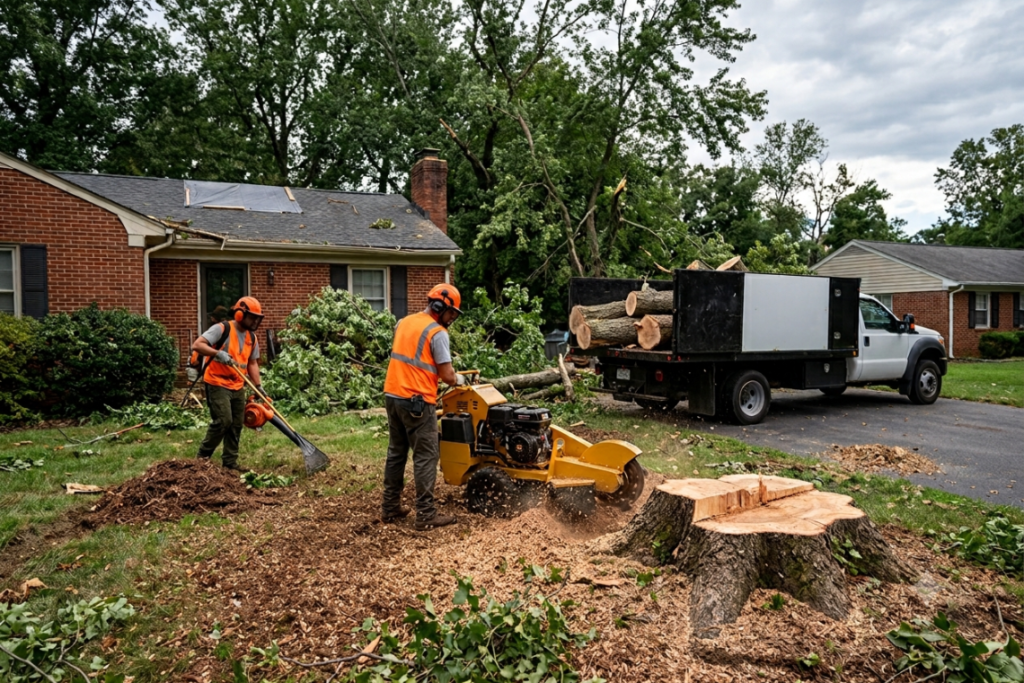
Stump grinding Richmond VA services can remove the visible portion of the stump and make the area easier to restore. However, if the storm pulled the tree out by its roots and left a large root ball or disturbed soil behind, inspect the area for drainage, erosion, or settling concerns before completing the final landscaping.
5. Have Remaining Trees Evaluated
One fallen tree does not always mean the other trees on your property are safe. Strong winds and saturated soil can weaken several trees during the same storm.
Look for signs such as:
- Newly leaning trees
- Cracks in branches or trunks
- Hanging or broken limbs
- Exposed or damaged roots
- Soil lifting around the base
- Large sections of damaged bark
If a standing tree appears unstable or hazardous, professional assessment may be necessary. In some situations, hazardous tree removal Richmond VA services may be recommended to reduce the risk of another tree falling.
6. Restore Your Lawn and Landscaping
Storm cleanup can leave your yard looking very different from how it did before the storm. Fallen trees, branches, vehicles, and removal equipment can damage grass and garden areas.
Once the property is safe, consider:
- Removing small branches and remaining debris
- Raking leaves and bark
- Aerating compacted soil
- Filling uneven areas
- Reseeding damaged lawn sections
- Replacing heavily damaged sod
- Restoring mulch around plants and trees
Avoid rushing the landscaping process until you are confident that drainage and soil conditions have returned to normal.
7. Contact Your Insurance Company
Insurance coverage for fallen trees depends on your specific homeowners policy and the circumstances surrounding the damage. If a storm-damaged tree falls on a covered structure, there may be coverage for certain removal and repair expenses.
However, coverage can be different when a tree falls in an open yard without damaging a covered structure.
If you plan to make a claim, keep your photographs, invoices, estimates, and other documentation related to the storm and cleanup. Contact your insurance provider to understand what your particular policy covers.
8. Prepare for the Next Storm
Once the immediate cleanup is finished, look at the property from a prevention perspective.
A professional tree assessment can help identify dead branches, weak limbs, structural problems, or other potential hazards before the next severe weather event. Addressing these issues proactively may reduce the likelihood of another emergency.
Regular tree trimming and inspections can also help maintain healthier, safer trees around your home.
Why Professional Storm Tree Removal Matters
Storm-damaged trees can be unpredictable. Broken limbs may remain suspended in the canopy, trunks can shift unexpectedly, and damaged trees may have unstable root systems.
Professional storm damage tree removal Richmond VA services can help homeowners address these hazards while reducing the risk of additional property damage. Once the dangerous tree has been removed, the property can then be inspected and restored more safely.
For homeowners looking for dependable local tree care, DCS Tree Services provides tree removal and storm-related cleanup services in Richmond, VA and surrounding areas.
Conclusion
Storm recovery does not end when a fallen tree is removed. After storm damage tree removal Richmond, VA, homeowners should document the damage, inspect the surrounding property, evaluate remaining trees, address the stump, restore damaged landscaping, and review their insurance coverage.
Taking these steps can help you move from emergency cleanup toward a safer and more functional property. With professional support from DCS Tree Services, Richmond homeowners can address storm-damaged trees and work toward restoring their outdoor spaces with greater confidence.
Frequently Asked Questions
1. Does homeowners insurance cover storm damage tree removal in Richmond VA?
It depends on your policy and the type of damage involved. If a storm-damaged tree falls on a covered structure, some removal costs may be covered, but open-yard tree removal can have different coverage.
2. Should I remove the stump after storm damage tree removal?
Removing the stump can make landscaping and yard maintenance easier. Stump grinding Richmond VA services can help clear the remaining stump and prepare the area for restoration.
3. How do I know if other trees were damaged by the storm?
Look for leaning trunks, cracked branches, exposed roots, hanging limbs, or soil movement around the tree base. A professional inspection can identify hidden storm-related hazards.
4. When should I call for hazardous tree removal Richmond VA?
Call a professional when a remaining tree has major cracks, unstable roots, severe leaning, hanging branches, or other signs that it may pose a safety risk to people or property.
5. What should I do after storm debris is removed?
Inspect your roof, yard, fences, landscaping, and remaining trees for additional damage. Keep your cleanup records and photographs, then address stump, lawn, and tree-care needs.