What Trees Benefit Most From Tree Trimming in Richmond VA?
Not every tree on your property needs the same type of care. Some trees grow quickly and require regular attention, while others may only need occasional pruning to remove dead or damaged branches. Understanding the needs of different tree types can help homeowners maintain healthier and safer landscapes.
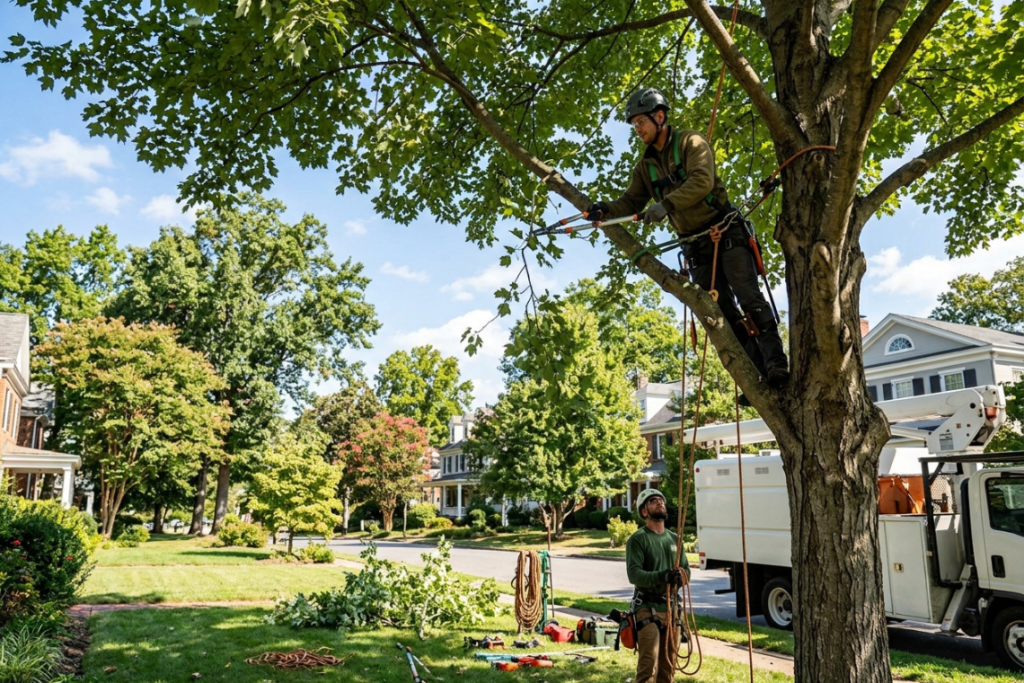
Professional tree trimming Richmond VA services can be especially useful for trees that grow near homes, power lines, driveways, and other structures. Trimming can also help young trees develop stronger structures and reduce potential problems as they mature.
Fast-Growing Trees Often Need More Frequent Trimming
Fast-growing trees can add plenty of shade and character to a property, but their rapid growth may also create maintenance challenges. New branches can develop quickly, sometimes resulting in crowded canopies, weak branch connections, or limbs that extend toward structures.
Some trees commonly associated with fast growth include:
- Silver maple: These trees grow quickly but can develop weak wood and branch unions that may be more vulnerable to splitting.
- Bradford pear: Their rapid growth and narrow branch attachments can create structural concerns as the trees become larger.
- Willow: Fast growth combined with relatively brittle wood can make deadwood and weak branches important maintenance concerns.
- Poplar and cottonwood: These trees can grow rapidly, which may require more regular attention to their developing structure.
For these trees, trimming is not simply about keeping the canopy attractive. Removing problematic growth and maintaining a balanced structure can help reduce potential issues as the tree gets larger.
Trees Growing Near Homes and Power Lines
The location of a tree can be just as important as its species. A tree growing in an open part of the yard may have plenty of room to develop, while one growing beside a house or utility line has much less space.
Trees near structures may benefit from regular monitoring and trimming to:
- Keep branches away from roofs and gutters
- Maintain appropriate clearance around power lines
- Reduce overextended limbs near buildings
- Prevent branches from interfering with driveways and walkways
- Manage growth that could become difficult to correct later
Homeowners should never attempt to trim branches that are touching or growing close to energized power lines. Utility-line work can involve serious electrical hazards and should be handled by qualified professionals.
Young Trees Benefit From Early Structural Pruning
Young trees may not look like they need much maintenance, but early pruning can have a significant effect on their future structure.
Structural pruning focuses on guiding a tree while its branches are still relatively small and easier to manage. This may involve removing competing leaders, correcting crossing branches, and addressing narrow branch attachments.
Early maintenance can help encourage:
- A stronger central structure
- Better spacing between major branches
- Fewer competing leaders
- Reduced development of weak branch unions
- More balanced canopy growth
Regular attention during the early years can be easier and less costly than trying to correct major structural problems after a tree becomes large.
Mature Trees Can Benefit From Deadwood Removal
Mature trees such as oaks, hickories, and other established hardwoods can remain healthy for decades with appropriate care. However, even a healthy mature tree may naturally develop dead, damaged, or declining branches.
Removing deadwood can help reduce the chance of branches falling unexpectedly. It can also improve the appearance of the canopy and create more space for healthy branches to develop.
Deadwood removal may be particularly useful when branches are positioned above:
- Homes and garages
- Driveways
- Patios
- Walkways
- Outdoor living areas
A mature tree does not necessarily need heavy pruning every year. Instead, its condition, location, species, and previous growth should guide the maintenance schedule.
Fruit Trees Need Trimming for Growth and Production
Fruit trees have somewhat different pruning requirements. While safety and structure are still important, pruning can also support fruit production and make harvesting easier.
Proper trimming can help improve sunlight penetration into the canopy, encourage better airflow, and remove branches that cross or rub against each other.
For fruit trees, trimming may help with:
- Managing overall tree size
- Improving sunlight exposure
- Supporting better airflow
- Removing damaged or crossing branches
- Making fruit easier to reach during harvesting
The correct pruning approach depends on the type of fruit tree and its stage of growth, so timing and technique are important.
Which Trees Usually Need Less Trimming?
Not every tree requires frequent pruning. Some slower-growing and structurally sound trees can often be maintained with periodic inspections and occasional corrective trimming.
For example, many mature oaks may only require maintenance when there is deadwood, storm damage, crossing growth, or another specific concern.
However, “low maintenance” does not mean “no maintenance.” Even trees that generally need less trimming should be inspected from time to time, especially after severe weather.
How Often Should Trees Be Trimmed?
There is no single schedule that works for every tree. The right frequency depends on the tree species, age, growth rate, location, health, and structural condition.
As a general guide:
- Fast-growing or structurally weaker trees: Every 1–2 years may be appropriate.
- Young trees: Annual structural pruning may be useful during their early development.
- Mature, healthy trees: Maintenance may be needed every 3–5 years, depending on their condition.
- Trees near structures or utility lines: These should be monitored more frequently regardless of species.
These are general guidelines rather than fixed rules. A tree inspection can help determine what type of pruning is actually necessary.
Why Professional Tree Trimming Matters
Tree trimming involves more than simply cutting branches. Removing the wrong branch or making an improper cut can create unnecessary stress or affect the tree’s natural structure.
Professional trimming takes factors such as branch size, attachment, tree species, canopy balance, and surrounding property into account. DCS Tree Services focuses on these factors to help ensure trimming is appropriate for the tree and its surroundings.
For homeowners in Richmond, professional tree trimming Richmond, VA services can help address maintenance needs while keeping the work focused on the tree’s actual condition.
Conclusion
Different trees have different trimming needs, and factors such as species, age, growth rate, health, and location all matter. Fast-growing trees may require more frequent attention, while mature and structurally sound trees can often go longer between maintenance visits.
Regular inspections can help homeowners identify problems before they become more difficult to manage. Whether you have young trees that need structural guidance, mature trees with deadwood, or branches growing close to your home, choosing the right trimming approach can support a healthier and safer landscape.
For professional tree care in the Richmond area, DCS Tree Services provides tree trimming services based on the specific needs of your property and trees.
FAQs
How often should I schedule tree trimming in Richmond, VA?
The right schedule depends on the tree’s species, age, growth rate, and location. Fast-growing trees may need attention every 1–2 years, while mature trees may require less frequent maintenance.
Does tree trimming help prevent storm damage?
Proper trimming can reduce some risks by removing deadwood, damaged limbs, and certain structurally weak branches. However, no pruning method can guarantee that a tree will not suffer storm damage.
When is the best time for tree trimming in Richmond VA?
Timing depends on the tree species and the type of pruning needed. Late winter is often suitable for many structural pruning tasks, while dead or hazardous branches may need attention whenever they are identified.
Can young trees benefit from regular tree trimming?
Yes. Early structural pruning can help guide young trees toward stronger branch development and reduce problems caused by competing leaders, crossing branches, or weak attachments.
How do I know if my tree needs professional trimming?
Look for dead branches, broken limbs, branches touching structures, excessive growth, or noticeable weak branch attachments. If you are unsure, a professional assessment can help determine what maintenance is appropriate.