When Should You Consider Dead Tree Removal in Richmond, VA?
A dead tree may look harmless when it is standing quietly in the yard, but its condition can change over time. As branches dry out and the wood becomes weaker, the risk of falling limbs or tree failure can increase. For homeowners, knowing when a tree has reached the point where it should be removed can help protect people, property, and surrounding trees.
If you are unsure whether a tree is dead, declining, or becoming unsafe, understanding the warning signs can help you decide when professional assistance is appropriate.
How Can You Tell If a Tree Is Dead?
Not every tree without leaves is dead. Some trees naturally lose their foliage during certain seasons. However, several signs can indicate that a tree has died or is experiencing severe decline.
No Leaves or New Growth
A tree that remains bare when surrounding trees have developed leaves may need closer inspection. Lack of new buds or growth can also be a sign that the tree is no longer healthy.
Brittle or Bare Branches
Dead branches often become dry and brittle. They may snap easily when exposed to wind or other pressure. Dead tree branches falling can create hazards around homes, driveways, sidewalks, and outdoor areas.
Damaged Bark and Visible Decay
Loose or missing bark, deep cracks, cavities, and soft areas on the trunk can indicate tree decay. These conditions may affect the tree’s structural stability.
Fungi or Rot
Fungal growth around the base or trunk does not always mean a tree is completely dead, but it can indicate wood decay or other underlying problems that deserve professional attention.
Why Are Dead Trees a Safety Concern?
One of the biggest concerns with a dead tree is that its structure can gradually weaken. Branches and sections of the trunk may become less stable, particularly during strong winds or severe weather.
A weakened tree located close to a house, garage, fence, driveway, or utility line can potentially cause property damage if a limb or section of the tree falls. Trees near areas where people regularly walk or spend time may also require greater attention.
For this reason, is a dead tree dangerous is an important question for property owners. The answer depends on factors such as the tree’s condition, size, location, and surrounding environment.
When Should a Dead Tree Be Removed?
There is no single rule that applies to every tree, but when should a dead tree be removed becomes an important consideration when there are clear signs of structural instability.
Removal may need to be considered when:
- The tree is completely dead and continuing to deteriorate.
- Large branches are already falling.
- The trunk has extensive decay or cavities.
- The tree is leaning toward a building or other structure.
- Roots have been significantly damaged.
- The tree is located near a frequently used walkway or outdoor area.
- Storms or strong winds have further weakened the tree.
If you are considering dead tree removal in Richmond VA, a professional assessment can help determine the safest approach based on the tree and its surroundings.
Can a Dead Tree Be Left Standing?
In some situations, a dead tree may be located far away from structures, roads, and frequently used areas. However, leaving it standing does not mean that its condition will remain unchanged.
As the wood continues to deteriorate, branches can become increasingly fragile. Homeowners should therefore consider the tree’s location, size, condition, and potential impact before deciding what to do.
For property owners researching dead tree removal Richmond, VA, having the tree evaluated can provide a clearer understanding of the risks involved.
Dead Tree Removal vs. Hazardous Tree Removal
Dead trees and hazardous trees are related, but the terms do not always mean the same thing. A dead tree can become hazardous because of structural deterioration, while a living tree may also be considered hazardous because of severe damage, disease, poor structure, or dangerous positioning.
This is where hazardous tree removal Richmond, VA may become relevant. DCS Tree Services can assess visible damage, weak branches, trunk condition, and the tree’s surroundings before recommending an appropriate solution.
What Happens During Professional Tree Removal?
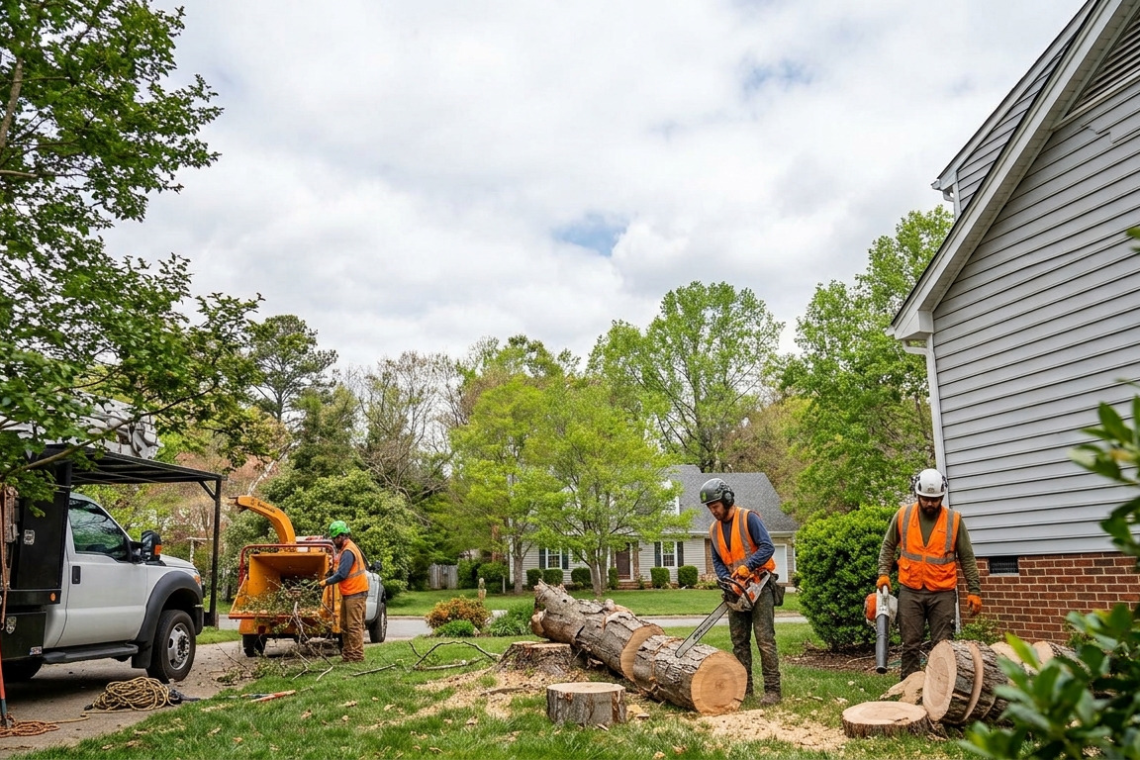
Professional tree removal generally begins with an assessment of the tree and the surrounding property. The removal team can then determine how branches and sections of the trunk should be handled safely.
Depending on the tree’s size and location, the process may involve:
- Inspecting the tree and identifying potential hazards.
- Planning the safest removal method.
- Removing branches and sections of the tree in a controlled manner.
- Cutting and removing the main trunk.
- Clearing branches, wood, and debris from the property.
- Discussing stump grinding if the remaining stump needs to be removed.
For homeowners searching for tree removal Richmond VA, choosing a service that considers both safety and property protection is important.
Protect Your Property by Addressing Dead Trees Early
A dead tree can become more difficult to manage as its structure deteriorates. Recognizing the warning signs, considering the tree’s location, and arranging a professional assessment can help property owners make informed decisions.
If you are concerned about a dead or potentially hazardous tree, addressing the situation early can help reduce unnecessary risks and protect your Richmond property.
How Can Richmond Property Owners Reduce Tree-Related Risks?
Regular observation can help homeowners notice changes before they become larger concerns. Look for dead branches, cracks, leaning, visible decay, unusual fungal growth, and damage following severe weather.
Avoid attempting to cut down a large or unstable tree yourself. Professional equipment, planning, and experience can make a significant difference when dealing with potentially dangerous trees.
If you need professional help assessing or removing a tree, DCS Tree Services provides tree care solutions for properties in Richmond and surrounding areas. You can explore their tree removal services to learn more.
FAQs
How do I know if a tree is completely dead?
Look for signs such as a lack of seasonal growth, brittle branches, damaged bark, extensive decay, and no healthy buds. A professional assessment can help distinguish a dead tree from one that is simply dormant.
Is it dangerous to leave a dead tree in my yard?
It can be, particularly when the tree is close to buildings, vehicles, walkways, or areas where people gather. As the tree deteriorates, branches or sections of the trunk may become unstable.
Can a dead tree fall without warning?
Yes. A severely weakened tree or branch can fail unexpectedly, especially during high winds or severe weather. Visible warning signs should be addressed rather than ignored.
Should I remove a dead tree near my house?
A dead tree near a home deserves careful attention because falling branches or tree sections could affect the structure. Its condition and location should be professionally evaluated before deciding on removal.
What happens to the stump after a dead tree is removed?
The stump can remain after the tree is removed unless additional work is performed. Stump grinding is one option for reducing the remaining stump below ground level and making the area easier to maintain.