Why Choose Stump Grinding in Richmond VA After Tree Removal?
Removing a tree can make a major difference to your Richmond property, but the job doesn’t always feel complete when a large stump is still sitting in the yard. While some homeowners choose to leave it and let nature take its course, stump grinding is often the more practical next step.
For homeowners planning tree removal, understanding what happens to the remaining stump can help prevent future problems and keep the property looking clean. Here’s why stump grinding Richmond, VA services can be a valuable part of completing your tree removal project.
Why Tree Removal Doesn’t Always End With the Stump
When a tree is removed, the trunk and major branches are taken away, but the stump and part of the root system can remain underground. Although it may seem harmless at first, a leftover stump can become an obstacle for lawn maintenance, landscaping, and plans for the area.
A stump can also produce new shoots, gradually decay, or become home to insects and fungi. That’s why many homeowners choose to deal with the stump soon after the tree has been removed.
5 Reasons to Grind a Stump After Tree Removal
1. It Makes the Yard Safer
A stump that remains at ground level can easily become a tripping hazard. This is particularly noticeable when grass grows around it and makes the stump harder to see.
Grinding the stump below ground level creates a safer, more manageable surface for mowing, walking, and using the surrounding part of the yard.
2. It Helps Prevent Unwanted Regrowth
Some tree species can continue producing shoots from the remaining stump or root system after the main tree has been removed. This can turn a finished tree removal project into an ongoing maintenance issue.
Grinding the stump reduces the visible source of regrowth and makes it easier to reclaim the area for lawn or landscaping.
3. It Improves the Appearance of Your Property
Even after a tree has been removed, a prominent stump can make the area look unfinished. If you’re trying to maintain a neat lawn or improve your property’s curb appeal, leaving the stump behind may work against that goal.
With stump grinding Richmond VA services, the remaining stump can be reduced below the surrounding grade, giving you a cleaner area to work with.
4. It Creates Space for Future Landscaping
Maybe you want to plant something new, extend your lawn, install a garden bed, or change the layout of your outdoor space. A stump can get in the way of all of these plans.
Grinding it down gives you more flexibility when deciding how to use the space after tree removal.
5. It Reduces Long-Term Maintenance
A stump may eventually decay naturally, but waiting for that process can take years. During that time, you may have to mow around it, deal with new growth, or monitor changes as the wood breaks down.
Grinding handles the visible stump much sooner and allows the area to become part of your regular landscape again.
What Happens If You Leave the Stump Behind?
Leaving a stump isn’t necessarily an emergency, but it can create problems over time.
As the stump ages, it can begin to decay and attract insects or fungal activity. Depending on its location and condition, it may also interfere with mowing or other yard work.
Another concern is regrowth. Certain trees are more likely than others to produce shoots from the remaining stump or roots, meaning the area may require additional maintenance.
If you already know that you don’t want the stump on your property, addressing it during or shortly after tree removal is usually the simpler approach.
Stump Grinding vs. Complete Stump Removal
Stump grinding and stump removal are not the same process.
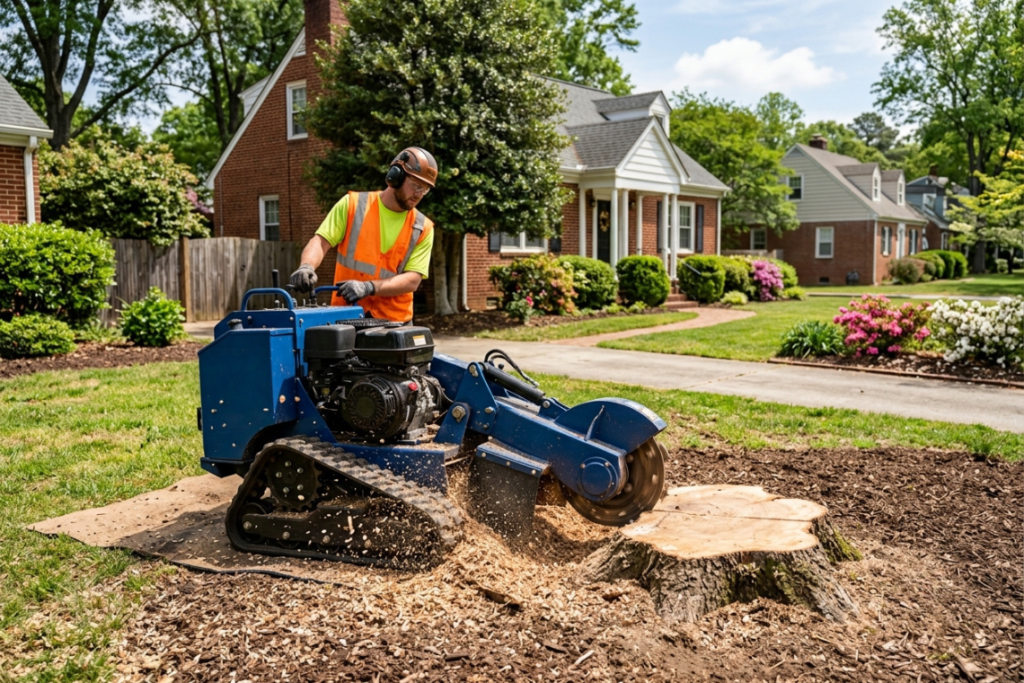
Stump grinding uses specialized equipment to grind the visible stump down below the surface. The roots generally remain underground and can gradually break down naturally.
Stump removal, on the other hand, involves extracting the stump and a larger portion of its root system. This can require more excavation and may leave a larger hole that needs to be filled and restored.
For many residential properties, grinding is a practical choice when the main goal is to remove the visible obstruction and reclaim the surface area.
The right option depends on factors such as the stump’s size, location, root structure, surrounding landscaping, and what you plan to do with the area afterward.
Is Stump Grinding Hard on Your Lawn?
It’s understandable to worry that heavy equipment could damage your landscaping. Professional stump grinding equipment is designed to work around the stump rather than excavating a large area of soil.
The amount of disturbance depends on the stump’s location, size, accessibility, and surrounding conditions. A professional crew can assess the area beforehand and determine the most appropriate approach.
After grinding, the resulting wood chips can typically be cleared or managed as part of restoring the area.
When Should You Schedule Stump Grinding?
If you already have a tree scheduled for removal, discussing stump grinding at the same time can make the entire project easier to plan.
Handling both services together may eliminate the need to arrange another appointment later. It also means you can start planning your next landscaping project without having an unwanted stump occupying the space.
However, if your tree has already been removed, it’s not too late. A professional stump grinding service can assess the remaining stump and recommend the appropriate solution.
Complete Your Tree Removal Project With Stump Grinding
Removing a tree is only part of restoring your yard. If a stump remains, having it ground down can improve the area’s safety, appearance, and usability while making future landscaping easier.
For homeowners in Richmond, professional stump grinding can be a practical final step after tree removal. DCS Tree Services can help homeowners address remaining stumps and prepare their outdoor spaces for future use.
To learn more about tree care and stump grinding services, visit DCS Tree Services.
A clean, usable yard starts with taking care of what remains after tree removal.
FAQs
1. Is stump grinding necessary after tree removal?
It isn’t always mandatory, but it can make your property safer, cleaner, and easier to maintain. Stump grinding Richmond, VA services are especially useful when you want to reclaim the space quickly.
2. How soon can a stump be ground after tree removal?
In many cases, stump grinding can be performed soon after the tree is removed. The exact timing depends on the stump, site conditions, equipment access, and the overall removal project.
3. Will stump grinding stop a tree from growing back?
Grinding removes the visible stump and can significantly reduce the potential for new shoots from the stump itself. However, remaining roots can sometimes produce growth depending on the tree species.
4. What happens to the roots after stump grinding?
Most of the underground root system remains in place after grinding. Over time, those roots naturally decay, while the surface area can be prepared for landscaping or lawn restoration.
5. Should I choose stump grinding or stump removal?
It depends on your property’s needs and plans. Grinding is generally less invasive, while complete removal may be preferable when the entire root system needs to be extracted.