When Is Tree Removal in Richmond, VA the Right Choice?
Not every damaged or unhealthy tree needs removal. In many cases, pruning, cabling, bracing, or regular monitoring can help preserve a tree and keep it safe. However, some trees become too hazardous, unhealthy, or problematic to keep on a property.
Knowing when removal is genuinely necessary can help you protect your home, family, vehicles, and surrounding landscape while avoiding unnecessary tree loss. So, how can you tell when a tree has reached that point?
Start by Asking: Is the Tree a Safety Risk?
Safety should always come first when evaluating a problem tree. If a tree presents a serious or increasing risk to people, buildings, vehicles, or nearby property, removal may be the safest solution.
Some common warning signs include:
- A noticeable or worsening lean, particularly toward a home or other structure
- Large dead branches throughout the canopy
- Deep cracks, splits, or cavities in the trunk
- Roots that have been exposed or damaged by erosion, construction, or flooding
- Fungal growth or mushrooms appearing around the base of the tree
One warning sign does not necessarily mean a tree must come down. However, several signs occurring together can indicate a serious structural problem. In these situations, professional hazardous tree removal in Richmond, VA may be more appropriate than simple pruning.
Is the Tree Dead or Dying?
A dead tree is not simply a landscaping concern. As wood becomes dry and brittle, branches can break unexpectedly, and the entire tree may eventually become unstable.
Trees that remain mostly bare during the growing season, show little to no new growth, or have significant bark deterioration may be declining or already dead.
A few basic observations can help you identify potential problems:
- Check the branches: A small scratch on a live branch may reveal green tissue underneath. Brown, dry tissue can indicate that the branch is dead.
- Look at the canopy: Compare the tree with healthy trees of the same species. A significantly thinner canopy may indicate stress or decline.
- Watch for fungal growth: Shelf-like fungal growth on the trunk can be associated with internal decay.
If a tree is dead or severely declining, professional evaluation can help determine whether it can be preserved or whether dead tree removal Richmond VA is the safer option.
Could the Tree Damage Your Property?
A tree does not have to be dead or visibly unstable to become a removal candidate. Sometimes, a healthy tree creates ongoing problems because of where it is growing.
Potential concerns include:
- Roots affecting foundations, driveways, sidewalks, or underground utilities
- Branches growing too close to power lines
- Excessive growth affecting nearby trees or landscaping
- Construction or home additions planned within the tree’s root zone
- A trunk or canopy interfering with structures or access areas
These situations may allow time for planning rather than requiring emergency action. However, ignoring the problem can make it more difficult or expensive to manage later.
This is one reason homeowners may consider tree removal Richmond VA services before a manageable property issue turns into a major safety or structural concern. DCS Tree Services can help assess the tree’s condition and determine whether removal is the most suitable option for the property.
Could Pruning or Cabling Solve the Problem?
Tree removal should not automatically be the first solution. If the tree is structurally sound and the problem is limited to certain branches or weak areas, other treatments may be more appropriate.
Pruning
Professional pruning can remove dead, damaged, or poorly positioned branches while maintaining the tree’s overall structure. It can also reduce the weight of certain limbs and improve clearance around structures.
Cabling or Bracing
Trees with weak branch unions or multiple trunks may sometimes benefit from cabling or bracing. These systems can provide additional structural support when removal is not necessary.
Tree Care and Monitoring
A stressed tree may sometimes respond to proper care and monitoring, depending on the underlying problem. Improving growing conditions and addressing sources of stress can help some trees remain healthy.
The key is determining whether the tree can realistically be preserved. A professional assessment can help distinguish between a tree that needs targeted treatment and one that has become too hazardous to keep.
When Is Tree Removal Clearly the Better Choice?
While every tree should be evaluated individually, removal may be appropriate when:
- The tree is dead and presents a safety concern
- Major structural damage has significantly weakened the tree
- The tree is leaning toward a home, vehicle area, utility line, or neighboring property
- Root damage is affecting a structure or important utility
- The tree repeatedly becomes hazardous during storms
- A professional assessment identifies the tree as a high-risk hazard
- The tree’s condition cannot be effectively managed through pruning or other treatments
The goal is not to remove every problem tree. The goal is to identify situations where keeping the tree creates a greater risk than removing it.
What Should You Consider Before Removing a Tree?
Once removal appears necessary, there are several practical factors to consider. First, the tree’s location and condition should be evaluated. Limited access, nearby buildings, utility lines, fences, and landscaping can all affect how the removal needs to be performed.
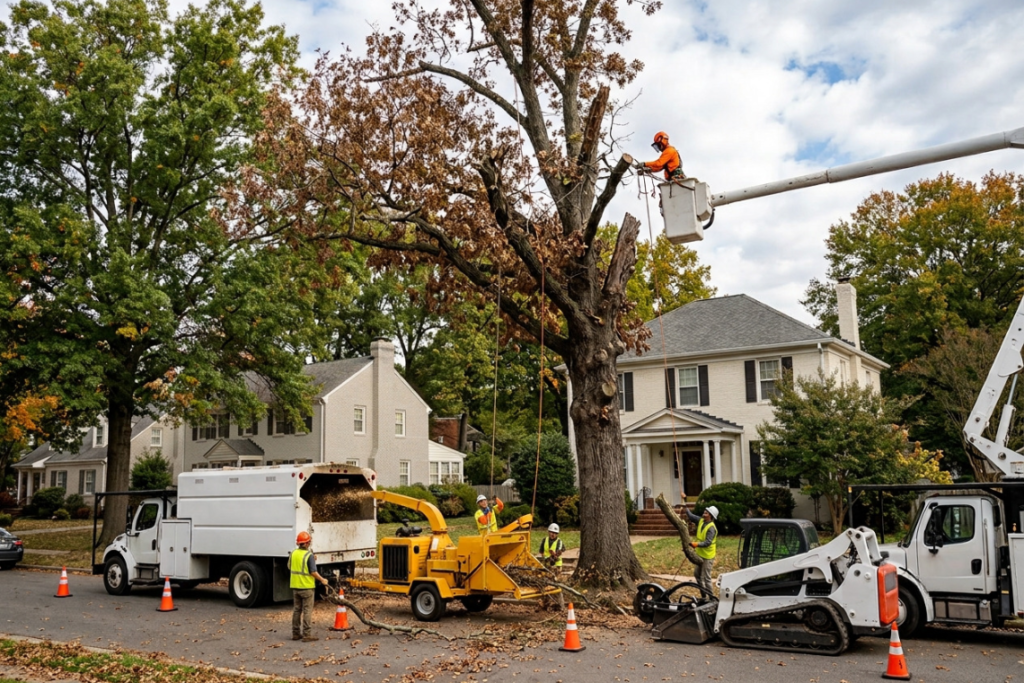
The drop zone and surrounding property should also be considered carefully. Large or damaged trees may require controlled removal rather than simply cutting the trunk and allowing the tree to fall. DCS Tree Services can assess these factors and help determine the safest approach for the property.
You should also decide what should happen to the remaining stump. If you do not want the stump left behind, asking about stump grinding Richmond, VA services at the same time can make the overall project easier to plan.
What Happens After the Decision Is Made?
After a tree has been assessed and removal is recommended, a professional tree service can evaluate access, surrounding structures, potential hazards, and the safest approach for taking the tree down.
Urgent situations, such as severely damaged trees following a storm, may require faster attention. Routine removals can generally be planned around property access and other landscaping or construction work.
A professional approach also helps reduce the chance of damage to nearby structures, landscaping, vehicles, and other trees.
Conclusion
Knowing when a tree should be removed is about more than its appearance. Safety risks, structural damage, declining health, root problems, and property conflicts can all influence the decision. When removal is not necessary, professional pruning or other treatments may help preserve the tree.
For homeowners who are unsure about the condition of a tree, DCS Tree Services can help assess the situation and determine the most appropriate next step. A professional evaluation can give you a clearer understanding of whether removal is necessary or whether the tree can safely remain on your property.
FAQs
1. How do I know if I need tree removal Richmond VA services?
Look for major warning signs such as severe leaning, trunk cracks, extensive decay, dead branches, or damaged roots. A professional assessment can determine whether removal or another treatment is appropriate.
2. Can a dying tree be saved instead of removed?
Sometimes, yes. Pruning, cabling, improved care, or monitoring may help depending on the tree’s condition and the cause of its decline.
3. Is a leaning tree always a reason for tree removal?
No. Some trees naturally develop a slight lean. A new or worsening lean, especially with root damage or trunk cracks, is more concerning and should be professionally evaluated.
4. When should I consider dead tree removal Richmond VA?
A dead tree should be evaluated because dry, weakened wood can become increasingly unstable. Removal may be recommended when the tree or its branches pose a risk to people or property.
5. Should I get stump grinding after tree removal?
If you do not want the remaining stump on your property, stump grinding can remove most of the visible stump and make the area easier to maintain or replant.