Category: Uncategorized

  • Why You Need to Trim Trees Near Your Roof: 5 Hidden Property Risks

    Why You Need to Trim Trees Near Your Roof: 5 Hidden Property Risks

    Why You Need to Trim Trees Near Your Roof: 5 Hidden Property Risks

    Living under a lush canopy of oak, maple, or pine trees gives a home instant curb appeal. However, when those branches spread over your roofline, they quietly transition from a landscape asset into a structural liability. During heavy weather in Virginia, weak limbs scrape against shingles, drop heavy debris, or snap entirely. Trimming trees near your roof is one of the single most cost-effective preventive maintenance steps a homeowner can take to protect their property. Here are five critical risks of neglecting overhanging branches and what you can do to keep your roof safe.

    5 Major Hazards of Overhanging Tree Limbs

    1. Shingle Wear and Structural Roof Damage

    When wind blows, heavy branches sway back and forth across your roof. This repeated motion acts like coarse sandpaper, grinding away the protective granules on asphalt shingles. Once those granules disappear, water penetrates the underlying felt, causing roof damage from tree branches. Worst of all, dead or diseased limbs hanging directly overhead can break under their own weight during summer thunderstorms or ice events, puncturing decking and causing sudden structural leaks.

    2. Accelerated Gutter Clogs and Water Leaks

    Trees hovering above your roofline drop a non-stop stream of leaves, twigs, pollen pods, and pine needles straight into your gutter troughs. Over time, this debris packs tightly into downspouts, causing water to pool along the eaves. When gutters overflow, water backs up under the fascia boards and roof deck. This rot slips behind siding and eventually floods your home’s foundation. Roof clearance tree trimming prevents excessive organic buildup, letting your drainage system do its job.

    3. Pests and Wildlife Access to Your Attic

    Overhanging limbs serve as a natural highway straight to your attic. Squirrels, raccoons, mice, and roof rats routinely use these wooden bridges to leap onto home structures. Once on the roof, animals chew through soft fascia wood, soffit vents, or loose shingles to build warm nests inside your home. Maintaining proper clearance cuts off roof animal access from tree limbs, keeping destructive pests outdoors where they belong.

    4. Sun Deprivation, Moss, and Algae Growth

    A dense tree canopy creates constant shade over your roof, blocking sunlight from drying out morning dew and rain. Moisture gets trapped against the shingles, creating the ideal environment for moss, mildew, and blue-green algae. Moss acts like a sponge, holding water against the roof surface, lifting shingle edges, and rotting the wooden decking underneath.

    5. Heavy Storm and Ice Weight Hazards

    Rain-soaked foliage and heavy ice add hundreds of pounds of load to tree branches. Limbs that look safely elevated on a calm, sunny day sag significantly under severe weather conditions. Pruning weak branches before seasonal storm cycles hit prevents heavy limbs from crashing down on your home unexpectedly.

    How Far Should Tree Branches Be From Your Roof?

    As a general rule, maintain 8 to 10 feet of clear space between tree branches and your roofline. This clearance buffer accounts for natural branch sway during high winds and gives fast-growing species room to expand without encroaching on your shingles. Softwood trees like pines or silver maples may require even larger safety margins due to their rapid growth and brittle wood. Scheduling professional tree trimming in Richmond, VA with DCS Tree Services ensures these high clearance zones are pruned safely without risking damage to your roof structure.

    DIY vs. Professional Tree Maintenance

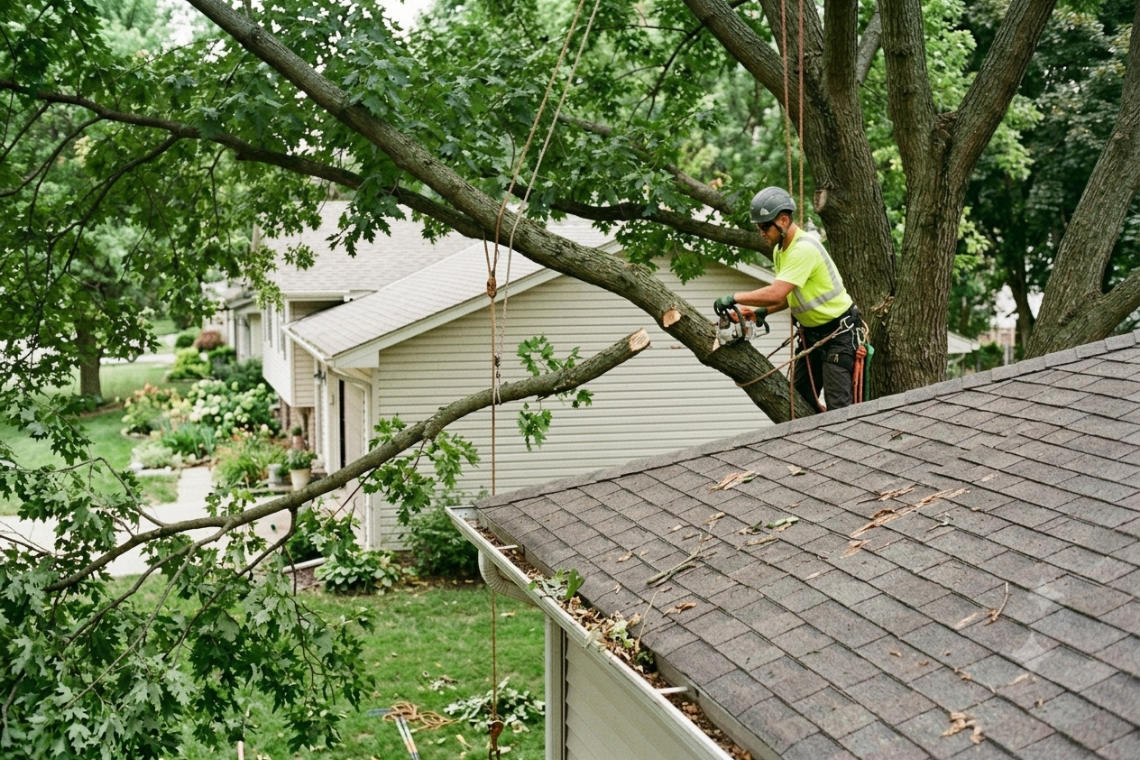
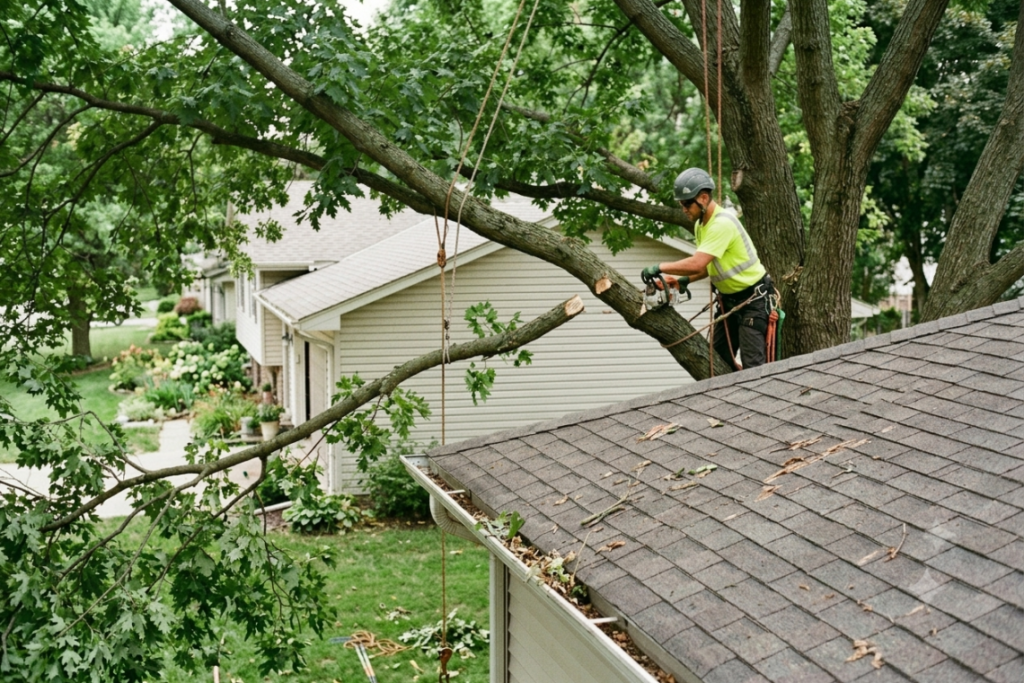
    Attempting to prune large branches suspended over a roof is one of the most hazardous tasks a homeowner can undertake. Working from tall ladders with chainsaws while managing falling timber requires specialised rigging equipment, safety lines, and technical experience. Professional arborists use controlled sectional lowering methods to tie off heavy sections, ensuring limbs are removed safely without dropping onto your home, fence, or power lines.

    Protect Your Investment Today

    Protect Your Investment Today Ignoring branches over your home puts your roof, gutters, and family at unnecessary risk. Taking a proactive approach to tree trimming in Richmond, VA, with DCS Tree Services saves you thousands of dollars in unexpected roof repairs down the road. If overhanging limbs are threatening your home, contact the licensed experts at DCS Tree Services today for a free, no-obligation roof clearance evaluation.

    FAQs

    1. Can tree branches damage a roof without actually breaking?

    Yes. Even minor contact causes damage. Wind causes branches to constantly scrape across shingles, wearing off protective asphalt granules and exposing the underlying layers to moisture leaks.

    2. How often should I schedule roof line tree clearance?

    Inspect tree clearance once a year, preferably in late fall or early spring. Most fast-growing trees benefit from professional pruning every 2 to 3 years to maintain a safe distance from your home.

    3. Will my homeowner’s insurance cover damage from overhanging tree branches?

    Insurance generally covers sudden, accidental tree damage (like a limb snapping in a storm and hitting your roof). However, insurance policies usually deny claims resulting from long-term neglect, such as un-trimmed branches wearing down shingles over years.

    4. How do I know if a limb over my roof is hazardous?

    Look for warning signs like dead bark, fungal growth near branch joints, lack of leaves on a specific limb, or deep vertical cracks. If you notice any of these signs, have the tree evaluated by a professional immediately.

    5. What is the best time of year to trim trees back from my home?

    Dormant pruning in late winter is ideal because trees suffer less stress, and the leaf-free canopy makes structural branches easier to assess. However, removing hazardous limbs hovering over a roof should be done immediately, regardless of the season.
  • Tree Removal Cost in Richmond, VA: Complete 2026 Price Guide

    Tree Removal Cost in Richmond, VA: Complete 2026 Price Guide

    Tree Removal Cost in Richmond, VA: Complete 2026 Price Guide

    Central Virginia weather keeps local yards lush, but severe summer thunderstorms and heavy winter ice can quickly transform a prized shade tree into a serious property hazard. When a towering Willow Oak begins to decay or a massive Loblolly Pine starts leaning toward your roof, budgeting for safety becomes a top priority. Understanding the expected tree removal cost in Richmond, VA helps you plan your outdoor projects without high-pressure surprises. While smaller jobs start around $250, most homeowners pay between $500 and $1,850 for professional removal. Complex, high-risk extractions requiring specialized rigging or heavy cranes can reach upwards of $3,500. This comprehensive guide breaks down Richmond pricing benchmarks, local price drivers, add-on expenses, and city permit rules.

    Average Cost Breakdown by Tree Size

    Tree height, trunk diameter, and overall canopy mass are the primary factors influencing labor hours and crew equipment needs. Local arborists categorize tree sizes into clear height tiers to set baseline estimates:
    • Small Trees (Under 30 Feet): $250 – $500 Small ornamental varieties like Dogwood, Crape Myrtle, and Japanese Maple require minimal heavy machinery. Crew members can usually handle these removals quickly from the ground, making them the most affordable to take down.
    • Medium Trees (30 to 60 Feet): $500 – $1,200 Mid-sized species such as River Birch, Sweetgum, and Red Maple often require climb-and-drop techniques or standard bucket trucks. This price tier reflects increased labor time and branch rigging.
    • Large Trees (60 to 80 Feet): $1,200 – $2,200 Mature trees like White Oak, Loblolly Pine, and Sycamore demand heavy-duty equipment, advanced lowering ropes, and extended crew hours. Sectional cutting is required to drop heavy limbs safely.
    • Extra-Large Trees (80+ Feet): $2,200 – $3,500+ Historic Willow Oaks or towering Tulip Poplars demand specialized crane support and dedicated ground crews to manage multi-ton limbs safely around surrounding structures.
    Understanding the expected tree removal cost in Richmond, VA gives you a solid benchmark before bringing an estimator from DCS Tree Services out to inspect your yard.

    Key Factors Influencing Pricing in Central Virginia

    No two yards in RVA are identical. A straight drop in an open field costs significantly less than precision removal in a tight neighborhood.
    • Property Accessibility: Dense, historic neighborhoods like The Fan, Museum District, and Church Hill feature narrow alleyways, tight power corridors, and zero yard clearance. Crew members must use manual sectional rigging or bring in heavy cranes. Open residential lots in Henrico, Chesterfield, or Midlothian allow faster equipment setup and lower labor costs.
    • Proximity to Utilities & Structures: Working near home foundations, glass sunrooms, or Dominion Energy utility drop lines requires extra ground protection, lowering ropes, and slower, metered cuts.
    • Tree Health & Emergency Hazards: Rotting trunks, hollow bases, or dangerous leans after a nor’easter increase risks for arborists. Unstable trees cannot be safely climbed and require aerial bucket trucks or specialized crane lowering.

    Additional Services to Factor Into Your Budget

    Understanding Stump Removal Cost in Richmond, VA

    Standard tree cutting brings a tree safely down near ground level, but it leaves the root base behind. Calculating your total project estimate requires factoring in stump removal cost in Richmond, VA, which ranges from $150 to $450 per stump. Most professional crews charge based on stump diameter, location, and root depth.

    Debris Hauling & Wood Chipping

    Always check your itemized quote to confirm debris clearance. Full-service tree teams include limb chipping, log hauling, and complete lawn raking in their standard rate, ensuring your yard is left spotless.

    Local Regulations, Permits, and Guidelines

    Before starting work, check your property’s municipal jurisdiction:
    • Private Property (Counties): Removals on private residential lots in Henrico, Chesterfield, and Hanover counties do not require city work permits.
    • City of Richmond & Historic Districts: If a tree stands in a city right-of-way, public easement, or designated historic zone, you may need clearance from the city’s Commission of Architectural Review (CAR) or Urban Forestry Division.
    • Chesapeake Bay Preservation Act (RPA): Trees growing within 100 feet of protected local streams, rivers, or tidal wetlands require environmental authorization prior to clearing.

    Work with Richmond’s Trusted Tree Specialists

    Navigating tree hazards doesn’t have to mean dealing with unexpected costs or messy property damage. When you need transparent pricing, fully licensed and insured crews, and pristine yard clean-up, trust the experts at DCS Tree Services. Whether you need routine trimming, emergency storm clearing, or a complete removal, DCS Tree Services provides clear, no-obligation estimates for homeowners across Richmond and surrounding areas. 

    FAQs

    1. How much does tree removal cost in Richmond, VA?

    Most homeowners spend between $500 and $1,850 per tree. Small ornamental trees cost as little as $250, while extra-large trees near structures or utility lines can cost upwards of $3,000.

    2. Does homeowners insurance cover tree removal after a storm?

    Insurance typically covers removal costs (minus your deductible) if a fallen tree damages an insured structure like a roof, garage, or fence. If a tree falls safely in the yard without hitting a building, insurance rarely pays for removal.

    3. Is stump grinding included in the initial tree cutting quote?

    No, stump grinding is usually priced as an optional add-on service. Combining tree removal with stump grinding on the same visit often saves money compared to booking them separately.

    4. What is the cheapest time of year to remove a tree in Richmond?

    Late winter (January through March) is generally the best time for tree service discounts. Trees are dormant, leaves are gone, ground surfaces are firm, and local schedules have more availability.

    5. How do I know if a tree needs immediate removal?

    Watch for large dead branches, fungus or mushrooms growing at the base, vertical trunk cracks, or a sudden lean after heavy rainfall.
  • How to Choose the Right Tree Service in Richmond VA for Your Property

    How to Choose the Right Tree Service in Richmond VA for Your Property

    How to Choose the Right Tree Service in Richmond VA for Your Property

    Choosing the right company for tree work is about more than finding the lowest quote. Whether you need a dangerous tree removed, branches trimmed, or an old stump cleared, the company you hire can affect your property’s safety, appearance, and long-term condition. With several options available, knowing what to look for in a tree service Richmond, VA company can help you make a confident decision.

    Why Choosing the Right Tree Service Matters

    Tree work can involve heavy branches, climbing equipment, power tools, and trees located close to homes, vehicles, fences, and utility lines. An inexperienced crew can turn a routine project into a costly problem. Choosing a trusted tree service Richmond, VA provider like DCS Tree Services, can help ensure the job is approached with the right level of care and professionalism. A professional tree service should have the right equipment, trained workers, appropriate insurance, and a clear safety plan. They should also understand how to work carefully around residential properties while minimising potential damage to surrounding structures and landscaping. For Richmond homeowners, choosing a local tree service can also be beneficial because local professionals understand common property conditions, seasonal weather concerns, and the challenges that come with working around established neighbourhoods. DCS Tree Services provides local tree care with a focus on safe, dependable, and property-conscious service.

    7 Things to Check Before Hiring a Tree Service

    1. Verify Licensing and Insurance

    Before hiring a company, ask whether it is properly licensed and insured. Licensed tree service providers should be willing to explain their credentials, while adequate insurance helps protect homeowners if an accident or property damage occurs.

    2. Look for Relevant Experience

    Experience matters when dealing with large, unstable, or difficult-to-access trees. Ask about the company’s previous residential projects and whether its team has handled situations similar to yours. A company experienced in tree care services should be able to explain what work your trees need and why.

    3. Check Reviews and Local Reputation

    Online reviews can provide useful insight into a company’s reliability. Look beyond the overall rating and read comments about communication, workmanship, safety, punctuality, and cleanup. A strong tree service company Richmond VA should have a consistent reputation rather than relying on a handful of reviews.

    4. Ask What Services Are Included

    Make sure you understand exactly what you’re paying for. Depending on your property’s needs, the project could involve tree removal, pruning, stump work, or debris cleanup. Don’t assume that hauling away branches, removing logs, or cleaning the work area is automatically included. Ask before approving the estimate.

    5. Get a Detailed Written Estimate

    A written estimate makes it easier to compare companies. Look for a clear description of the work, equipment, cleanup, disposal, and any potential additional charges. When comparing tree service estimates, don’t automatically choose the lowest number. A very low quote may leave out important services or reflect less experienced workmanship.

    6. Evaluate Safety Practices

    Ask how the crew will protect your roof, landscaping, vehicles, fencing, and other structures. Proper planning is particularly important when trees are close to buildings or have damaged limbs. Good tree safety practices should be part of every project, not an afterthought.

    7. Pay Attention to Communication

    Professionalism starts before the crew arrives. A reliable company should answer your questions, explain the recommended work, provide clear pricing, and communicate what you can expect. If a company is difficult to reach or gives vague answers during the estimate, consider that a warning sign.

    Match the Company to the Tree Work You Need

    Not every tree project is the same, so choose a company with experience in the specific service your property requires.

    Tree Removal

    Dead, severely damaged, leaning, or hazardous trees may require complete removal. Tree removal Richmond VA projects should be carefully planned to prevent damage to nearby structures and landscaping.

    Tree Trimming and Pruning

    Regular pruning can help manage overgrown branches and maintain clearance around roofs and structures. When searching for tree trimming Richmond VA, look for professionals who understand proper pruning techniques rather than simply cutting branches back.

    Stump Grinding

    After a tree has been removed, the remaining stump can interfere with landscaping and create a tripping hazard. Stump grinding Richmond VA services can remove much of the visible stump below ground level, making the area easier to maintain.

    Questions to Ask Before Hiring a Tree Company

    Before scheduling the work, ask:
    • Are you licensed and insured?
    • Can you provide a written estimate?
    • What exactly is included in the quoted price?
    • How will you protect my property?
    • Is debris cleanup included?
    • Do you have experience with hazardous or storm-damaged trees?
    • What equipment will be required?
    These questions can help you identify a reliable tree service and avoid unexpected problems.

    Red Flags to Watch For

    Be cautious of companies that offer an unusually low quote without explaining the scope of work, refuse to provide proof of insurance, pressure you into making an immediate decision, or provide vague pricing. Other warning signs include poor communication, inadequate safety equipment, and large upfront payments without a clear agreement.

    How to Compare Tree Service Estimates

    When comparing estimates, consider the complete value rather than price alone. Check the company’s experience, insurance, safety practices, cleanup policy, and reputation. A slightly higher estimate from an experienced tree care company may provide better value if it includes proper equipment, careful property protection, complete cleanup, and professional workmanship.

    Why Local Experience Matters in Richmond

    Local experience can make a difference when working on residential properties. A tree service Richmond VA provider familiar with the area may better understand local property layouts, weather-related tree damage, access challenges, and common residential tree-care needs. Choosing a nearby, established company can also make communication easier if you have questions before or after the project.

    Conclusion

    Choosing the right tree company starts with looking beyond the price. Verify insurance, evaluate experience, read reviews, request a detailed estimate, and make sure the company follows appropriate safety practices. Most importantly, choose a provider that clearly understands the work your property needs. For homeowners looking for dependable local tree care, DCS Tree Services offers professional services for a range of residential tree-care needs. Learn more about the company and its services through DCS Tree Services.

    FAQs

    1. How do I choose the right tree service company?

    Look for a company with appropriate insurance, relevant experience, positive local reviews, clear written estimates, proper safety practices, and good communication.

    2. Should I choose the cheapest tree service estimate?

    Not necessarily. Compare the complete scope of work, insurance, experience, cleanup, equipment, and safety practices instead of choosing based only on price.

    3. When should a tree be removed?

    A tree may need removal when it is dead, severely damaged, unstable, diseased beyond recovery, or posing a significant risk to people or property. A qualified professional can assess the situation.

    4. Is stump grinding necessary after tree removal?

    It isn’t always mandatory, but stump grinding can eliminate much of the remaining stump and make the area safer and easier to landscape or maintain.

    5. What should a tree service estimate include?

    A detailed estimate should explain the planned work, labor, equipment, debris removal, cleanup, and any additional charges that may apply. Getting these details in writing helps prevent misunderstandings.
  • Overgrown Lot Clearing in Richmond: Prepare Your Property for Sale

    Overgrown Lot Clearing in Richmond: Prepare Your Property for Sale

    Overgrown Lot Clearing in Richmond: Prepare Your Property for Sale

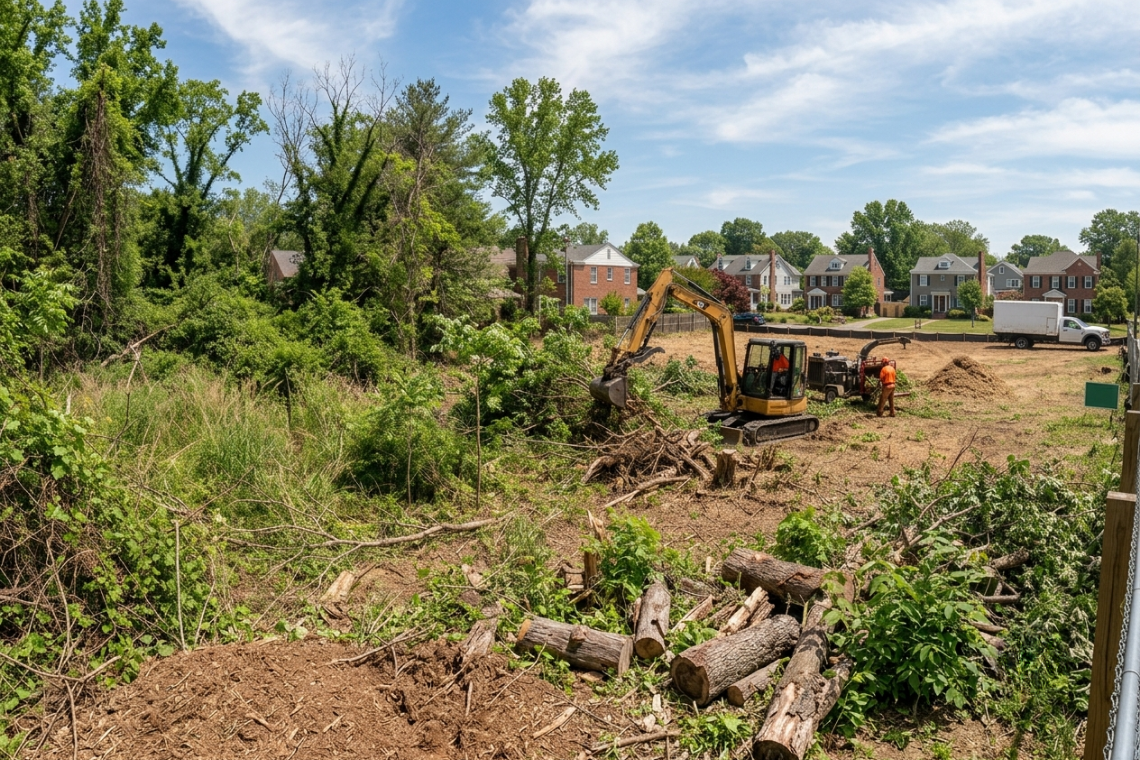
    An overgrown property can quickly become difficult to access, inspect, or maintain. Thick brush, unwanted trees, fallen branches, vines, and old stumps can hide important parts of a lot and make plans harder to manage. Whether you are preparing land for a new building or getting ready to put a property on the market, clearing the site is often an important first step. For homeowners and property owners considering overgrown lot clearing in Richmond, VA, the right approach starts with understanding what needs to go, what should stay, and how the property will be used after the cleanup.

    Start With a Thorough Property Assessment

    Before removing anything, walk the entire property and assess its current condition. Look for overgrown vegetation, dead or damaged trees, dense brush, fallen limbs, exposed roots, stumps, and accumulated debris. Pay attention to structures, fences, driveways, utility lines, and property boundaries that may be hidden by vegetation. It is also worth identifying mature trees or other natural features that could be valuable to keep. A proper assessment helps prevent unnecessary removal and gives you a clearer idea of the work involved.

    Decide What Needs to Be Removed

    Not every part of an overgrown lot needs to be cleared. The goal should be to create a safer, more usable property while preserving features that make sense for its future.

    Trees and Large Branches

    Dead, unstable, or poorly positioned trees may create hazards, particularly when they are close to structures, vehicles, or areas where people will work. Large branches can also make construction access more difficult. Professional evaluation is especially important when trees are large, damaged, or located near property improvements.

    Brush and Dense Vegetation

    Thick brush, vines, weeds, and unwanted growth can make a property appear smaller and more neglected than it actually is. Removing this vegetation can improve visibility and create easier access throughout the lot.

    Stumps and Debris

    Old stumps can become obstacles for future landscaping, construction, or equipment access. Fallen branches and other debris can also make a property harder to navigate and prepare. If stumps are left behind after clearing, they may interfere with future site work or landscaping plans. For property owners looking for stump grinding Richmond VA, DCS Tree Service can help remove these remaining obstacles as part of a more complete property cleanup.

    Preparing an Overgrown Property for Construction

    Construction requires more than simply making a property look cleaner. The site needs to be accessible and suitable for the next phase of work. Land clearing Richmond VA may involve removing selected trees, brush, stumps, and debris from areas needed for construction. Access routes may also need to be opened so contractors and equipment can reach the work area safely. Before clearing begins, consider the planned building footprint, driveway access, existing structures, drainage patterns, slopes, and property boundaries. A thoughtful clearing plan can help prevent unnecessary disturbance while creating the space needed for construction. It is also important to understand that tree removal and vegetation clearing may not be appropriate everywhere on a property. Some trees may provide shade, privacy, or other benefits and could be incorporated into the final landscape.

    Preparing the Property for Sale

    An overgrown lot can make it difficult for potential buyers to understand what they are actually purchasing. Dense vegetation may hide property boundaries, usable areas, access points, and existing features. Professional Property cleanup Richmond VA can help improve visibility and make a neglected property easier to inspect. Removing obvious hazards, unwanted brush, fallen limbs, and accumulated debris can also give the lot a cleaner and more maintained appearance. For sellers, the objective is not necessarily to make the property completely bare. Instead, the goal is to make the land easier to understand and demonstrate its potential.

    What Should You Keep Instead of Clear?

    Clearing an overgrown property does not mean removing every tree or natural feature. A mature tree may provide shade, privacy, visual appeal, or environmental benefits. Before removing a healthy tree, consider whether it could remain as part of the property’s future design. The same principle applies to established landscaping or vegetation that may have value after construction. A selective approach can often produce a more functional result than clearing everything at once.

    When DIY Lot Clearing May Not Be Enough

    Small-scale yard cleanup may be manageable for a homeowner, but larger lots can present very different challenges. Large trees, unstable branches, dense vegetation, heavy debris, and difficult access can require specialized equipment and experience. Trying to remove a hazardous tree or large section of brush without the right equipment can create unnecessary risks. Professional Lot clearing Richmond VA services can help property owners handle larger clearing projects more efficiently while taking surrounding structures and site conditions into consideration.

    A Simple Pre-Clearing Checklist

    Before starting the project, consider these steps:
    • Define whether the property is being prepared for construction or sale.
    • Walk the entire lot and identify problem areas.
    • Determine which trees and vegetation should remain.
    • Identify hazardous trees, stumps, and debris.
    • Check for fences, structures, utility lines, and access points.
    • Plan where removed vegetation and debris will go.
    • Consider whether professional clearing is needed for difficult or hazardous work.

    Conclusion

    Preparing an overgrown property is about more than cutting back vegetation. A well-planned clearing project can improve access, visibility, safety, and the property’s readiness for its next purpose. Whether you are planning construction or preparing to sell, start by assessing the site and deciding what truly needs to be removed. For homeowners who need help with overgrown lot clearing Richmond VA, DCS Tree Services can provide professional tree and property cleanup services suited to the condition of the site.

    FAQs

    1. What does overgrown lot clearing include?

    It can include removing unwanted brush, vegetation, selected trees, fallen branches, stumps, and other debris. The exact scope depends on the property’s condition and its intended use.

    2. Should I clear a lot completely before selling it?

    Not necessarily. Selective clearing can be more beneficial because it improves visibility and access while preserving useful mature trees and desirable natural features.

    3. Is lot clearing necessary before construction?

    It often is, particularly when vegetation, trees, stumps, or debris interfere with the planned building area or equipment access. The required work depends on the construction plan and condition of the site.

    4. Can all trees on an overgrown property be removed?

    No. Some trees may be worth preserving for shade, privacy, appearance, or future landscaping. A property assessment can help determine which trees should remain.

    5. When should I hire a professional for lot clearing?

    Professional help is worth considering when the property has large trees, hazardous branches, dense brush, heavy debris, difficult access, or vegetation located close to structures and utility lines.
  • Stump Grinding in Richmond, VA: What Happens After a Tree Is Removed?

    Stump Grinding in Richmond, VA: What Happens After a Tree Is Removed?

    Stump Grinding in Richmond, VA: What Happens After a Tree Is Removed?

    Completing a tree removal in Richmond, VA brings an immediate sense of relief. The dangerous branches hanging over your roof are gone, the canopy shadow has cleared, and your outdoor living space is safe once again. However, once the primary work is done, homeowners are often left looking down at an unsightly wooden eyesore. What happens to the leftover stump, and why isn’t it automatically gone? Understanding how professional stump grinding in Richmond, VA works, why it matters, and how to properly restore your yard will help you turn that leftover ground crater into a smooth, healthy lawn. When you partner with a trusted local crew like DCS Tree Services, you ensure the entire job- from top canopy clearing down to below-grade grinding- is handled safely, cleanly, and efficiently.

    Is Stump Grinding Included in Standard Tree Removal?

    A common point of confusion for property owners is expecting a stump to disappear as soon as the trunk comes down. In the tree care industry, taking down timber and processing sub-surface wood are two completely different operations requiring different equipment. Standard tree cutting takes the trunk down flush or slightly above the soil grade. Unless explicitly bundled into your initial scope of work, specialised grinding is billed as an add-on service.

    Why Leaving a Tree Stump Behind Is a Risk

    Leaving an old stump to rot naturally might seem like a budget-friendly move, but it introduces several serious problems over time:
    • Pest Infestations: Decaying hardwood stumps are prime real estate for Virginia pests, including termites, carpenter ants, and wood-boring beetles. Once established in your yard, these colony pests can easily migrate toward your home’s foundation.
    • Lawn Care Hazards & Liability: Hidden stumps damage expensive mower blades and pose trip hazards for children, pets, and visitors.
    • Unwanted “Zombie” Regrowth: Certain local tree species (like Crape Myrtles and Maples) will continue sending up unsightly sapling shoots or sucker growth that siphon nutrients away from nearby healthy landscape plants.
    • Fungal Spores: Decaying wood often sparks fungal growth like honey fungus, which can spread underground to infect surrounding tree root systems.

    Step-by-Step: What Happens During the Stump Grinding Process?

    When you hire a licensed tree service in Richmond, VA, trained arborists use specialised, heavy-duty machinery equipped with high-speed, carbide-tipped teeth to systematically reduce the remaining wood fibre to organic mulch. Here is what you can expect during the professional grinding process:
    1. Utility Line Clearance & Site Assessment Before starting any machinery, technicians inspect the area and ensure all underground utility lines, such as gas, water, electric, and telecommunications, are properly located and marked. This critical safety step prevents costly property damage and guarantees a safe work area.
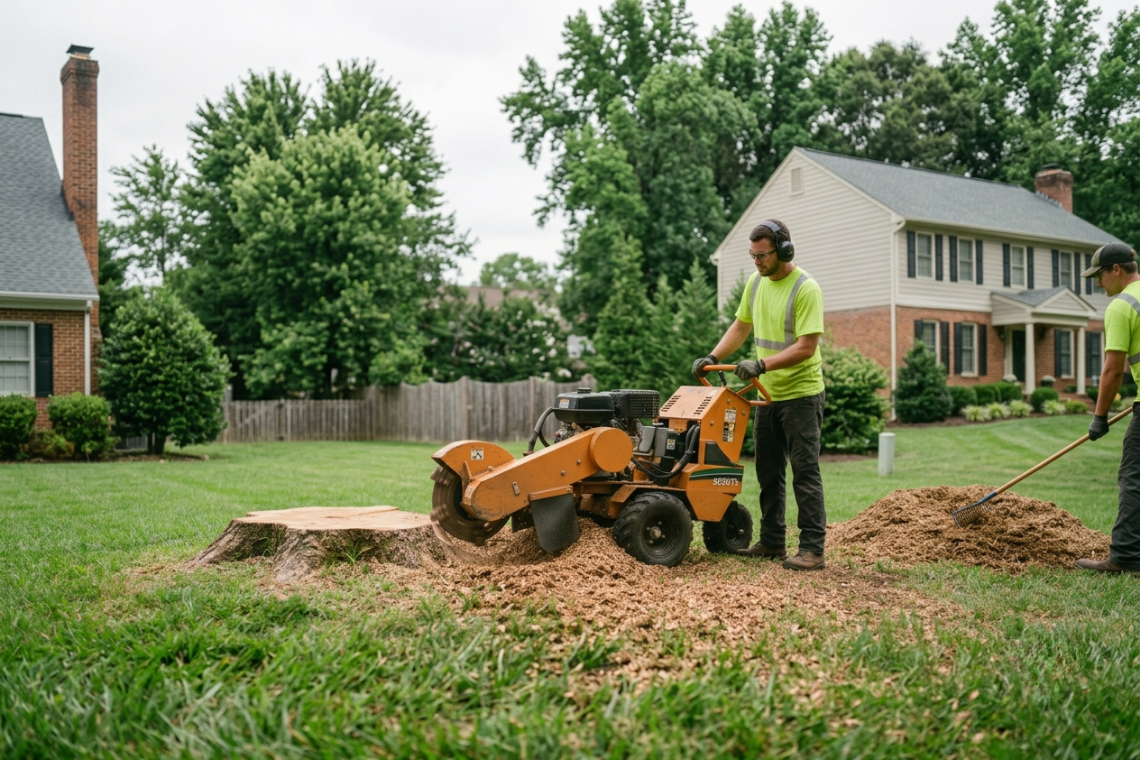
    2. Mechanical Sub-Grade Grinding The operator positions the stump grinder over the trunk base. The machine’s high-speed cutter wheel sweeps back and forth, shaving the stump down 4 to 12 inches below ground level. Technicians also grind down any major exposed surface roots spreading across the lawn to prevent future trip hazards and protect your lawnmower blades.
    3. On-Site Mulch Production & Surface Levelling As the carbide teeth slice through dense wood, the machine naturally transforms the solid stump into a blend of organic wood shavings and soil. This mixture fills the sub-surface hole, leaving a manageable mound of fresh, nutrient-rich mulch ready for backfilling or garden bed landscaping.

    3 Ways to Handle Leftover Wood Chips and Soil Depressions

    Once the grinding wheel stops, you are left with a mixture of soil, organic debris, and wood shavings expanding beyond the initial hole. You have three primary choices for managing the site:
    1. Backfill & Re-Seed Grass: Scoop out excess coarse wood chips, backfill the depression with nutrient-rich topsoil, pack it tightly to prevent future settling, and broadcast fresh grass seed.
    2. Repurpose as Landscape Mulch: Use the fresh wood mulch in surrounding garden beds or around remaining trees to lock in ground moisture and suppress seasonal weeds.
    3. Full Debris Removal: Request that your crew haul all leftover wood debris off-site so you are left with a clean slate ready for immediate landscaping.

    Emergency Tree Removal vs. Planned Stump Grinding

    Severe Central Virginia weather often brings down large oaks and pines without warning. When unexpected severe storms strike, emergency tree removal in Richmond, VA focuses first on structural safety, clearing fallen timber off roofs, power lines, and driveways. During an emergency response, torn-up root balls and jagged stumps are stabilised to eliminate immediate hazards. Homeowners can then schedule follow-up stump grinding in Richmond, VA once urgent property risks are fully mitigated.

    Conclusion

    Leaving a tree stump in your lawn opens the door to unwanted pests, tripping hazards, and damaged lawnmowers. Investing in professional grinding finishes the job right, allowing you to reclaim your outdoor space, protect your property value, and keep your landscape looking pristine. Whether you need routine maintenance, storm cleanup, or stump removal, trust the local experts at DCS Tree Services for safe, reliable execution. Contact our team today to request a free estimate and get your yard looking its best!

    FAQs

    1. Can I plant a new tree directly in the spot where the old stump was ground down?

    No, it is best to plant a new tree at least 3 to 5 feet away. The soil beneath a ground stump is depleted of key nutrients and packed with acidic leftover sawdust that slows down new root development.

    2. How deep does professional stump grinding go?

    Professional stump grinders typically operate between 4 and 12 inches below ground level. This depth completely severs the root collar, prevents regrowth, and allows enough soil clearance to establish healthy turf grass.

    3. Will the remaining underground roots rot on their own?

    Yes. Once the stump collar is ground away below the surface, the remaining underground root system dies off and naturally decomposes over a few years without causing sinkholes.

    4. How long does the grinding process take?

    Most residential stumps take between 30 to 90 minutes to grind down, depending on the wood density, diameter, and site accessibility.

    5. Is stump grinding better than full stump excavation?

    Yes, for almost all residential properties. Full stump extraction requires massive excavators that tear up lawns and leave massive craters, whereas grinding is faster, cost-effective, and minimally invasive.
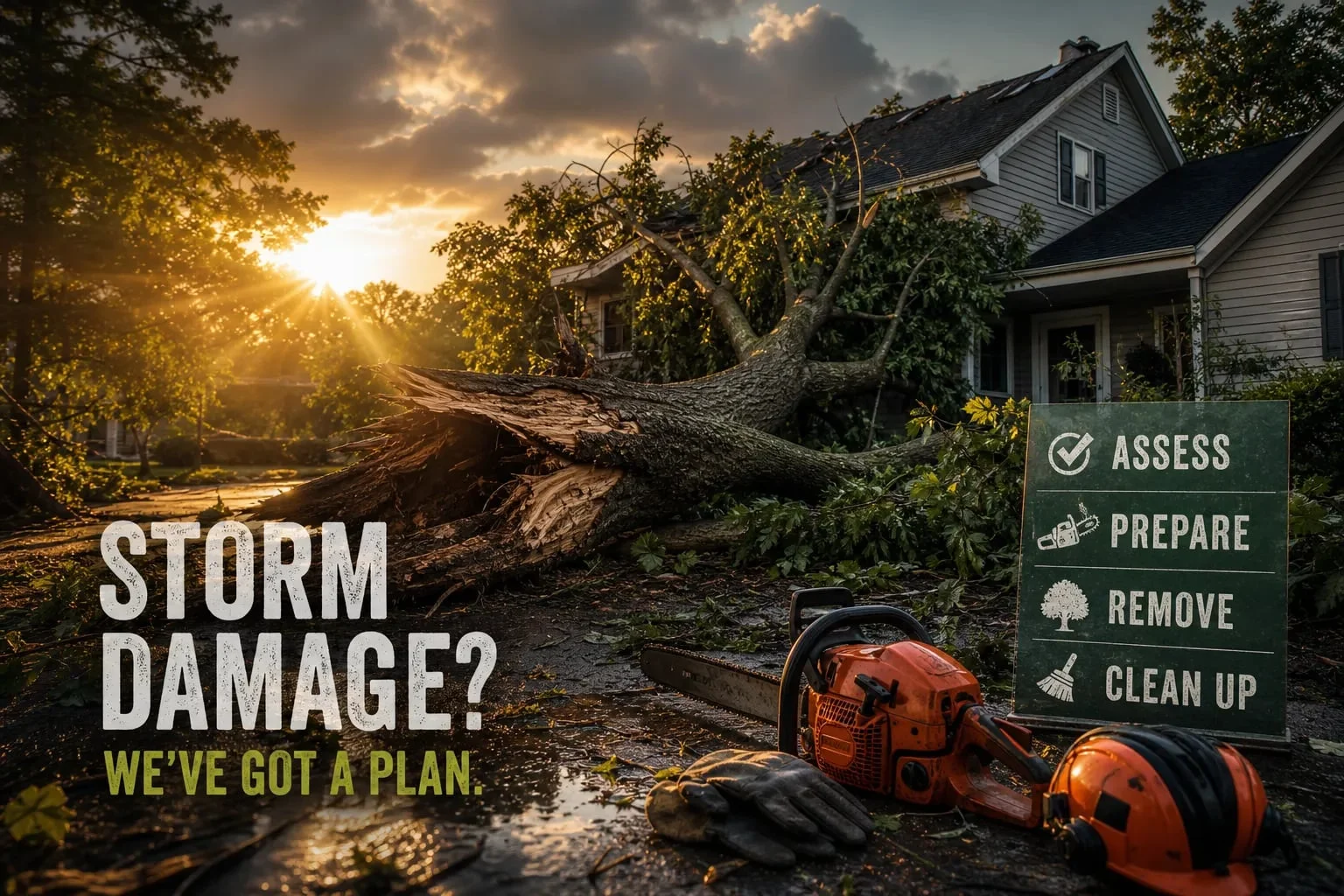
  • Storm-damaged tree removal: your step-by-step guide

    Storm-damaged tree removal: your step-by-step guide

    Storm-damaged tree removal: your step-by-step guide

    The storm rolled through overnight. By morning the neighborhood was quiet again, but one look out the back window tells the whole story: a split trunk leaning against your fence, a thick limb draped across the roof edge, or a full tree lying where the kids were playing two days ago. The relief that the storm is over collides immediately with that familiar knot in the stomach, what do I do now?

    Many homeowners make their situation worse in the first hour after a storm, not because they’re careless, but because they move too fast. After years of responding to storm calls across Richmond and the surrounding counties, our crew at DCS Tree Services sees the same avoidable mistakes repeated: people walking under hanging limbs to get a better look, starting cleanup before documenting anything for insurance, or calling the first number they find online without confirming the company carries proper insurance and meets Virginia’s contractor requirements. Every one of those mistakes can cost time, money, or worse.

    This guide walks you through five clear steps for storm damaged tree removal: making the scene safe, assessing whether your tree can be saved, documenting the damage for your insurer, deciding when to call a professional, and understanding what the whole thing will likely cost. Work through them in order and you will move from chaos to a clear plan of action.

    Make the scene safe before you do anything else

    Getting everyone out of the hazard zone first

    The first rule after a storm is simple: no one approaches the damaged tree until the area has been assessed from a safe distance. That means children, pets, and any neighbors who have wandered over to look. Broken or partially attached limbs, sometimes called widow makers by arborists, can drop without any warning even hours after the storm has passed. The tension in storm-split wood is unpredictable, and what looks stable from across the yard can shift the moment conditions change.

    Identify the debris fall zone by looking at the full length of the damaged tree or limb and adding a safety buffer in every direction. If you have caution tape, use it. If not, position a lawn chair or trash bin at the perimeter to signal that the area is off limits until a professional clears it.

    What to do if the tree is touching power lines

    Treat every wire in contact with a tree as live, no matter what it looks like. A line that appears dead can still carry a lethal charge. The safe distance from any downed or contacted line is at least 35 feet, and that distance applies to wet ground around the contact point as well. Electricity travels through moisture, and walking across a wet lawn toward a downed line is genuinely dangerous.

    The call sequence here is 911 first, then your utility company. Do not attempt to move the tree, lift the wire, or even drag a branch away from the contact point yourself. This is not a job for a homeowner, and it is not a job for a tree crew until the utility company has confirmed the lines are de-energized.

    Checking for structural damage to the home

    If a limb or trunk section has made contact with the house, do a quick assessment from the ground before entering: look for visible roof penetration, any signs of a compromised wall, and smell for gas. If you detect a gas odor, leave immediately and call your gas provider from the street. When there is any doubt about whether the structure is safe to occupy, step out and let a professional make that determination. Insurers generally accept cautious actions taken to prevent further harm, keep a record of steps you took and consult your agent if you are unsure. No property is worth staying inside a compromised building.

    Assessing your storm-damaged tree: save, monitor, or remove

    Reading the root zone and trunk for structural failure

    Once the scene is secure, conduct a visual assessment from a safe distance. Start at the base of the tree. Visible root plate uplift, soil heaving or cracking radiating outward from the trunk, and a new lean that was not there before the storm are all strong indicators of root system failure. A tree showing those signs very likely needs removal, the root system is what keeps the tree anchored, and once it fails structurally, no amount of pruning changes the outcome. That said, get a certified arborist on site before any final decision is made.

    If the roots look stable, shift your attention to the trunk. A vertical split or crack running down the main trunk, significant bark loss on a major load-bearing section, or a fracture at a major crotch point all point toward removal. Bark intact, no deep cracking, and a straight plumb line suggest the tree has structural integrity worth preserving.

    Estimating crown loss and what it means for recovery

    The standard benchmark in arborist assessments is the 25/50 rule. Trees that have lost less than 25% of their crown often recover well with proper pruning. The 25, 50% range is a judgment call that depends on the species, the age of the tree, and the overall health of the trunk. Crown loss over 50% means the tree can no longer generate enough leaf surface to sustain itself, and removal is generally the right call. This is not about appearance, it is about the tree’s ability to photosynthesize and fight off decay and disease going forward.

    The save, monitor, or remove framework

    Use this simplified framework as a starting point before a certified arborist arrives for an on-site hazardous tree removal assessment:

    • Save: Roots stable, trunk intact, crown loss under 25%, no deep cracking.
    • Monitor: Minor soil movement, one or two major limbs lost, crown loss in the 25, 50% range with a healthy trunk.
    • Remove: Root plate uplift, vertical trunk split, multiple primary scaffold limbs gone, or crown loss over 50%.

    This framework gives you a working hypothesis, but any tree with trunk or root damage needs a professional on-site inspection before any final decision is made.

    Documenting the damage before cleanup begins

    What your insurer actually needs to see

    Do not start cleanup until your photo and video documentation is complete. Walk the full scene and capture wide establishing shots that show the tree’s position relative to your home and property lines, close-ups of every impact point, the condition of the root zone, and any structural damage to the house or outbuildings. Use your phone’s native camera so each photo is automatically timestamped, that timestamp can matter when a claim is reviewed weeks later. Keep your original files unedited, since insurers may ask for corroborating evidence such as local weather reports or witness statements alongside your photos.

    When homeowners insurance covers storm tree removal

    The most common misconception homeowners have is that any storm-felled tree on their property is automatically covered for tree storm damage insurance purposes. It is not. Coverage under a standard policy generally applies when a tree downed by a covered peril, wind, lightning, or ice, has damaged an insured structure: your home, garage, fence, or an access point required for accessibility. A tree that fell in the open yard without hitting anything covered is typically an out-of-pocket expense. Most policies also cap debris removal at $500 to $1,000, so knowing your actual limit before filing sets realistic expectations from the start.

    Pulling your claim documentation together

    Gather these items before cleanup starts: timestamped photos and video, local weather event reports confirming the storm date and severity, a written itemized estimate from a licensed tree service, receipts for any emergency tarping or temporary repairs, and your policy’s declarations page. Your insurer will move faster when you hand them a complete file. A written estimate from a properly insured crew is not optional, it is the anchor document for what the cleanup actually cost.

    When to call for storm damaged tree removal: hiring a certified arborist

    Jobs that are never safe to handle yourself

    Some storm tree work is genuinely manahire geable as a DIY task: dragging small fallen branches to the curb, clearing debris from a garden bed, cutting up limbs already on the ground that are under three inches in diameter. Beyond that, an arborist after storm-damaged tree removal rather than pushing your luck. Overhead cutting, anything within range of a power line, limbs larger than three to four inches in diameter, trees leaning against a structure, and split trunks with tension in the wood all call for the training, equipment, and rigging experience a certified arborist brings to the site. 

    The three-cut method professionals use on large limbs exists for a specific reason: an improperly cut limb under tension snaps and kicks back with enough force to cause serious injury. The weight distribution in a storm-damaged tree is not the same as a healthy standing tree, and that unpredictability is what makes storm work more technical, not just more difficult.

    What to look for in a storm tree service

    When vetting companies for emergency tree removal, the non-negotiables are straightforward. In Virginia, tree service work over $1,000 typically requires a contractor license, and any reputable crew should carry general liability insurance and workers’ compensation coverage, ask for proof of both before signing anything. ISA certification is a strong professional credential worth asking about as well. The company should also provide a written on-site estimate before work begins and be transparent about what fallen tree cleanup and debris hauling are included. Be cautious of crews that show up unsolicited after a major weather event. Storm chasers are a real problem in the Richmond area after significant weather, and they operate on inflated pricing with no local accountability. If a company cannot give you a written estimate and you have never heard of them, that is a signal worth heeding.

    Why a local, family-owned crew makes a difference

    That difference shows up in practice. At DCS Tree Services, when you call after a storm, you are talking to the same people who will be on your property doing the work. There is no call center, no subcontractor chain, and no ambiguity around what cleanup is included, we are happy to put it all in writing. We show up, assess the situation honestly, give you a written estimate at no obligation, and handle everything from hanging limb removal to full debris hauling. That direct accountability matters especially after a storm, when you need a crew you can trust to make good decisions on your property.

    Storm damaged tree removal costs: what to expect

    Cost ranges by tree size and access conditions

    Storm damage tree removal costs vary considerably based on tree size and site conditions. Here is a general range to help you plan:

    • Small trees under 30 feet: $300, $600 for removal
    • Medium trees 30, 60 feet: $800, $1,500 for a standard job
    • Large trees over 60 feet: $1,500, $3,000 depending on access
    • Trees on a structure: $2,000, $8,000 depending on rigging complexity and access

    For a medium-sized residential job with decent access, most homeowners can expect half a day of work or less from an experienced crew.

    Why storm jobs often cost more than standard removal

    Storm-damaged trees are structurally unpredictable. Tension and compression in split wood behave differently than a standing healthy tree, which changes how the crew has to rig and cut each section. Equipment access is often restricted, debris volumes are higher, and the crew is sometimes working in conditions that are still difficult. These are legitimate cost factors, not padding, and any professional crew quoting storm work accurately will reflect them.

    The problem with phone quotes

    No honest tree service can give you an accurate number over the phone for storm work. The variables that drive the price, root plate condition, structural tension in the wood, crane access, proximity to the structure, debris volume, all require eyes on the job. An on-site estimate is the only way to price the work fairly. DCS Tree Services offers free, no-obligation on-site estimates for exactly this reason: you deserve to know the real number before anyone picks up a chainsaw.

    Getting your yard back after the work is done

    What full-service cleanup should include

    A professional storm damaged tree removal job should end with all debris chipped or hauled, no large limb sections left in the yard, and the work area clean and safe. If debris cleanup was not explicitly included in your written estimate, confirm it before work begins. At DCS Tree Services, fallen tree cleanup is part of the job, not an add-on, because the goal is to leave your property in better shape than the storm left it.

    Stump grinding and post-storm inspection

    The stump is typically left after removal unless grinding is specifically included or requested. Grinding matters for practical reasons: it eliminates a tripping hazard, removes the pest attraction that a decaying stump creates, prevents regrowth from the root system, and restores the usable area of your yard. Ask about it when you get your estimate. Beyond the stump, take a full walkthrough of your remaining trees after any major storm. Storms stress trees that show no obvious damage, a new lean, fresh bark cracks, or surface root disturbance can all signal a tree that needs attention before the next storm season arrives.

    The path forward is clearer than it feels right now

    Standing in your yard after a storm looking at a damaged or fallen tree, the situation can feel overwhelming. It does not have to be. Work through the steps in order: get everyone clear of the hazard zone, assess the tree from a safe distance, document everything before a single branch moves, then get a licensed professional on site for a proper storm damaged tree removal assessment before making any cutting decisions on a structurally compromised tree.

    Those priorities, safety first, document before cleanup, professional assessment before any work on a damaged trunk or root system, protect both you and your property. They also protect your insurance claim and your ability to make a good decision about whether the tree is worth saving or needs to come down.

    If you are in the Richmond area and dealing with storm damage right now, DCS Tree Services offers free, no-obligation on-site estimates for storm damaged tree removal. You will talk to the people doing the work, get honest pricing, and have a crew that leaves your yard safer and cleaner than the storm left it. Reach out and we will get eyes on your property as soon as possible.

    FAQs 

    Does homeowners insurance cover storm damaged tree removal?

    It depends on where the tree fell. Most standard policies cover removal when the tree has damaged an insured structure such as your home, garage, or fence. A tree that landed in the open yard without hitting a covered structure is typically not covered. Debris removal is usually capped at $500 to $1,000, check your declarations page before filing.

    How quickly can you get emergency tree removal after a storm?

    Response times vary by company and storm volume, but a local crew like DCS Tree Services prioritizes hazardous situations, trees on structures, blocked driveways, and downed-line contacts, and can often get eyes on your property the same day. Call as early as possible after the storm passes.

    What does storm damaged tree removal cost in Richmond?

    Costs range from roughly $300, $600 for small trees to $1,500, $3,000 or more for large trees, with trees on structures potentially reaching $8,000 depending on rigging complexity. An on-site estimate is the only way to get an accurate number, phone quotes for storm work are not reliable.

    Can I remove a storm-damaged tree myself?

    Small debris under three inches in diameter on the ground is generally manageable for a careful homeowner. Anything overhead, near power lines, leaning against a structure, or involving a trunk larger than a few inches should be handled by a certified arborist. The unpredictable tension in storm-split wood makes this work more technical than standard tree cutting.

    How do I find a reputable storm tree service in Richmond, Virginia?

    Look for a company with proof of general liability insurance and workers’ compensation, a written on-site estimate before work begins, and ISA-certified arborists on staff. Avoid unsolicited crews that show up door-to-door after major weather events, storm-chasing contractors are common in the Richmond area and often deliver inflated pricing with no local accountability.
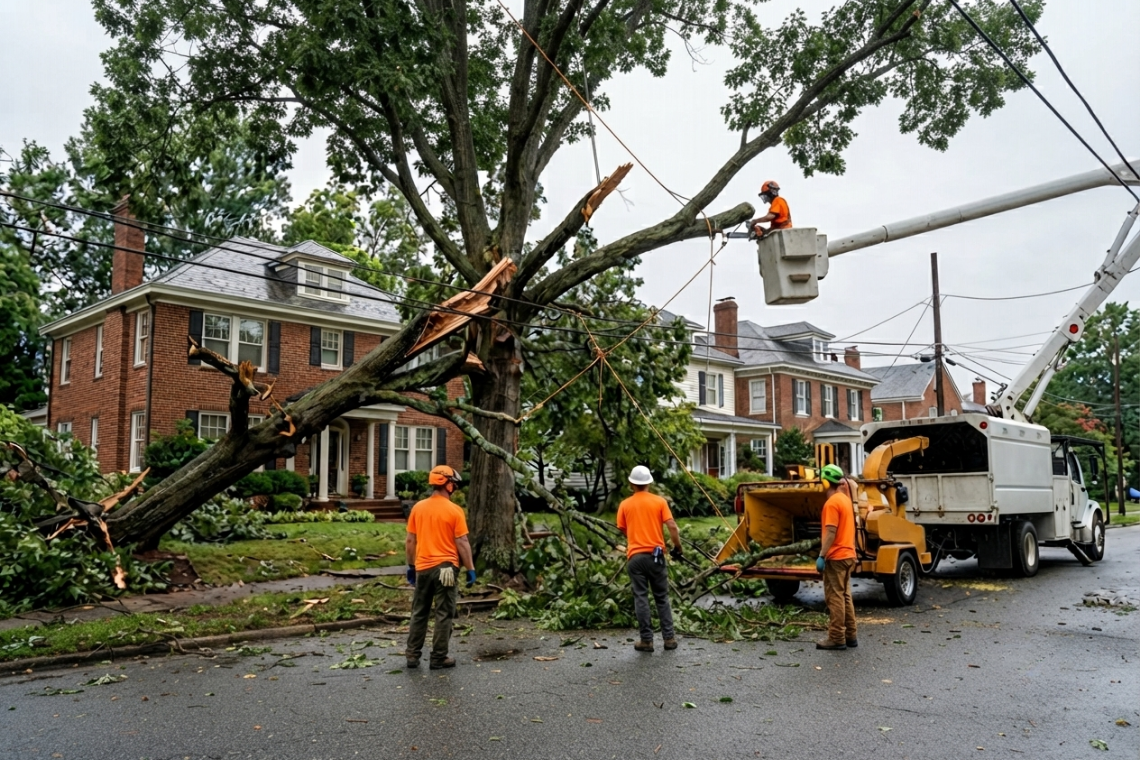
  • Storm Damage Tree Removal in Richmond VA: What to Do After a Severe Storm

    Storm Damage Tree Removal in Richmond VA: What to Do After a Severe Storm

    Storm Damage Tree Removal in Richmond VA: What to Do After a Severe Storm

    Severe storms can leave behind more than fallen branches and scattered debris. High winds, heavy rain, and lightning can crack trunks, split large limbs, uproot trees, or leave them leaning dangerously close to homes and vehicles. Once the storm passes, it can be tempting to start cleaning up immediately. However, storm damage tree removal Richmond VA often requires careful assessment before any work begins.

    Knowing what to look for and when to call a professional can help protect your family, property, and surrounding landscape.

    What to Do Immediately After a Severe Storm

    Safety should come before cleanup. Stay away from trees that are leaning, split, uprooted, or supporting broken branches. Look around the property for downed power lines before approaching damaged areas. If a tree or branch has come into contact with a power line, keep your distance and contact the utility provider.

    If it is safe to do so, take photos of the damage. These may be useful when contacting your insurance company. Avoid using a chainsaw on a large damaged tree unless you have the proper experience and equipment. Storm-damaged trees can shift unexpectedly and contain hidden tension.

    How to Tell If a Storm-Damaged Tree Is Dangerous

    Not every damaged tree needs immediate removal, but certain warning signs should not be ignored. Look for:

    • Large broken or hanging branches
    • Deep cracks in the trunk
    • Split or damaged major limbs
    • Exposed or lifted roots
    • A tree leaning noticeably after the storm
    • Damage near the base of the trunk
    • A tree resting against a house, fence, vehicle, or another tree

    These are common signs of a hazardous tree. Even when a tree appears stable, damaged roots or internal cracks can make it more likely to fail later.

    When You May Need Professional Tree Removal

    Professional help is especially important when a damaged tree is large, unstable, or positioned near a structure. A tree that has fallen across a driveway may be inconvenient, while one leaning toward a roof can present a much more serious risk. In these situations, DCS Tree Services can assess the condition of the tree and determine the safest way to handle the damage.

    For homeowners dealing with storm damage tree removal Richmond VA, learn more about how hazardous and storm-damaged tree removal may be necessary when there is significant structural damage. Professionals can evaluate the tree, surrounding property, access points, and potential hazards before deciding how the removal should be carried out.

    The goal is not simply to cut down the tree. It is to remove damaged sections in a controlled manner while reducing the possibility of additional damage to your home, vehicles, landscaping, or nearby structures.

    Why You Shouldn’t Remove a Storm-Damaged Tree Yourself

    Storm damage can change how a tree responds to cutting. A broken limb may be under considerable tension and can move suddenly when released. An uprooted tree can also shift as its weight changes.

    Without the right equipment and experience, DIY tree removal can result in serious injuries or damage to roofs, vehicles, fences, and landscaping. The risk becomes even greater when trees are close to electrical lines or structures.

    For larger or severely damaged trees, professional assessment is generally the safer approach.

    What to Know About Fallen Tree Removal

    A fallen tree may look easier to handle because it is already on the ground, but removal can still be complicated. Large trunks and branches may be resting against structures or tangled with other trees.

    Fallen tree removal Richmond VA may involve cutting the tree into manageable sections, moving heavy logs, and clearing branches from the property. Depending on the situation, the remaining stump may also need attention.

    Proper cleanup is important because leaving storm debris around a property can create additional obstacles and make future landscaping work more difficult.

    Storm Damage and Hazardous Tree Removal

    A storm-damaged tree does not automatically mean it should be removed. Some trees may recover after minor damage, while others may have structural problems that make removal the safer option.

    A professional evaluation can help determine the extent of the damage. For trees with major trunk cracks, severely damaged roots, large hanging limbs, or significant leaning, hazardous tree removal Richmond VA may be necessary.

    The surrounding area also matters. A damaged tree located beside a house, driveway, sidewalk, or utility line presents a different level of risk than one standing in an open part of the yard.

    What Happens During Professional Storm-Damage Tree Removal?

    The process typically begins with a tree assessment. The condition of the trunk, branches, roots, and surrounding property is considered before removal begins.

    Next, the crew develops a safe tree removal plan. Depending on the location and condition of the tree, sections may be cut and lowered individually rather than allowing them to fall freely.

    After the tree is removed, branches, logs, and other storm debris can be cleared from the work area. If a stump remains, homeowners may also consider stump grinding to make the space easier to maintain or reuse.

    Does Homeowners Insurance Cover Storm-Damaged Trees?

    Insurance coverage depends on the homeowner’s policy and the circumstances surrounding the damage. If a storm causes a tree to fall, document the damage and contact your insurance provider to understand what may be covered.

    Photos, videos, and professional documentation can be helpful when reporting a claim. It is also important to understand that tree removal, property damage, and debris cleanup may be treated differently under an individual policy.

    How Richmond Homeowners Can Prepare for Future Storms

    Storm preparation starts before bad weather arrives. Regular tree inspections can help identify dead limbs, weak branch unions, declining trees, and other potential hazards.

    Routine pruning can also reduce the amount of dead or weak growth that could become storm debris. Homeowners should pay particular attention to mature trees located close to homes, garages, driveways, and utility lines.

    Taking care of potential problems early can make your property better prepared when the next severe storm arrives.

    Conclusion

    Storm damage can turn an otherwise healthy-looking tree into a serious property hazard. Taking a few moments to assess the situation, keeping away from unstable trees, and knowing when professional help is needed can prevent injuries and further damage.

    If you need help assessing a damaged tree or arranging storm damage tree removal Richmond VA, DCS Tree Services can help Richmond homeowners address storm-related tree hazards and cleanup safely.

    FAQs

    1. What should I do if a tree falls during a storm?

    Keep people and pets away from the area and check for downed power lines. If the tree is large or blocking a structure or access point, contact a professional tree service for an assessment.

    2. How do I know if a storm-damaged tree is dangerous?

    Look for major cracks, hanging limbs, exposed roots, severe leaning, or significant trunk damage. Trees near buildings and utility lines require additional caution.

    3. Can I remove a storm-damaged tree myself?

    Small branches may be manageable with appropriate precautions, but large or unstable trees can be dangerous. Professional equipment and experience are recommended for significant storm tree damage.

    4. What happens if a tree falls on my house?

    Move away from the affected area if there is an immediate safety concern, especially if electrical lines are involved. Document the damage when safe and contact your insurance provider and a qualified tree professional.

    5. Should a leaning tree always be removed after a storm?

    Not necessarily. The cause and severity of the lean matter. A professional assessment can determine whether the tree can remain safely or whether removal is the better option.

  • Tree Removal Richmond VA: What Homeowners Need to Know

    Tree Removal Richmond VA: What Homeowners Need to Know

    Tree Removal Richmond VA: What Homeowners Need to Know

    If you’re researching tree removal in Richmond, VA after a storm, or just noticed something troubling in your yard, you’re in the right place. Picture this: a mature white oak at the back corner of your Richmond yard, the kind that’s been there longer than your house. After last summer’s thunderstorms pushed through Henrico and Chesterfield counties, it’s developed a noticeable lean toward your roofline, and two neighbors have already knocked on your door to ask if it looks safe to you. You’re not sure what you’re looking at, and you definitely don’t know who to call first.

    That scenario plays out across Richmond every summer, and the wrong decision, either ignoring a genuinely hazardous tree or panicking and overpaying an unqualified crew, costs homeowners far more than the right one. At DCS Tree Services, we’re a locally owned, fully insured crew based in Richmond, and we’ve handled exactly this kind of situation hundreds of times across the metro area. This guide covers five things every Richmond homeowner should know: how to recognize a tree that actually needs to come down, what removal realistically costs in 2026, whether you need a city permit, how to vet a tree service before signing anything, and what to expect from estimate day through final cleanup.

    Signs a tree on your Richmond property needs to come down

    Not every dead branch or odd lean is an emergency. Some trees with minor cosmetic issues are structurally sound and just need a trim. But Virginia’s storm seasons, summer thunderstorms, hurricane remnants tracking up from the Gulf, and the occasional ice event in January, accelerate structural decline in trees that might survive longer in drier climates. A tree that looked fine two summers ago can become a genuine hazard after a couple of wet, stormy seasons.

    Visible warning signs every homeowner can spot

    A few red flags are easy to identify from the ground. Large dead limbs hanging in the upper canopy, often called “widow makers”, are the most obvious warning sign. A trunk that leans noticeably toward a structure, fence, or power line deserves immediate attention, especially if the lean has changed after a storm. Visible cracks or splits in the main trunk indicate the tree has already begun to fail structurally, while mushroom growth at the base signals root decay that is often more advanced underground than what you can see. Bark that is peeling or detaching in large sections rounds out the list of signs that point toward decline serious enough to warrant removal.

    When a professional assessment is worth the call

    Some risks aren’t visible from the ground. Root damage, internal decay, and compromised structural wood deep in the trunk require an experienced eye and, sometimes, specialized probing equipment. A licensed Richmond arborist can assess canopy weight distribution, evaluate the root zone, and provide a documented risk rating. That documentation also matters if you need to file an insurance claim or demonstrate due diligence to a neighbor or HOA. If you’re not sure whether a tree is a genuine hazard, a professional assessment is the fastest and cheapest way to find out.

    What tree removal in Richmond, VA actually costs in 2026

    Price is the first thing most Richmond homeowners search for, and the honest answer depends on three factors: tree size, condition, and site access. DCS Tree Services job data and current Richmond market rates in one of the best companies in Richmond, VA.

    For most Richmond homeowners, a mid-sized tree on a typical suburban lot lands somewhere in the $1500-$3000 That’s a useful mental benchmark before you collect quotes from Richmond tree removal companies.

    What drives the price up

    Three factors push a job toward the top of those ranges. First, a hazardous or storm-damaged tree requires more careful, slower dismantling because the wood is unpredictable, adding labor time and a risk premium often 50 to 100 percent over a standard removal. Second, proximity to a structure, fence, or utility line means the crew can’t simply fell the tree; they have to rig and lower sections by hand, which takes more time and requires more equipment. Third, limited truck access forces crews to carry debris farther and sometimes use smaller equipment, both of which add time and cost.

    Adding stump grinding to the job


    Stump grinding Richmond VA homeowners’ requests are almost always quoted as a separate line item, but combining it with the removal is more cost-effective than scheduling it as a second job. Richmond tree services typically price stump grinding at roughly $2 to $5 per inch of stump diameter, with a minimum fee around $100 to $125. An average 18-inch stump runs about $324 in Richmond. Ask for it itemised on your estimate so you know exactly what you’re paying for, and confirm how deep the grinding will go and whether the area will be levelled afterwards. 


    Does Richmond require a permit to remove a tree on your property?

    This question creates more confusion than almost any other in the tree removal process. The short answer for most Richmond homeowners is that a routine removal on private residential property does not require a permit. However, there are specific situations where city approval is required, and skipping that step can create real problems.

    When a permit is required

    City of Richmond authorization is typically required when the tree is located in the public right-of-way or is classified as a street tree, when the property falls within a designated historic district or conservation area, or when the removal is part of a larger land-disturbance or construction project. Dead, dying, or clearly hazardous trees are often treated differently than healthy ones, but documentation supporting that determination may still be needed. The rules around development-related removals are stricter, and violations can affect your site plan approvals.

    How to confirm requirements for your specific property

    The City of Richmond’s Urban Forestry office is the authoritative source for your specific address. Before scheduling any removal, contact them with the property address, the tree’s approximate species, diameter, and height, and your reason for removing it. A reputable tree service will often help navigate this step and flag whether a permit is needed as part of their estimate process. At DCS Tree Services, we include that conversation as part of every on-site visit so homeowners aren’t caught off guard after work has started.

    How to hire the right tree removal service in Richmond

    Richmond has no shortage of companies offering tree work, but the gap between a legitimate, qualified crew and an unqualified one is significant, and the consequences of hiring the wrong company can follow you for years. Vetting any tree service before you sign anything comes down to a few focused checks.

    Red flags that should end the conversation

    Walk away from any company that can’t produce a certificate of insurance directly from their insurer. Door-to-door solicitation immediately after a Richmond storm is a well-known tactic used by out-of-area crews looking for quick money. These operations frequently deliver inflated pricing and poor workmanship, then move on before you can follow up. Other red flags: a quote delivered without a site walk, a request for a large cash-only deposit upfront, and any recommendation to “top” a tree rather than remove or properly prune it. Topping is harmful to tree health and is never the correct solution.

    Questions to ask before signing anything

    Five questions will tell you most of what you need to know about any tree cutting Richmond VA company you’re considering. Who will actually perform the work, your own employees or subcontractors? What is included in the price, specifically debris hauling, stump grinding, and final site cleanup? Will the company handle any permit research or applications required for this job? What happens to the price if the crew discovers unexpected hazards once work begins? Can they provide references or reviews from recent Richmond jobs? A company that hesitates on any of these is telling you something important about how they operate.

    What to expect from estimate day through final cleanup

    A professional tree removal Richmond VA homeowners can rely on is not a same-day phone call and show-up situation. Any legitimate crew will walk the property, assess job conditions, and provide a written estimate before scheduling work. Knowing what a good estimate looks like helps you quickly identify which companies are worth trusting.

    What a legitimate written estimate should include

    A proper estimate is itemized, not a single dollar figure on a sticky note. It should clearly identify the specific trees being removed, break out labor and equipment costs, list debris hauling and disposal, specify whether stump grinding is included and at what depth, note any permit fees or access-related charges, and state the total price with payment terms. A vague one-line quote is a red flag regardless of how competitive the number looks.

    What happens on the day of removal

    A standard removal job starts with crew arrival and a quick site setup, including protecting your lawn and any structures from falling debris. Depending on site conditions, the crew will either take the tree down in sections using rigging or fell it in a controlled drop if there’s enough open space. Debris is chipped on-site and hauled away. The job ends with final site leveling and cleanup. A quality Richmond tree service leaves your yard cleaner than they found it, no brush piles sitting in the corner, no ruts in the lawn from equipment dragged across unprotected grass.

    Emergency tree removal in Richmond after a storm

    Virginia storms regularly bring trees down across Richmond neighborhoods, and when a tree comes down on or near a structure, the priority shifts from budget to safety and speed. Knowing the right steps in the first hour makes a real difference.

    Your first steps when a tree comes down

    If the tree is anywhere near a power line, stay well clear and call Dominion Energy before anyone touches the tree or debris. Dominion evaluates line clearance and determines whether their crews need to respond before tree removal can begin. While you wait, document the damage thoroughly with photos for your insurance company. Do not sign anything with a crew that shows up at your door unsolicited. Storm-chasing crews are a known problem in Richmond after major weather events, they use high-pressure tactics, inflate pricing, and often disappear before problems are fixed.

    Emergency removal costs and response time

    Emergency tree removal Richmond VA residents face after major storms typically runs $300, $3,000 or more depending on tree size and the hazard level involved. Legitimate crews often add a 25, 50 percent premium for after-hours or urgent dispatch, which is standard and reasonable. Response times stretch during high-demand storm periods, so a company with genuine local roots in Richmond is more likely to prioritize your job and follow through after the contract is signed than a traveling storm crew passing through the metro area.

    Make a confident decision, not a rushed one

    Richmond homeowners who understand the signs of a hazardous tree, go in knowing realistic cost ranges, confirm whether a permit applies to their situation, and vet contractors on credentials rather than price alone are in a fundamentally better position than those who call the first number they find after a storm. That preparation usually saves money and avoids the headaches that come with hiring the wrong crew.

    DCS Tree Services is built for exactly this kind of work. We’re family-owned, fully licensed and insured in Virginia, and we don’t subcontract. Every job comes with transparent, upfront pricing, full debris cleanup, and a finished yard that’s ready to use. Our 4.8-star rating from Richmond-area homeowners reflects a simple standard we hold ourselves to on every job: we leave your property cleaner than we found it.

    If there’s a tree on your property you’re not sure about, the easiest first step is a free, no-obligation on-site estimate. You’ll talk directly to the people who will do the work, get a clear written quote, and leave knowing exactly what you’re dealing with. Contact DCS Tree Services for tree removal in Richmond, VA, and get your free on-site estimate today.

  • Why Family-Owned Tree Removal Companies Do It Better

    Why Family-Owned Tree Removal Companies Do It Better

    Why Family-Owned Tree Removal Companies Do It Better

    When you search “family owned tree removal near me,” you’re not just looking for the lowest price, you’re looking for someone accountable. Before you call, it helps to understand exactly how family owned tree removal companies differ from national franchises, and what that difference looks like on your property when something goes sideways.

    Picture this: you hire a tree company off a quick Google search, and a guy in an unmarked rental truck shows up two hours late. He and one helper knock the tree down fast, toss some branches in a pile, collect a check, and drive off. You’ve got debris on the lawn, a rut in the grass where the truck pulled in, and nobody picks up when you call the next day to ask about the stump. That scenario, frustrating, costly, and all too common, tends to happen when homeowners skip the right questions before hiring.

    Contrast that with what typically happens when you hire a local, owner-operated tree service. Many family-owned companies send the same person who quoted your job to lead the crew. They’ve walked your property, they know your neighbor’s fence is twelve inches behind that red oak, and they have a stake in the outcome. DCS Tree Services in Richmond is built exactly this way: owner-operated, fully licensed and insured, and actively involved on every job from first cut to final cleanup.

    This article breaks down what actually separates a family-owned tree service from a large franchise, how to verify a company before anyone fires up a chainsaw on your property, and the specific questions worth asking so you don’t end up with a mess and no recourse.

    What separates a family-owned tree company from a national franchise

    The “who shows up” problem with large companies

    Some larger tree companies and national franchises use subcontractors. The estimator is one person, the crew is a different company entirely, and the person responsible for cleanup may never have spoken to the person who sold you the job. For homeowners with large trees near a roofline or power lines, that communication gap creates real risk. If nobody on the crew knows you asked the estimator to avoid the rose garden, nobody avoids the rose garden. Always ask directly whether any part of the work will be subcontracted and whether those workers carry their own insurance.

    Skin in the game changes every cut

    When the owner is on-site doing the work, accountability is built into every decision. They’re not running twelve jobs simultaneously across three zip codes and hoping the crews stay on task. They know your neighbor’s driveway is behind that oak, and they plan the fall direction accordingly. Family-run operations have a direct reputational stake in every job they complete, and that local accountability tends to translate into sharper attention to detail than a distant corporate checklist can reliably produce.

    Pride of workmanship is personal, not a company value posted on a wall

    For a family-owned tree service, a sloppy cleanup or a cracked fence isn’t a customer complaint that gets routed to a call center and closed in three days. It’s a reputation hit in the same neighborhood where they live, where their kids go to school, and where their next five referrals come from. That personal investment tends to show up in the quality of finished work, and it’s one of the main reasons homeowners often prefer local crews for residential jobs.

    Accountability and communication: the real advantage of going local

    One contact from estimate through cleanup

    With a family-owned operation, you typically deal with the same person from the first site visit through final debris removal. Your concern about the garden bed under the maple, the stump you want ground to grade, or the irrigation line running near the roots doesn’t get lost in a handoff between departments. You call one number, and someone who has already walked your yard picks up and knows exactly what you’re talking about.

    What happens when something goes wrong mid-job

    No removal is without surprises. Hidden rot or an unexpectedly hollow trunk can change the entire removal plan mid-job, and a root system closer to the foundation than anyone anticipated raises the stakes further. How a company handles those moments is where character shows itself. Local, family-run crews have every incentive to communicate honestly and solve problems on the spot, because their next three jobs are referrals from your street. A crew from a larger operation with less local accountability may have different incentives, finishing the current job and moving on. Ask any company you’re considering how they handle unexpected complications and whether there’s a written policy for scope changes.

    Pricing transparency and what it looks like in practice

    What an honest, itemized quote covers

    A trustworthy family-owned tree removal company gives you a written quote that spells out each line: Stump grinding if requested, and final site cleanup. There are no vague “starting from” prices designed to get a foot in the door. You know exactly what you’re paying and what’s included before any equipment leaves the truck. That written document also gives you something to reference if there’s a question later about scope.

    What residential tree removal actually costs in 2026

    Pricing varies by tree size, condition, and site access. Small trees under 30 feet typically run $150 to $800. Medium trees in the 30- to 60-foot range land between $450 and $2,500. Large trees between 60 and 80 feet often fall in the $800 to $5,000 range, and trees over 80 feet or positioned near structures can push $1,000 to $15,000 or more in complex situations.

    Condition matters significantly: a dead or hollow tree is often harder and more dangerous to remove than a healthy one of the same size, and proximity to power lines or a roofline adds both risk and cost. Get a site visit before committing to any number.

    Pricing red flags to watch for

    Be cautious of any company that demands full payment upfront, can’t produce a written estimate, or gives you a number over the phone without a site visit. Legitimate residential tree removal requires an on-site assessment to price accurately. A quote pulled out of thin air almost always means add-on charges once the crew is already on your property and you feel locked in. If the number sounds unusually low and they haven’t seen the tree, that’s not a deal. That’s a setup.

    Permits: who needs them and who handles the paperwork

    Some municipalities require permits for removing trees above a certain size, near right-of-way, or on protected species lists. In Richmond and the surrounding Virginia counties, requirements vary by locality. Street trees and trees in resource protection areas almost always need authorization. Trees on private residential property outside those overlays often don’t, but the rules shift by jurisdiction. Ask your tree company directly whether a permit applies to your specific job and whether they’ll handle the application. A professional, established company knows the local rules and handles this routinely without making it your problem to figure out.

    Questions worth asking before the crew arrives

    About scope, cleanup, and property protection

    Get clear answers in writing about exactly what the quote includes. Find out whether stump grinding is part of the job or billed separately, and how debris will be removed. If the fall damages your lawn, fence, or irrigation system, what’s the company’s policy? On equipment access, ask whether they’ll need to drive over your grass and what steps they’ll take to protect it. A crew that can’t answer these questions clearly hasn’t planned the job properly, and that’s useful information to have before they start.

    About the crew, subcontracting, and scheduling

    Ask directly: will the person who gave the estimate be on-site during the job? Will any part of this work be subcontracted, and if so, are those workers covered under the same insurance policy? Get a clear start date and a realistic estimate of how long the work will take. Owner-operated tree companies generally schedule honestly and show up when they say they will, and because they’re local, there’s a direct line of accountability when they don’t.

    Finding a local tree crew worth trusting, and where to start in Richmond

    What reviews and references actually tell you

    Look for Google reviews that mention the crew by name, describe how the site looked after the job was done, or explain how the company handled a problem that came up mid-project. Detailed, specific local reviews from verified customers tend to be more useful than aggregated ratings spread across dozens of franchise locations. When you’re considering a larger or more complex removal, ask for references from jobs completed in your own neighborhood. A local crew with a solid track record nearby is the most reliable indicator you’re going to find.

    Emergency tree removal and trimming: where local crews shine

    Storm damage doesn’t wait for business hours. When a limb comes down on your fence at 7 p.m. on a Thursday, you need someone who picks up, knows your area, and can be there with the right equipment the next morning. That’s where owner-operated companies consistently outperform larger operations, they offer emergency tree removal response without routing you through a regional dispatch center. Local crews also handle routine tree trimming and pruning service on familiar schedules, so the same company managing a hazardous removal can keep your remaining trees healthy year-round.

    The local crew difference when it matters most

    For Richmond homeowners, DCS Tree Services is built for exactly this kind of work. The crew that quotes your job is the crew that shows up to do the work. Estimates are free, pricing is written and upfront, and the yard gets left in good shape when the job is done. If you’re looking for local tree removal near me results you can actually trust, start with a company that has a verifiable track record in your own neighborhood and the credentials to back it up.

    The bottom line on hiring a family-owned tree company

    Hiring a family-owned tree removal company isn’t just about supporting a local business. It’s about getting someone accountable on your property, someone who communicates clearly, prices honestly, and treats your yard with the same care they’d give their own. The difference shows up at every stage, especially when something unexpected happens mid-job.

    The checklist is straightforward: verify the license and insurance, look up any certifications through the issuing organization, get a written and itemized quote, and ask directly who will be on-site doing the actual work. If a company passes those tests and has a strong track record of reviews from neighbors in your area, you’ve found someone worth trusting with your trees.

    For homeowners in Richmond and the surrounding area, DCS Tree Services offers exactly this kind of work: family-owned, fully licensed and insured, and run by the people who show up and do the job themselves. Call or reach out online to set up a free on-site estimate and see the difference a local crew makes from the very first conversation.

  • Tree Removal Cost in 2026: Real Prices by Size & Situation

    Tree Removal Cost in 2026: Real Prices by Size & Situation

    Tree Removal Cost in 2026: Real Prices by Size & Situation

    If you’re wondering how much does tree removal cost, you’re not alone, it’s the first thing nearly every homeowner asks when they call us. Picture this: you’re standing in your backyard staring at a tree that clearly needs to come down. Maybe it’s dead, maybe it’s leaning toward your fence, or maybe last week’s storm made the decision for you. The question on your mind isn’t whether it needs to go; it’s what it’s going to cost. And that number can swing anywhere from a few hundred dollars to several thousand. At DCS Tree Services, we provide free on-site estimates across the Richmond area every month, and the answer is always honest but never one-size-fits-all.

    This guide covers real 2026 price ranges organized by tree size, explains the variables that push quotes up or down, details the add-on costs that often catch homeowners off guard, and gives you a practical framework for comparing bids without getting burned.

    How much does tree removal cost? What most homeowners actually pay

    National averages exist, but they’re only useful as a starting reference point. Your final number depends on what’s in your yard, how it’s positioned, and what condition it’s in. That said, residential removals consistently fall into three size tiers, and knowing which tier your tree lands in gives you a workable ballpark before you talk to anyone.

    Small trees under 30 feet: the most affordable tier

    For trees under 30 feet tall, most homeowners in the Richmond area pay somewhere between $225 and $450. Nationally, the range runs $150 to $450 for this tier. These are typically ornamentals, young maples, small ornamental pines, or any tree with a modest canopy spread and a manageable trunk. Shorter working height and faster crew time keep the cost to remove a tree in this category relatively low. One thing worth noting: “small” refers to overall height and canopy spread, not just the trunk. A 20-foot tree with wide lateral branches growing close to a structure can cost more than a taller tree standing in an open yard.

    Medium trees from 30 to 60 feet: where most suburban jobs land

    This is the most common tier for residential work. Mature oaks, tulip poplars, established pines, and older shade trees typically fall here. Professional tree removal pricing for this category ranges from $450 to $1,200 nationally, with Richmond-area pricing often landing between $450 and $800. Most of the variability within this tier comes from location and access rather than the tree itself. A 50-foot tree in an open lot and a 50-foot tree growing over a garage roof are fundamentally different jobs, even though they’re technically the same size. 

    Large trees at 60 feet and taller: budget $800 to $2,000 or more

    The price to cut down a large tree climbs steeply above 60 feet, and trees in tight spots near structures, power lines, or fencing push toward the upper end of that range fast. Nationally, the typical range for large-tree removal runs $800 to $2,000, while in the Richmond metro, large tree removal commonly runs $800 to $2,400 given local market conditions. Statewide Virginia averages reach $1,575 to $3,675 for this tier. Some complex large-tree jobs, particularly those requiring crane work or specialized rigging, exceed those ranges. If a company quotes you under $800 for a very large tree without any explanation, that’s worth a conversation before you sign anything.

    What actually drives your quote higher or lower

    Two trees that look nearly identical can carry quotes hundreds of dollars apart. The size tiers above are useful anchors, but the variables below are what move the number in practice. Every legitimate tree company factors these into their pricing.

    Tree location and site access

    A tree standing in the middle of an open backyard is the most straightforward job on any crew’s schedule. A tree leaning toward a roofline, surrounded by a fence, or accessible only through a 36-inch gate is a different story entirely. Restricted access means the crew can’t get equipment into position, which translates to slower work, more manual rigging, and higher labor time. Companies price that additional effort into the quote, and they should. It’s real work.

    Tree health, lean, and structural condition

    A healthy, upright tree behaves predictably during removal. A dead, hollow, or severely leaning tree does not. Structural instability means the crew has to work more carefully, use more deliberate rigging techniques, and account for the possibility that the tree could behave unexpectedly during the cut. Dead or diseased trees don’t get a discount; they often cost more because the added risk demands added care. If a company quotes you less for a hazardous tree without explaining why, ask them directly how they’re planning to handle the removal safely.

    Trunk diameter and wood species

    Some pricing models charge per inch of diameter at breast height (DBH), typically $5 to $10 per inch over 12 inches, though rates vary by provider and region, and separate stump-grinding models often use a different per-inch rate of $2 to $6. Dense hardwoods like oak and hickory take longer to cut through and produce heavier debris than softer species. A thick-trunked oak can genuinely surprise homeowners who only compared tree heights when getting quotes. When you’re describing your tree to any company, mention both the approximate height and the trunk width. It gives them a much more accurate picture before they arrive.

    How much does emergency tree removal cost?

    Not every removal can wait for a scheduled appointment, and companies structure their pricing accordingly when urgency is real. Knowing what to expect prevents sticker shock when you’re already dealing with a stressful situation.

    What qualifies as an emergency removal

    A tree actively resting on a structure, blocking a driveway after a storm, splitting from wind damage, or leaning dangerously toward a utility line qualifies as an emergency. So does any situation where a local authority or inspector has flagged the tree as an imminent hazard requiring same-day or next-day response. The defining factor is urgency, not simply the presence of damage. A tree with visible decay that’s been standing for years is a hazard, but it’s not necessarily an emergency in the same way a freshly fallen trunk across your driveway is.

    The emergency premium and what you’re actually paying for

    The emergency tree removal price typically runs $1,000 to $2,500 for standard situations. Complex scenarios (a large tree on a roof, for example) can reach $5,000 or more, with the most involved jobs, those requiring extensive crane work or structural shoring, reported at $10,000 in documented cases. Companies generally apply a premium of 25% to 100% above their standard rate, plus a call-out fee in the range of $150 to $350.

    Those fees cover after-hours dispatch, rapid equipment mobilization, and the logistical overhead of rearranging a full crew’s schedule on short notice. These premiums are real, but they reflect real risk and real cost. A crew responding to an unstable tree in difficult conditions is taking on liability that a scheduled job simply doesn’t carry.

    Add-on costs that show up after the base quote

    The base removal quote typically covers cutting the tree down and, in some cases, chipping or stacking debris on-site. What often appears as a separate line item are the services that leave your yard actually usable afterward. Knowing these in advance prevents surprises when the invoice arrives.

    Stump removal cost: grinding versus full extraction

    Stump removal cost runs $100 to $600 per stump, with most residential stumps in Virginia landing between $150 and $400 for grinding. Full stump extraction, pulling the stump and its major root system out of the ground, costs significantly more, typically $350 to $1,500 depending on size and root spread. For most homeowners, grinding is the right choice. The exception is when you plan to plant a new tree or shrub in the exact same spot; in that case, full extraction makes more sense. DCS Tree Services provides stump grinding as part of our service offering, and we’ll walk you through which option fits your situation during the on-site estimate.

    Debris hauling and what happens to the chips

    Some companies include debris haul-away in their quote; others charge $50 to $200 extra to load and remove chipped material from the property. Always ask whether the quote assumes the chips stay on-site or get hauled. Leaving wood chips as ground cover or mulch around your remaining trees is a legitimate option that saves money and actually benefits your yard’s soil health over time.

    Permits and municipal requirements

    Permit requirements vary significantly by locality. In Richmond, permits for city-owned trees are issued free of charge through the Urban Forestry Division, but private-property requirements depend on the specific situation and local ordinances. Virginia permit fees for private removal are generally modest where they apply, often in the $0 to $250 range for the application itself, based on general national guidance, though fees vary by jurisdiction. Some municipalities charge per-inch recompense fees for removing healthy protected trees, which can add up quickly. Check with your city or county office before the crew starts work; an unpermitted removal can carry fines that dwarf the cost of the permit.

    How to get a fair, accurate bid, and what to watch for

    The difference between a fair quote and an inflated one often comes down to how thoroughly the company assessed the job before giving you a number. A quick phone figure based on a description is a rough guess, not a quote.

    What a trustworthy estimate process looks like

    A reputable company walks your property, examines the tree from multiple angles, asks about site constraints like fence gates and underground utilities, and delivers an itemized written quote that tells you exactly what’s included and what isn’t. They explain their plan for the removal, clarify whether stump grinding and debris haul-away are part of the price, and give you a written figure before any commitment is made. A number scrawled on a business card after a five-minute phone call is not a quote.

    Questions to ask before you commit to any company

    • Does the quote include debris removal, or is that billed separately?
    • Is stump grinding part of the base price?
    • Are you licensed and insured, and can I see proof today?
    • Is the price fixed, or can it change once the job starts?
    • Will the people giving me this quote be the ones doing the work?

    Watch for companies that pressure you to sign on the same day, demand full payment upfront, or won’t provide a written scope of work. Those patterns show up consistently in bad experiences, and they’re easy to screen for before you’re committed.

    How DCS Tree Services approaches estimates

    Here’s how we handle it at DCS Tree Services. Every estimate is free, no-obligation, and conducted on-site, and the people who assess your tree are the same crew who will do the work. We walk the property, assess the tree, ask the right questions, and give you a written price before you make any decision. There are no vague line items and no add-ons that appear after we’ve started. If you’re in the Richmond, Virginia area and want a real number you can actually plan around, contact DCS Tree Services to request your free on-site estimate and we’ll schedule a visit at your convenience.

    The bottom line on tree removal cost in Richmond

    So, how much does tree removal cost? The range isn’t random, and once you understand the drivers, any quote you receive becomes easier to read. In the Richmond area, small trees under 30 feet typically run $225 to $450. Medium trees from 30 to 60 feet land between $450 and $1,200. Large trees above 60 feet start around $800 and can reach $2,400 or more depending on complexity and local site conditions. Emergency situations carry a real premium of 25% to 100% above standard scheduling, plus call-out fees. And services like stump grinding, debris hauling, and permit compliance are often separate line items that the base quote doesn’t always cover.

    Knowing these average tree removal rates by size means you can evaluate any bid with clear eyes. You’ll know which line items to ask about, which premiums are justified, and which quotes deserve a follow-up question before you sign. If you’re still unsure what your specific tree will cost to remove, the fastest path to a real number is an on-site look, not a phone estimate. DCS Tree Services serves Richmond-area homeowners with free, no-obligation estimates, and we’ll give you a price you can actually trust.

    Frequently asked questions about tree removal cost

    How much does tree removal cost for an average-sized tree?

    For a medium tree between 30 and 60 feet, the most common size in suburban Richmond yards, expect to pay $450 to $1,200 nationally, with many local jobs landing in the $450 to $800 range. The final number depends on access, trunk diameter, and whether stump grinding is included.

    Does the cost to remove a tree include stump removal?

    Usually not. Most base quotes cover cutting the tree down and chipping the debris. Stump grinding is typically a separate line item, running $100 to $600 depending on stump size. Always ask your contractor upfront so there are no surprises on the invoice.

    How much does emergency tree removal cost compared to a scheduled job?

    Significantly more. Emergency removal typically runs $1,000 to $2,500 for standard situations, compared to $450 to $1,200 for a scheduled medium-tree removal. The premium reflects after-hours dispatch, rapid mobilization, and the added risk of working on unstable or storm-damaged trees.

    Is tree removal in Richmond, VA more expensive than the national average?

    For large trees, yes. Richmond-area pricing for trees above 60 feet commonly runs $800 to $2,400, which is in line with or slightly above many national averages. Medium and small tree removal in Richmond tends to track closely with national ranges.